
Australian Property Capex Budget: Plan for 10 Years, Avoid ATO Errors
Maintenance is an operating cost you generally deduct in the year you spend it; capital expenditure gets capitalised and claimed over several years through capital works deductions or depreciation. The budgeting answer follows from that split: build a 10 year asset register, estimate replacement timing and cost for every major item, and fund an annual contribution toward it rather than reacting to surprises.
TL;DR:
- Routine repairs are deductible when paid if the property is rented or genuinely available, while capital works are generally claimed at 2.5% or 4% annually.
- Defects that existed at purchase count as capital initial repairs, even when minor; use itemized invoices to separate mixed jobs by task.
- Build a 10 year reserve from each major asset’s effective life and replacement cost, inflate future estimates, and spread projected spending across the plan.
- Add roughly a tenth to a sixth as contingency, reassess condition every one to two years, and compare reserves with costs due within three years.
- Strata schemes generally require a 10 year capital works plan, reviewed at least every five years, with levies separate from day to day operating costs.
WealthstackerForecast Property Costs With More ContextWealthStacker provides real-time property investment modelling, helping you assess how property decisions may affect your net worth over time.Explore WealthStacker
Table of Contents
- Defining repairs, maintenance and capital works under tax rules
- A checklist for telling maintenance apart from capex
- Building a 10 year sinking fund for capital expenditure
- Where quantity surveyors and forecasting tools add value
- Strata capital works funds: levies, timing and governance
- How WealthStacker supports multi-year capex forecasting
- FAQ
- Sources
Defining repairs, maintenance and capital works under tax rules
A repair restores something to its previous condition after wear and tear from renting it out: replacing a few broken roof tiles, fixing a leaking tap, repainting a faded wall. The Australian Taxation Office treats these as immediately deductible in the year you incur them, provided the property was rented or genuinely available to rent at the time.
Capital expenditure is different: it improves, extends or replaces an asset rather than just restoring it. The ATO classifies these costs as either capital works, generally structural items claimed at 2.5% or 4% per year, or depreciating assets, claimed over their effective life.
A frequently missed rule catches new owners out: repairs needed to fix problems that existed when you bought the property, even minor ones, are treated as initial repairs and are capital in nature, not an immediate deduction. This makes a pre-purchase condition assessment worth doing before you set your first year’s budget, not after.
Key practical points:
- Routine repairs and maintenance are deductible in the year paid, provided the property earns rental income at the time.
- Capital works deductions generally run at a low single-digit percentage rate per year depending on construction date, and depreciating assets are claimed over their effective life.
- Initial repairs on a newly acquired property are capital, regardless of how minor the job looks.
- Keep itemised invoices and apportion mixed jobs, because ATO reviews are commonly triggered by lump-sum invoices that blend a repair with an improvement.
Capital works deductions are generally calculated at a low single-digit percentage rate per year, which is why getting the classification right at the time of spending matters more than fixing it later at tax time, according to the ATO.
A checklist for telling maintenance apart from capex
Three questions sort most jobs correctly:
- Restore or improve? If the job brings the item back to its prior state, it is maintenance; if it makes the item better, bigger or different, it is capital.
- Part or entirety? Repairing a section of a roof is maintenance; replacing the whole roof is capital, because you have replaced an entirety rather than a part.
- Ongoing or initial? A repair triggered by wear during your ownership is deductible; a repair needed because of a defect that existed when you bought the property is an initial repair and capital.
Common examples: patching a few roof tiles is maintenance, a full re-roof is capital. Repainting a water-damaged wall is maintenance, gutting and remodelling a bathroom is capital. Servicing an oven is maintenance, replacing it with a new unit is a depreciating asset.
The most frequent error is treating a capital job as a repair because it was paid on one invoice alongside genuine maintenance. Ask tradespeople for itemised invoices that separate labour and materials by task, and get a quantity surveyor or tax adviser to apportion mixed-scope jobs where the split is not obvious, a point tax guidance for rental owners raises regularly.
Pro Tip: Photograph the item before and after any significant job; it is the cheapest evidence you can keep if the classification is ever questioned.
Building a 10 year sinking fund for capital expenditure
Budgeting for capex works best as a schedule, not a guess. Five steps turn a property into a funded plan:
- Build an asset register listing every major component: roof, hot water system, kitchen, bathrooms, flooring, driveway, fencing, air conditioning.
- Assign an effective life and current replacement cost to each item, using ATO effective life tables or a quantity surveyor report as the baseline.
- Plot each item on a 10 year timeline showing the year it is due for replacement.
- Escalate each cost for inflation to the year it falls due, rather than using today’s price for a job that happens in year eight.
- Sum the escalated costs and divide by the plan length to set your annual reserve contribution.
A simplified illustration: say a property has a $12,000 hot water system due in year six and an $18,000 exterior repaint due in year four, with no other major items in the window. Escalating both for inflation and spreading the total over ten years gives a modest annual contribution well below the cost of either job landing as a surprise in a single year.
Because timing estimates are never exact, most practitioners add a contingency margin, often around a tenth to a sixth of the annual figure, to absorb items that fail earlier than their stated effective life. Review the schedule annually against actual condition, not just the calendar: maintenance forecasting data aligned to ATO effective lives shows that condition-based scheduling consistently outperforms age-only assumptions for picking the right replacement year. Check adequacy by comparing your fund balance against the next three years of scheduled spending, not the full ten, since that is the window where a shortfall actually bites.

Where quantity surveyors and forecasting tools add value
A quantity surveyor report is worth commissioning when you need defensible figures for either tax depreciation or a long-range reserve plan. Their deliverable is typically an asset register with current replacement costs, effective lives and depreciation schedules you can hand straight to your accountant or use to set levies.
- Forecasting tools such as the MCG QS maintenance forecasting tool map around 45 asset types to replacement schedules using industry build cost data and ATO effective lives, projecting costs across a long horizon.
- Condition-based scheduling, where an inspector rates an item’s actual state rather than just its age, produces more reliable timing than a straight age-based rule, because two roofs of the same age can be in very different condition.
- Standalone landlords benefit from running a shadow version of the same 10 year schedule strata schemes use, so a repair-or-replace decision never turns into an unplanned cashflow crisis.
Pair the forecast with a routine: reinspect major items every one to two years, update condition ratings, and feed any change straight into your cashflow model rather than waiting for the annual review.
Strata capital works funds: levies, timing and governance
Owners corporations face a statutory version of the same planning problem. Strata schemes are generally required to maintain a capital works fund and prepare a 10 year capital works fund plan, reviewed at least every five years, to set levies that match forecast spending rather than guesswork. The NSW Strata Hub capital works fund planner is built specifically to help committees produce and update that plan.
Two funds serve different purposes: the administrative fund covers day-to-day running costs like insurance, cleaning and minor repairs, while the capital works fund covers major items such as repainting, roof replacement and structural work.
- Present the 10 year forecast at each AGM so owners see upcoming costs before levies are set, not after.
- Choose a levy pathway that balances fund adequacy against what owners can afford in a given year.
- Keep transparent, itemised records of every capital works item so apportionment between repair and capital components holds up under scrutiny.
Pro Tip: A sinking fund run as a genuine 10 year rolling plan, rather than a one-off estimate, is what prevents the special levies that catch owners off guard.
How WealthStacker supports multi-year capex forecasting
Running this framework by hand across a growing portfolio gets unwieldy fast, which is why we built WealthStacker around automating the parts investors find most tedious. Our platform delivers free automated quarterly property valuations so your replacement cost assumptions stay current without manual research, alongside portfolio dashboards that track every property’s position in one place.
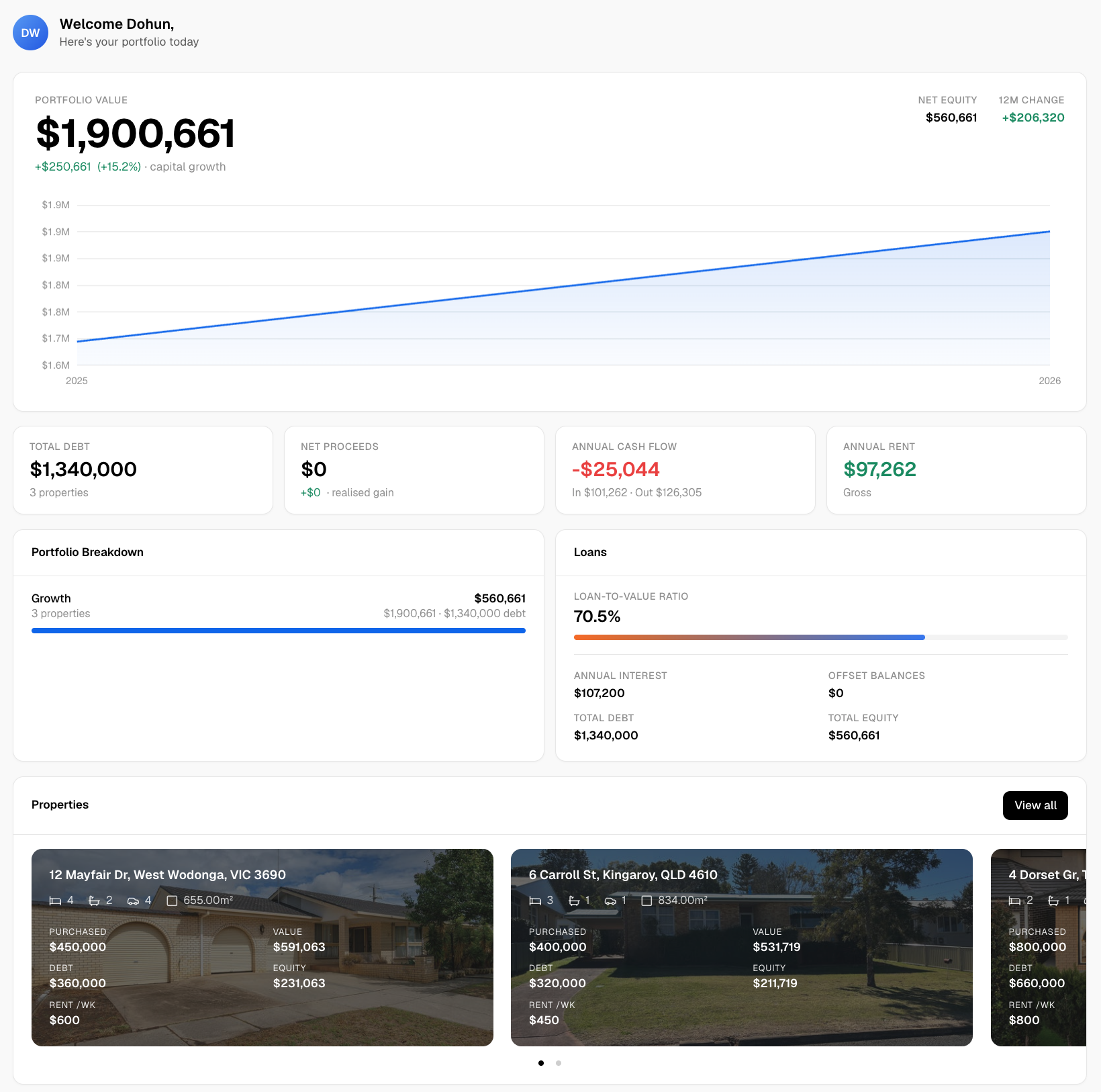
- Automated quarterly valuations keep your asset register’s replacement cost figures realistic as markets move.
- Scenario modelling lets you test how a major capex year affects your rentvesting versus buying strategy before you commit.
- Multi-year forecasting tools extend your 10 year reserve plan into a full wealth trajectory, not just a maintenance budget.
| Capex planning step | How we support it |
|---|---|
| Asset register and valuations | Automated property valuations |
| Replacement cost estimates | Market data synced across portfolio |
| Annual contribution modelling | Scenario forecasting |
| Portfolio-wide tracking | Dashboards across properties |
If you are converting a capex schedule into an annual cashflow contribution, our property cash flow forecast guide walks through the mechanics, and our depreciation schedule cost article covers entering those figures correctly; for sellers in New Zealand looking for a fast sale, it is also essential to understand property sale tax basics for a fast, stress-free sale. Sign up for WealthStacker to start building your own 10 year plan today.
This article is general information, not a substitute for advice from a qualified financial advisor. Consult a qualified financial professional about your own circumstances before acting on anything here.
FAQ
What is maintenance CapEx?
Maintenance capex is the capital expenditure portion of upkeep spending: the share of a job that replaces, improves or extends an asset rather than simply restoring it. It sits alongside routine repairs in your budget but follows different tax treatment, claimed over time rather than deducted immediately.
Can you capitalise maintenance costs?
Genuine maintenance, work that restores an item to its prior condition from normal wear and tear, is not capitalised; it is deducted in the year you pay for it. Only work that improves, replaces an entirety, or counts as an initial repair after purchase gets capitalised as capital works or a depreciating asset.
Where does CapEx go on a cash flow statement?
Capital expenditure appears in the investing activities section of a cash flow statement, separate from the operating activities where routine maintenance and running costs sit. For an individual property investor budgeting outside formal accounts, the same split still matters: track capex separately from day-to-day expenses so your annual cashflow forecast reflects both accurately.
Should CapEx be written in capitals?
As an abbreviation of capital expenditure, CapEx is commonly styled with a capital C and capital E, though some publications write it as Capex or capex in running text. There is no single enforced standard, so consistency within your own documents matters more than which exact style you pick.
How often should a strata capital works fund plan be reviewed?
A strata scheme’s 10 year capital works fund plan generally needs reviewing at least every five years to keep levies aligned with forecast spending. Tools such as the NSW Strata Hub capital works fund planner help committees update the plan and avoid the funding shortfalls that trigger special levies.
Sources
- Repair and maintenance expenses | Australian Taxation Office
- Capital works fund planner | NSW Strata Hub
- Property Maintenance Forecasting Tool | Free | MCG QS