
What does equity mean in property: a clear guide
TL;DR:
- Property equity is the difference between a property’s current market value and the secured debts against it, representing the owner’s true stake.
- Lenders typically allow borrowers to access only 80% of that equity through loans, which is known as usable equity.
Equity in property is defined as the difference between a property’s current market value and the total debts secured against it. It represents your true ownership stake in a home. The more you pay down your mortgage, or the more your property rises in value, the more equity you hold. Understanding what equity means in property is the foundation for every major financial decision you will make as a homeowner or investor, from refinancing to funding your next purchase.
How is property equity calculated?
Equity is the remaining value of a property after subtracting all outstanding mortgage balances and liens. The formula is straightforward: current market value minus total secured debts equals equity. That gap is your real ownership position.
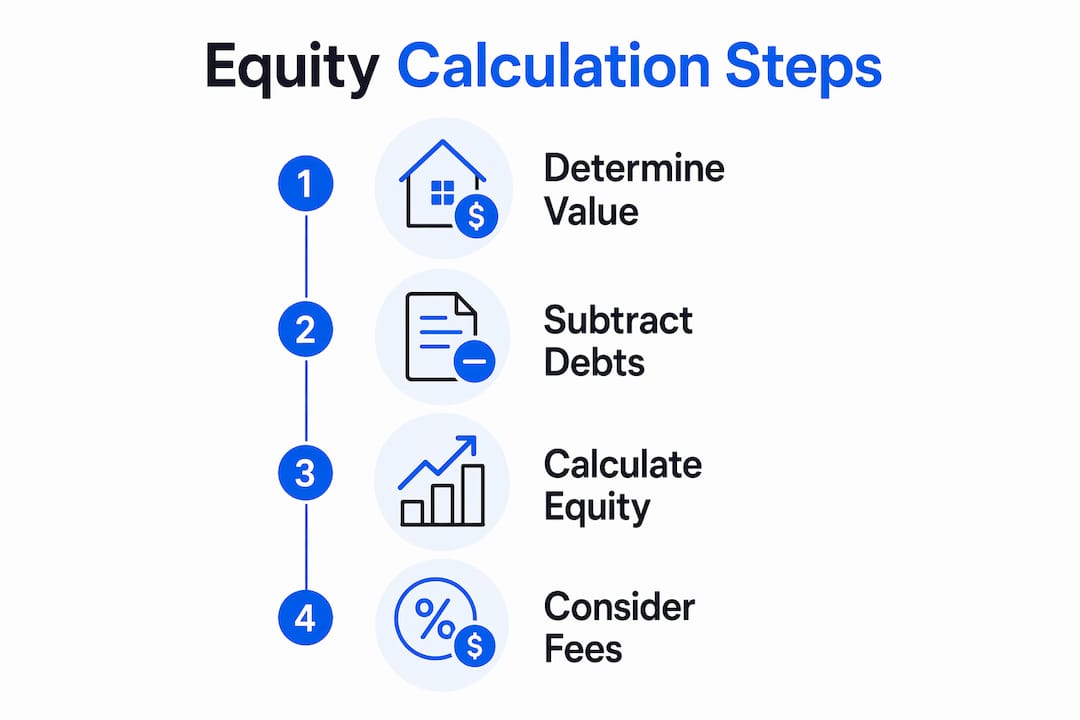
A simple example makes this concrete. A property worth $600,000 with a $400,000 mortgage outstanding carries $200,000 in equity. That is a one-third ownership stake. If the same property rises in value to $650,000 and you pay the loan down to $380,000, your equity grows to $270,000 without any extra effort on your part.
Several factors drive equity up or down over time:
- Mortgage repayments. Every principal repayment reduces your debt and increases equity over time. Interest payments do not build equity; only principal does.
- Market appreciation. Rising property values lift equity automatically. Falling values do the opposite.
- Your deposit. A 20% deposit translates directly to 20% equity at settlement. That is your starting position on day one.
- Secondary debts. A second mortgage or a tax lien sits on top of your property title. All secured debts must be included when calculating equity, or you will overstate what you actually own.
Pro Tip: Ask your lender for a current payout figure, not just your loan balance. Discharge fees and break costs can reduce your real equity position at settlement.
What legal rights does property equity represent?
Equity is not just a number on a spreadsheet. Equity interest represents a residual legal claim on a property after all mortgages and liens are satisfied. That claim carries real legal weight.
Australian property law distinguishes between legal title and equitable title. Legal title is held by the registered owner on the certificate of title. Equitable title refers to the beneficial interest, meaning the right to enjoy and profit from the property. A homeowner with a mortgage holds both, but the lender holds a registered security interest until the loan is repaid.
“Equitable title confers beneficial interests and legal rights enforced in court. Equity holders have the legal right to sell, transfer, or bequeath their ownership interest at any time.”
Lien priority matters enormously when a property is sold under financial pressure. Foreclosure proceeds pay senior lienholders first; any surplus flows to the equity holder. A first mortgage sits at the top of that hierarchy. A second mortgage or unsecured creditor sits below it. If the sale price does not cover all debts, the equity holder receives nothing. This is why lien priority critically affects investor returns during forced sales.
Equity holders can sell or transfer ownership at any time, subject to the mortgage terms. That right to deal with the property is one of the most valuable aspects of property ownership equity meaning in practice.
Total equity vs usable equity: what can you actually borrow?
Many homeowners assume that having $300,000 in equity means they can borrow $300,000. That is not how Australian lenders work. The distinction between total equity and usable equity is one of the most misunderstood concepts in property finance.

Usable equity is calculated as 80% of the property’s current value minus the outstanding loan balance. Lenders apply this formula to keep the total loan-to-value ratio (LVR) at or below 80%. Exceeding that threshold typically triggers Lenders Mortgage Insurance (LMI), which adds cost and reduces the benefit of borrowing.
| Scenario | Property value | Outstanding loan | Total equity | Usable equity (80% LVR) |
|---|---|---|---|---|
| Example A | $700,000 | $400,000 | $300,000 | $160,000 |
| Example B | $900,000 | $500,000 | $400,000 | $220,000 |
| Example C | $500,000 | $350,000 | $150,000 | $50,000 |
The table shows that total equity and usable equity can differ substantially. In Example A, a homeowner with $300,000 in total equity can only access $160,000 without triggering LMI.
Lenders offer several products to unlock usable equity:
- Refinancing. You replace your existing loan with a larger one and draw the difference as cash.
- Home equity loan. A separate loan secured against your property, drawn as a lump sum.
- Line of credit. A revolving facility secured against your property, drawn as needed.
Equity is not liquid cash. Accessing it always means taking on new secured debt. That debt carries interest, repayment obligations, and risk if property values fall. Borrowing against equity is a tool, not a windfall.
Pro Tip: Get an independent property valuation before approaching a lender. Banks use their own valuers, who may assess your property conservatively. Knowing the market value beforehand puts you in a stronger negotiating position.
How does equity support investment decisions and wealth building?
Home equity contributes directly to net worth but stays locked until you sell or borrow against it. That locked value is not idle. For Australian investors, it is the most common source of funds for purchasing additional properties.
The process of using equity to grow a portfolio follows a logical sequence:
- Build a base. Purchase a property, make regular repayments, and allow market appreciation to grow your equity position over time.
- Assess usable equity. Once usable equity reaches a meaningful level, typically enough for a 20% deposit on a second property plus purchase costs, you have a borrowing base.
- Access equity via refinancing or a line of credit. Draw the usable equity and direct it toward the deposit and costs of the next purchase. Explore property investment strategies to match the approach to your goals.
- Repeat with discipline. Each additional property, if selected well, builds its own equity over time. The portfolio compounds.
- Manage risk actively. Rising interest rates, falling property values, or vacancy periods can erode equity quickly. Maintain cash buffers and review your borrowing capacity regularly to avoid overextension.
Renovations are another lever. A well-targeted renovation can lift a property’s market value faster than natural appreciation alone. Kitchen and bathroom upgrades in the right suburb have historically delivered value gains that exceed their cost. The key word is “targeted.” Overcapitalising, spending more than the market will reward, destroys equity rather than building it.
Equity also plays a role in rentvesting, a strategy where you rent where you want to live and buy investment properties where the numbers work. Rentvestors build equity in investment properties while maintaining lifestyle flexibility. Wealthstacker’s modelling tools are built specifically to compare rentvesting and buying outcomes side by side, so you can see which path builds more wealth over your chosen timeframe.
The risk side of equity deserves equal attention. Borrowing against equity converts an asset into a liability. If property values fall and your LVR rises above 80%, lenders may require you to reduce the loan or provide additional security. This is called a margin call equivalent in property finance, and it catches investors off guard when markets correct. Responsible equity use means keeping a buffer between your total debt and the maximum the lender will allow.
Key takeaways
Property equity is the single most important number to track as a homeowner or investor, because it determines your net worth, your borrowing power, and your options at every stage of ownership.
| Point | Details |
|---|---|
| Equity definition | Equity equals current market value minus all secured debts, including second mortgages and liens. |
| Usable equity limit | Lenders typically cap borrowing at 80% LVR, so usable equity is always less than total equity. |
| Legal rights | Equity holders have the legal right to sell, transfer, or borrow against their ownership interest. |
| Equity is not cash | Accessing equity requires new secured debt, which carries interest and repayment obligations. |
| Wealth building tool | Usable equity funds deposits on additional properties, making it the primary growth engine for Australian investors. |
Wealthstacker makes equity tracking part of your investment plan
Knowing your equity position is one thing. Knowing what to do with it is another. Wealthstacker provides automated quarterly property valuations at no cost, so your equity figure stays current without manual research.
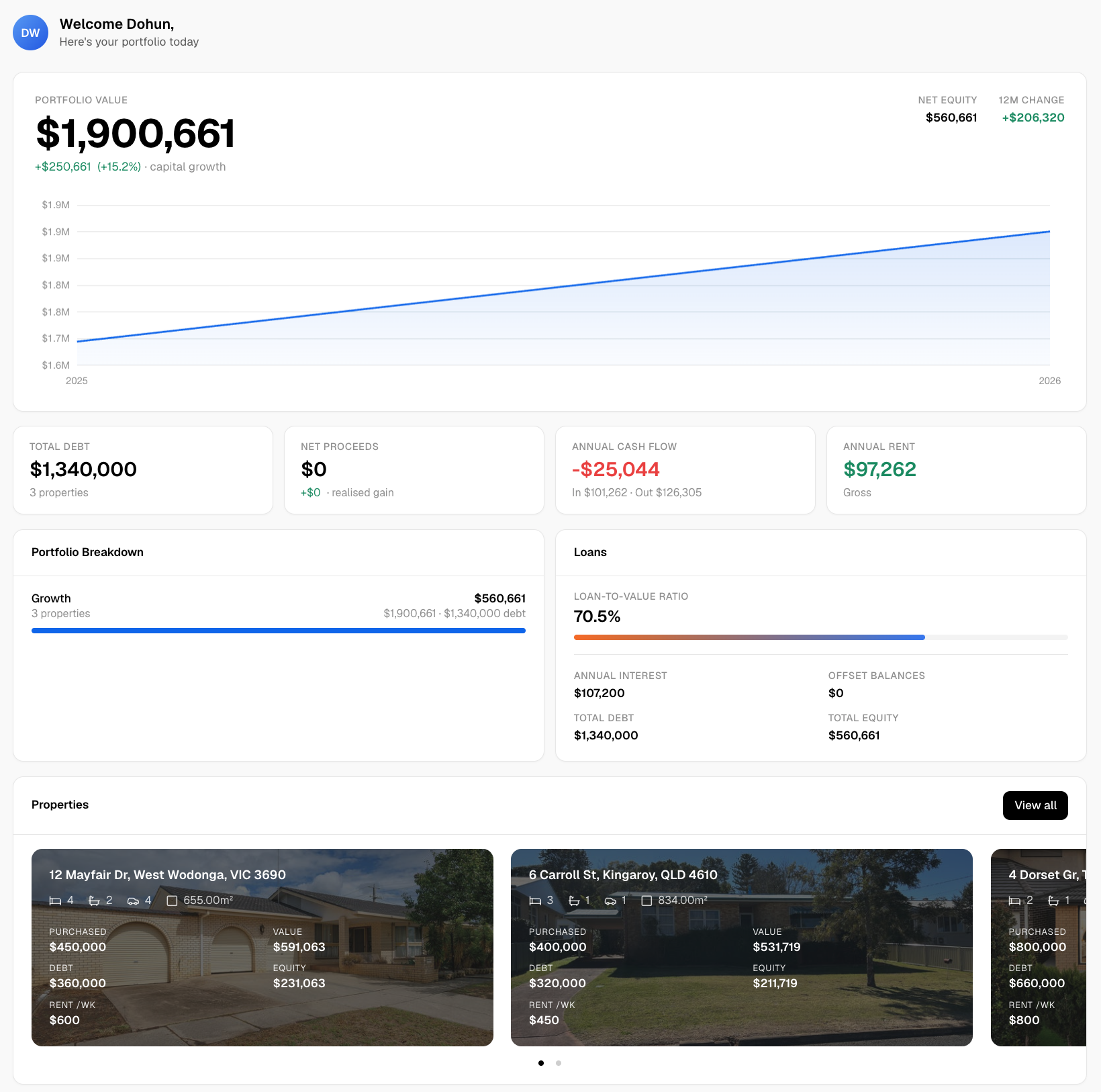
The platform’s AI tools model how your equity grows across different scenarios, whether you hold, refinance, renovate, or purchase again. You can assess your portfolio’s equity position in real time alongside your borrowing capacity, so every decision is grounded in current numbers rather than guesswork. Wealthstacker supports both rentvesting and direct buying strategies, giving you a clear forecast of how each path affects your net worth over time.
FAQ
What does equity mean in property?
Equity in property is the portion of a property’s value you own outright. It equals the current market value minus all outstanding secured debts, including the mortgage and any liens.
How do I calculate my property equity?
Subtract your total outstanding mortgage balance and any other secured debts from your property’s current market value. The result is your equity position.
What is usable equity and how does it differ from total equity?
Usable equity is the amount a lender will allow you to borrow against, calculated as 80% of your property value minus the outstanding loan. Total equity is the full difference between value and debt, but lenders do not permit borrowing against all of it without triggering LMI.
Can I access my property equity without selling?
Yes. You can access equity by refinancing your mortgage, taking out a home equity loan, or opening a line of credit secured against the property. Each method converts equity into new debt.
Does paying off my mortgage faster build equity?
Every extra principal repayment reduces your outstanding debt and increases your equity by the same amount. Accelerated repayments build equity faster than the standard schedule, independent of any change in market value.