
What does equity growth mean in rentvesting?
TL;DR:
- Equity growth in rentvesting is the increase in your property’s market value beyond what you owe on it, helping build wealth.
- Long-term holding and choosing high-growth suburbs are essential to maximize your equity accumulation over time.
Equity growth in rentvesting is defined as the increase in your investment property’s market value above what you owe on it, building real wealth while you rent the home that suits your lifestyle. Rentvesting, the recognised industry term for this strategy, means you rent where you want to live and own an investment property where the numbers make sense. The gap between your property’s current value and your outstanding mortgage is your equity. As that gap widens through capital growth, debt repayment, or both, your net worth rises. Understanding what equity growth means in a rentvesting context is the foundation of every smart property decision you will make as a renter-investor in Australia.
How does equity growth work financially in a rentvesting strategy?
Equity accumulation in rentvesting starts with leverage. A $60,000 deposit can control a $600,000 asset, meaning even modest capital growth produces large absolute gains relative to your initial outlay. That is the core financial engine of rentvesting explained in its simplest form.
Rental income from your investment property offsets a portion of your mortgage repayments. When rental income falls short of your total holding costs, the property is negatively geared. Negative gearing is not a flaw. It is a tax mechanism that lets you deduct the net loss against your other income.
The tax benefit is concrete. A $16,000 net rental loss generates a $5,120 tax saving annually for an investor on a 32% marginal tax rate. That saving directly reduces your out-of-pocket holding cost, making it easier to hold the property long enough for capital growth to do its work.
Capital growth adds to your equity over time. A property worth $600,000 today that grows to $720,000 in five years adds $120,000 to your equity, assuming your mortgage balance has also reduced through repayments. The combination of capital growth and debt reduction is what makes equity accumulation in rentvesting so powerful.
- Leverage: A small deposit controls a large asset, amplifying gains.
- Rental income: Tenant payments reduce your net mortgage cost each month.
- Negative gearing: Net losses are tax-deductible, lowering your effective holding cost.
- Capital growth: Rising property values increase the gap between asset value and debt.
- Debt reduction: Regular repayments shrink the mortgage, widening your equity position.
Pro Tip: Track your rent-to-mortgage gap every quarter. A sustainable cash flow gap is the single biggest factor in whether you can hold the property long enough to realise meaningful equity growth.
What factors influence equity growth in your rentvesting investment?
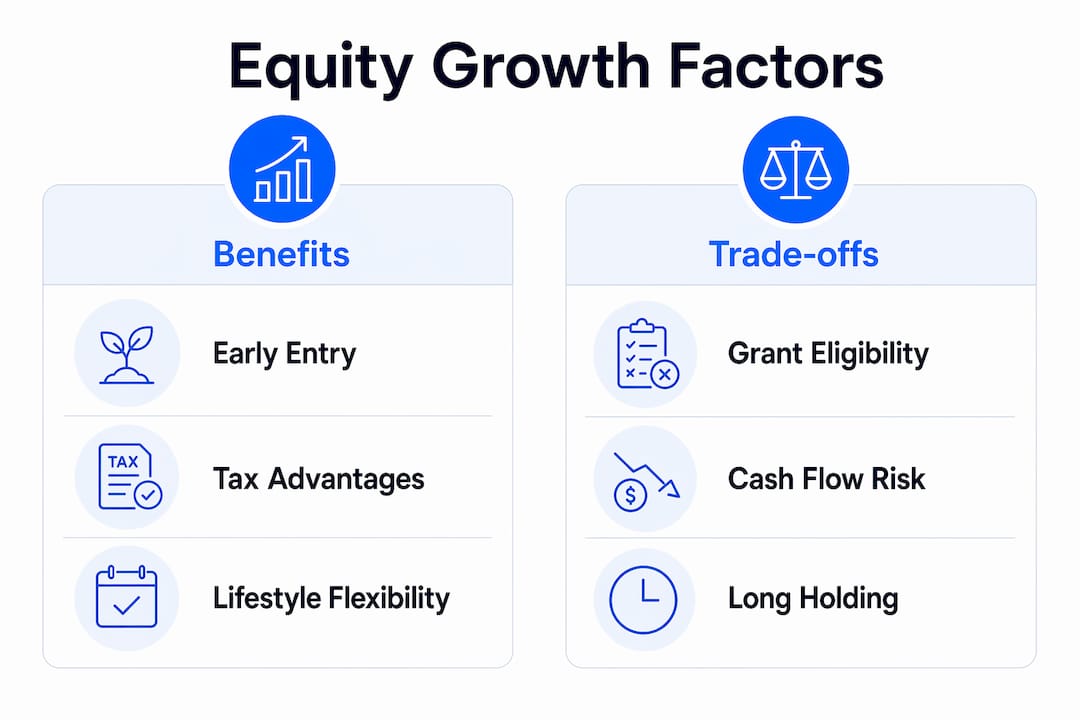
Location is the most powerful driver of equity growth, and it has nothing to do with where you want to live. Successful rentvestors choose suburbs on data, not postcode preference. High-growth suburbs share common traits: strong population growth, planned infrastructure investment, tight rental vacancy rates, and improving employment diversity.
Economic drivers matter more than aesthetics. A suburb receiving a new train line, hospital, or university precinct typically sees demand rise ahead of supply. That demand pressure pushes prices up, accelerating the impact of equity growth on your portfolio.
Holding period is equally critical. Leverage amplifies both gains and losses, meaning a 6% property value drop can reduce your capital by 60% if you are forced to sell early. A minimum horizon of seven or more years gives the market time to recover from short-term volatility and deliver the capital growth that builds equity.
Rentvesting is a strategic trade-off, not a shortcut. The investment suburb’s growth must significantly outpace the value of any subsidies or grants you forgo as a non-owner-occupier investor.
Property type also shapes equity growth. Freestanding houses on land in growth corridors have historically outperformed apartments in the same suburb over long periods, largely because land appreciates while buildings depreciate. Units can work in tightly held inner-city markets, but the fundamentals must be verified before you commit.
- High-growth suburb selection: Data-driven location choice outperforms personal preference every time.
- Infrastructure investment: Government spending on transport and services lifts local demand.
- Long holding period: Seven or more years smooths out market cycles and protects against leverage risk.
- Property type: Land-rich assets in growth corridors tend to outperform over the long term.
- Market timing risk: Buying at the peak of a cycle compresses early equity growth; research cycle position before purchasing.
What are the benefits and trade-offs of focusing on equity growth when rentvesting?
Rentvesting offers a genuine path to early market entry. Renters who cannot afford to buy in their preferred suburb can still get into the property market by purchasing in a more affordable, high-growth location. Early entry matters because capital growth in the right market can deliver $100,000 or more in additional gains over five years compared to waiting and saving for a lifestyle purchase.
The tax advantages are real and recurring. Negative gearing deductions, depreciation claims on fixtures and fittings, and deductible borrowing costs all reduce your annual tax bill. These savings compound over time, improving the net return on your investment property.
Lifestyle flexibility is a benefit that rarely gets enough attention. Rentvesting lets you live in the suburb, school zone, or city that suits your life right now, without being locked into a mortgage on a property you may outgrow. You rent your lifestyle and own your investment.
The trade-offs are equally real and must be factored into your projections.
| Benefit | Trade-off |
|---|---|
| Early property market entry | Loss of First Home Owner Grant eligibility |
| Negative gearing tax deductions | No main residence capital gains tax exemption |
| Lifestyle flexibility through renting | Ongoing rent costs alongside mortgage repayments |
| Equity growth in high-yield markets | Stamp duty concessions potentially worth $30,000–$60,000 forgone |
| Portfolio expansion using built equity | Leverage risk if forced to sell in a down market |
Rentvestors lose eligibility for First Home Owner Grants and stamp duty concessions worth $30,000–$60,000. That is a real cost. The question is whether the capital growth in your chosen investment suburb outpaces that forgone value. In high-growth markets, it typically does. In flat or declining markets, it may not.
The impact of equity growth over a full property cycle generally outweighs the lost subsidies, but only if you choose the right location and hold for long enough. Rentvesting accelerates wealth building compared to saving for an owner-occupier purchase, particularly when you invest early in a high-growth location.
How can renters maximise equity growth through rentvesting?
Maximising equity accumulation through rentvesting comes down to five practical disciplines. Each one compounds the others over time.
-
Research suburbs on fundamentals, not feelings. Use vacancy rate data, median price growth history, infrastructure pipeline announcements, and population projections. Avoid selecting a suburb because you know it or like it. The numbers must justify the purchase.
-
Commit to a long-term horizon. Property markets move in cycles. Selling within three to five years often means selling before the growth phase delivers its full return. A seven-plus-year horizon gives your equity time to build through both capital growth and mortgage reduction.
-
Use negative gearing correctly. Understand exactly which expenses are deductible: loan interest, property management fees, repairs and maintenance, council rates, insurance, and depreciation. A qualified tax accountant who specialises in property investment will identify deductions you would otherwise miss.
-
Manage your rent-to-mortgage gap actively. If holding costs persistently exceed rental income, equity growth slows or reverses as savings drain. Review your rental income annually and adjust your financial buffer accordingly. A gap that was sustainable at purchase may need attention as interest rates shift.
-
Plan to use equity for further investment. Equity built in your first investment property can be accessed through a line of credit or refinance to fund a deposit on a second property. This is how rentvestors build a property portfolio progressively rather than waiting years to save fresh deposits.
Pro Tip: Review your rental yield versus capital growth balance at least once a year. A property delivering strong yield but weak capital growth may need to be reassessed against your long-term equity targets.
Understanding how equity affects investments at each stage of your rentvesting journey lets you make adjustments before small problems become expensive ones. Quarterly valuations, cash flow reviews, and tax planning sessions are not optional extras. They are the maintenance schedule for your wealth-building engine.
Key takeaways
Equity growth in rentvesting builds real wealth only when location, holding period, and cash flow management work together over the long term.
| Point | Details |
|---|---|
| Equity growth definition | Equity is the gap between your property’s market value and your outstanding mortgage balance. |
| Leverage risk | A 6% property value drop can reduce your capital by 60%, making a long-term horizon non-negotiable. |
| Tax saving impact | A $16,000 net rental loss saves $5,120 annually at a 32% marginal tax rate, reducing holding costs. |
| Location over preference | Choosing suburbs on growth data rather than personal preference is the single biggest driver of equity success. |
| Trade-off awareness | Forgone grants and concessions worth $30,000–$60,000 must be factored into your net wealth projections. |
Wealthstacker helps you track your rentvesting equity in real time
Knowing what equity growth means in rentvesting is one thing. Tracking it accurately across your portfolio is another. Wealthstacker is a property investment app and portfolio tracker built specifically for Australian investors who want clear, up-to-date numbers on their equity position, cash flow, and net worth.
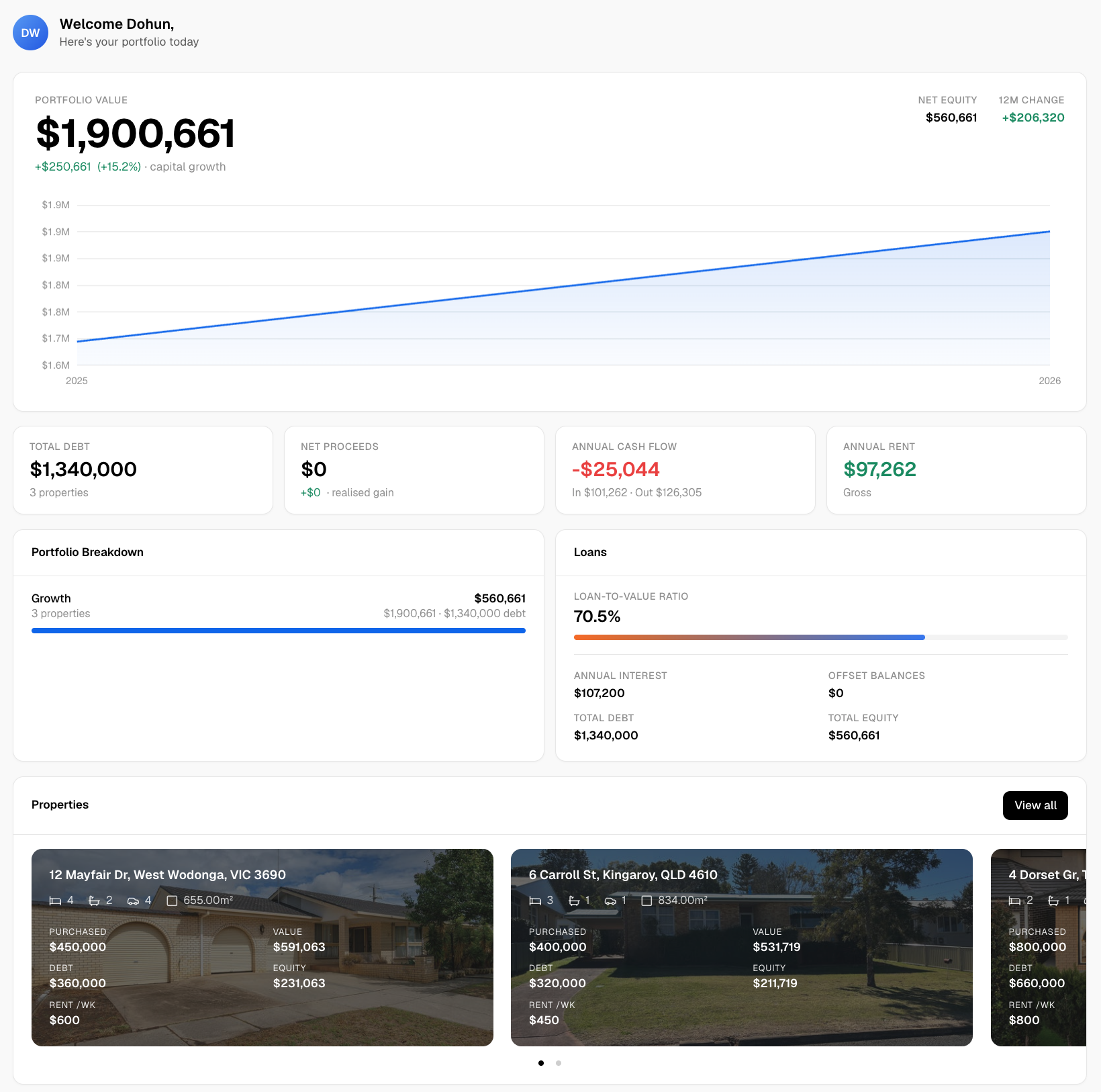
Wealthstacker provides automated quarterly valuations at no cost, so your equity figures stay current without manual research. The platform models both rentvesting and buying strategies side by side, letting you compare projected wealth outcomes in real time. Whether you are assessing your first investment property or planning your next purchase using built equity, Wealthstacker gives you the portfolio tracking tools you need to make confident, data-backed decisions.
FAQ
What does equity growth mean in rentvesting?
Equity growth in rentvesting is the increase in your investment property’s market value above your outstanding mortgage balance. It builds your net worth over time through capital growth and regular debt repayment.

How does negative gearing help equity growth?
Negative gearing lets you deduct net rental losses against your taxable income, reducing your annual tax bill. At a 32% marginal tax rate, a $16,000 net loss saves $5,120 per year, lowering your effective holding cost.
Do rentvestors lose their First Home Owner Grant?
Rentvestors lose eligibility for First Home Owner Grants and stamp duty concessions potentially worth $30,000–$60,000. Capital growth in a high-performing investment suburb typically outweighs this cost over a full property cycle.
How long should you hold a rentvesting property?
A holding period of seven or more years is recommended to ride out market volatility and allow capital growth to build meaningful equity. Selling early, particularly in a down market, can result in significant capital losses due to leverage.
What is the biggest risk to equity growth in rentvesting?
The biggest risk is an unsustainable rent-to-mortgage gap. When holding costs persistently exceed rental income, savings drain and equity growth slows or reverses, potentially forcing a sale at the wrong point in the market cycle.