Is your house actually at risk of subsidence?
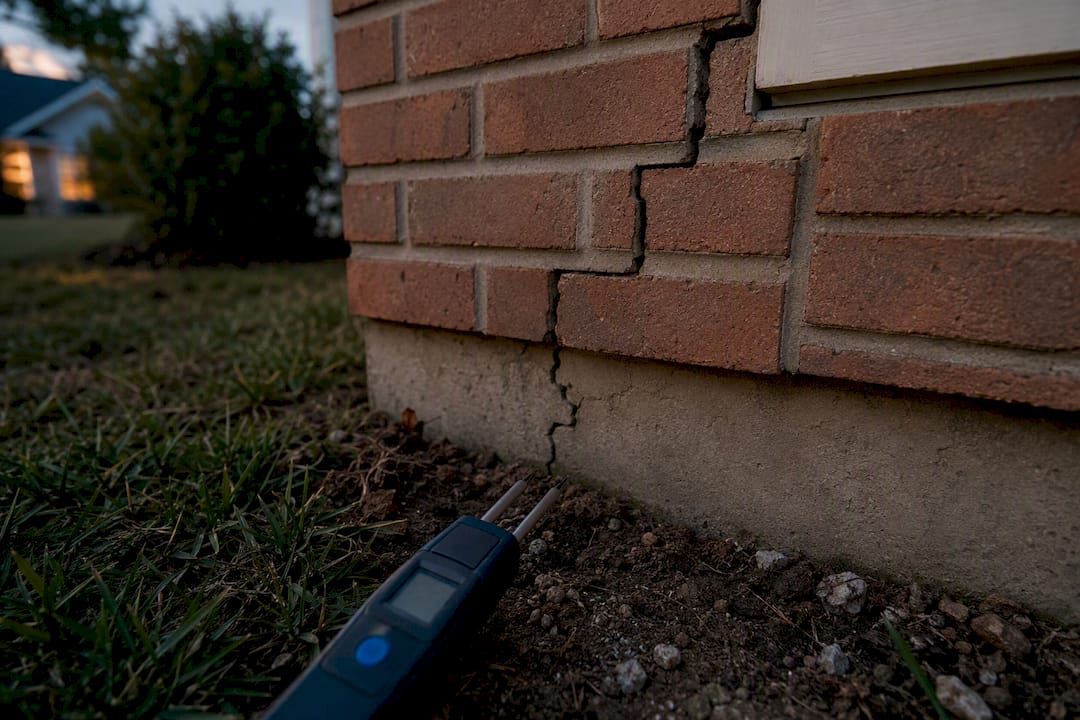
If you’re seeing diagonal cracks tracking along mortar lines, doors that suddenly stick, and floors that feel like they slope towards one corner, you’re likely looking at genuine subsidence risk rather than normal settling. A brand new house shifting slightly in its first two years is settlement. A house developing new cracks long after construction, especially following environmental changes like dry conditions, suggests a subsidence issue rather than normal settling.
Do this today, not next week:
- Photograph every crack with a coin or ruler in frame for scale, dated in the file name.
- Mark the end of each crack with a pencil line so you can see if it grows.
- Check gutters, downpipes and any visible plumbing for leaks near the affected walls.
- Hold off on major digging, new garden beds, or removing trees near the house until you’ve had it looked at.
Call a structural engineer or building inspector urgently if you notice sudden tilting, a crack that’s visibly widened within weeks, or a new hole opening in the ground. Everything else can wait for a properly scheduled inspection.
Key Takeaways
Genuine subsidence risk shows up as staircase cracking, jamming doors and sloping floors, and it’s confirmed through a level survey measured against QBCC’s 15mm and 5mm thresholds.
| Point | Details |
|---|---|
| Spot the right signs | Staircase cracks following mortar lines, jamming doors, and sloping floors point to structural movement, not cosmetic wear. |
| Know the threshold | QBCC treats a 15mm slab deviation over 3 metres or 5mm wall crack width as unacceptable movement. |
| Diagnose before repairing | Get a level survey and a structural engineer’s report before committing to underpinning or resin injection. |
| Manage moisture year-round | Keep gutters clear, grade gardens away from the house, and avoid planting large trees too close to footings. |
| Document everything | Dated photos, crack measurements and survey reports protect insurance claims and warranty rights alike. |
| Quantify the financial impact | Model repair-and-hold versus sell-as-is scenarios before deciding, using real inspection and quote data. |
Table of Contents
- Signs of subsidence in a house versus normal wear
- What causes subsidence in Australian homes
- How to assess and diagnose subsidence properly
- Prevention and maintenance that actually reduce risk
- What repairing subsidence actually involves
- Insurance, builder warranties, and reporting mine subsidence
- Putting a dollar figure on subsidence risk
- Sources
Signs of subsidence in a house versus normal wear
Most homes develop hairline cracks over time. That’s paint, plaster, and timber doing what they naturally do as temperatures and humidity shift through the year. The signs below point to something more serious happening underground.
- Staircase or diagonal cracks in brickwork. These follow the mortar joints in a stepped pattern rather than running straight up a wall, and they’re one of the clearest markers of differential movement beneath the footings, according to AZTA Engineering.
- Doors and windows that jam without being touched. If a door swung freely last year and now catches on the frame, or you’re seeing new gaps at skirting boards and cornices, the frame itself has likely shifted.
- Sloping or uneven floors. Put a marble on the floor near a suspect wall. If it rolls consistently towards one point, the slab beneath has probably dropped.
- Separation between an extension and the original house. Extensions built on different footings often move at different rates, so a widening gap at the join is a genuine red flag.
- External clues. New pooling water after rain, exposed or cracked utility pipes, or a small sinkhole appearing in the yard all point to ground movement rather than a structural problem inside.
One thing worth knowing: structural cracking almost always tracks the mortar joints in a stepped, diagonal line, while cosmetic cracking tends to run straight and stay narrow. That distinction alone can save you an unnecessary call-out fee.
What causes subsidence in Australian homes
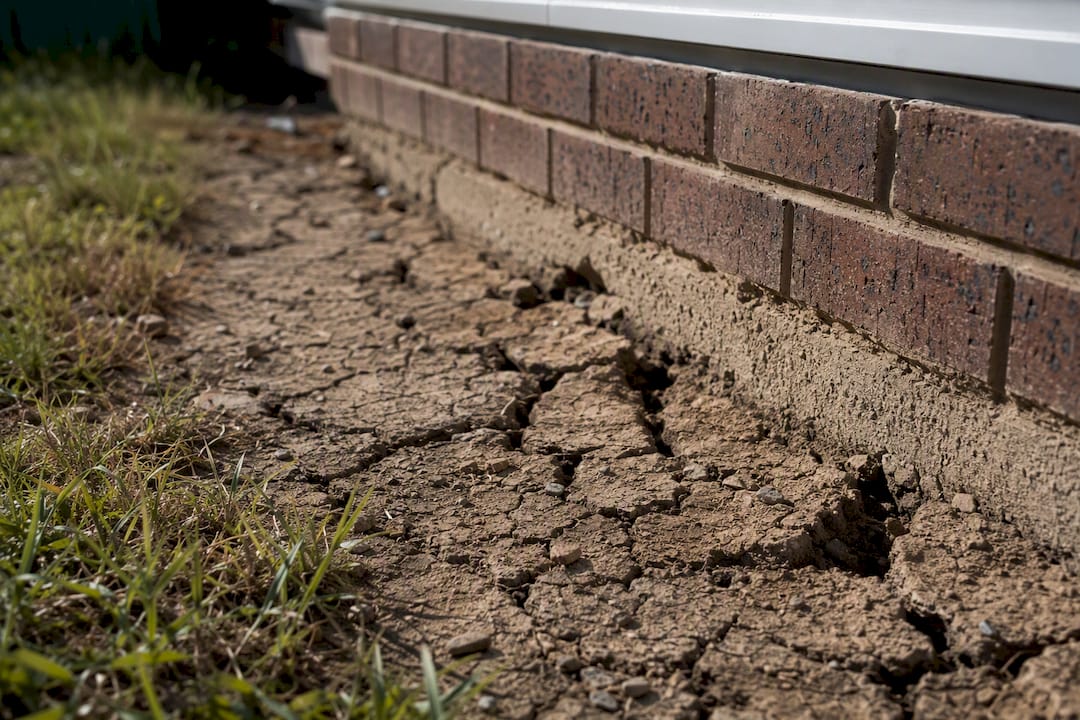
Australia’s soil profile is the single biggest reason subsidence shows up here more than in many other countries. Reactive clay soils expand when wet and shrink when dry, and that seasonal swelling and shrinking is exactly what QBCC’s guidance on subsidence points to as the dominant driver in most Queensland homes. Under the Australian Standard AS2870, sites get classified as M, H or E (moderate, highly reactive, or extremely reactive), and that classification governs how much movement a slab is engineered to tolerate before it’s a genuine problem.
Four causes account for the vast majority of cases:
- Reactive clay moisture cycles. A hot dry summer followed by heavy rain can shrink and swell clay soil enough to crack a slab that’s sat stable for a decade.
- Tree roots drawing moisture from beneath footings. Mature trees, especially eucalypts, can desiccate clay soil metres from the trunk, and root spread often extends well beyond the canopy.
- Leaking drains, broken stormwater pipes and irrigation. A slow leak under a slab does the opposite of drought. It saturates the soil locally and causes uneven swelling or erosion of the ground supporting the footing.
- Mine subsidence. This is mechanically different from reactive-soil movement. It results from historical underground workings settling or collapsing, and it’s assessed and managed separately by Subsidence Advisory NSW rather than through the standard building codes.
If your property sits in a former coalfield district, check its status before assuming reactive clay is the culprit. The repair approach, and who you report to, is completely different.
How to assess and diagnose subsidence properly
Start with what you can do yourself, then bring in professionals once you’ve got evidence worth handing over.
- Document everything methodically. Photograph cracks with a scale reference, note the date, and measure crack width with a simple ruler or crack gauge. Record any door or window gaps at skirtings.
- Run a level survey. A level or levelling survey uses precise instruments to map how much a slab has dropped across its length, and it’s the single most useful piece of evidence for any later claim or dispute.
- Apply the 3-metre straight-edge test. Lay a straight edge across the suspect area. QBCC’s thresholds treat a slab deviation of 15mm or more over that 3-metre span, or wall cracks wider than 5mm, as movement serious enough to warrant repair.
- Bring in the right professional for the job. A building inspector can give you a general condition report. A structural engineer assesses load-bearing risk and designs a fix. A geotechnical engineer investigates the soil itself, which matters most when reactive clay or a suspected void is involved.
- Escalate immediately if movement is rapid. A crack growing visibly within weeks, a new hole in the yard, or damage to gas or water lines needs urgent attention, not a scheduled appointment three weeks out.
Pro Tip: Keep a simple spreadsheet with the date, crack width, and a photo file name for every measurement. Engineers and insurers both respond faster to a clean timeline than a shoebox of undated phone photos.
If you suspect mine subsidence specifically, Subsidence Advisory NSW runs a dedicated reporting line and assessment process that’s separate from standard council building inspections, and it’s worth calling before you engage a private engineer.
Prevention and maintenance that actually reduce risk
Most subsidence prevention comes down to controlling moisture around the footings, not fixing the house itself.
- Keep gutters and downpipes clear and direct water well away from the slab edge, never let it pool against a wall.
- Grade garden beds so water runs away from the house rather than towards it.
- Follow a sensible tree-distance rule: as a guide, avoid planting large trees closer to the house than roughly their expected mature height, particularly on reactive clay.
- Skip unregulated garden sprinklers positioned close to slabs. Irregular heavy watering right beside a footing is one of the most common causes of localised swelling.
- Get sewer and stormwater lines checked periodically, especially in older homes with clay or earthenware pipes prone to cracking.
- Avoid dumping large soil fills against exterior walls or laying paving that traps water instead of shedding it.
Pro Tip: If you’re planning landscaping, check your site’s AS2870 classification first. A garden design that works fine on a stable sand site can actively cause damage on a highly reactive (H) or extremely reactive (E) clay site.
What repairing subsidence actually involves
The right fix depends entirely on the cause, and the two most common approaches address very different problems.
- Underpinning and pier systems. Engineers use these when footings need permanent additional support, typically for more severe or ongoing settlement where the original foundation depth is no longer adequate.
- Resin injection and micro-lifting. These are lower-disruption options for filling voids beneath a slab or gently re-levelling a section that’s dropped, and industry guidance from Rectify notes they can stabilise and lift a slab with far less excavation than traditional underpinning.
- Re-levelling versus a partial rebuild. Which one makes sense depends on whether you’re dealing with moisture-driven movement (often manageable with re-levelling and improved drainage) or genuine void or erosion damage (which sometimes needs structural rebuilding of the affected section).
- The process itself follows a consistent sequence: diagnosis, engineering design, the physical repair, then a monitoring period with follow-up level surveys to confirm the fix has held. That monitoring record is exactly what you’ll want if you ever make an insurance or warranty claim later.
Costs vary enormously depending on severity and method, so get at least two independent engineering assessments before committing to a repair path, particularly if underpinning is being recommended. A repair scoped correctly the first time is far cheaper than one that has to be redone because the wrong method was chosen for the actual cause.
Insurance, builder warranties, and reporting mine subsidence
Most home and contents policies exclude gradual subsidence caused by reactive soil movement, though policies vary, so check your specific wording and talk to your insurer early rather than assuming you’re covered or excluded.
- Gather your evidence before you call anyone: dated photos, crack measurements, and any level survey results.
- Contact your insurer to understand their position on your specific policy before commissioning expensive repairs.
- If the home is still within its builder warranty period, raise the issue with the builder immediately. In Queensland, QBCC’s guidance sets out what’s covered and the process for lodging a complaint.
- For suspected mine subsidence in New South Wales, report it through Subsidence Advisory NSW, which also handles development approvals in affected zones under Surface Development Guideline 4.
Build a simple evidence file as you go:
- Dated photographs and crack-width measurements
- A level survey report
- Any building inspector or structural engineer report
- Repair quotes from at least two licensed contractors
That file does double duty. It supports an insurance or warranty claim, and it’s exactly the documentation a buyer’s solicitor or a future insurer will want to see if you sell.
Putting a dollar figure on subsidence risk
A repair quote tells you what fixing the house will cost. It doesn’t tell you what the issue does to your equity, your borrowing capacity, or your resale price if you decide to sell instead of repair. That’s the gap Wealthstacker’s automated valuation and hazard overlay tools are built to close.
Run three numbers side by side before deciding anything:
- Repair and hold: current valuation, minus repair cost, projected forward against normal suburb growth.
- Sell as-is: likely discounted sale price against a documented subsidence issue, which buyers and their saleability considerations will factor into any offer.
- Walk away as a buyer: how the same purchase price and repair budget compares to a similar property with no known site risk.
Attach your inspection reports and repair quotes directly to the scenario so the numbers stay grounded in real evidence rather than guesswork.
A house with a documented, resolved subsidence history and clean level survey records often holds its value far better than an undocumented issue a buyer discovers during due diligence.
Pro Tip: Run the “sell as-is” and “repair and hold” scenarios before you get quotes, not after. It tells you what repair budget actually makes financial sense to chase.
If you’re weighing this decision before a purchase, a property investment checklist that includes subsidence-specific inspection items is worth running through before you make an offer. Wealthstacker’s free quarterly valuations and scenario tools are built exactly for this kind of decision, and you can start a scenario at Wealthstacker.
Sources
- Protect against subsidence | QBCC
- Signs of foundation damage & footing failure | AZTA Engineering
- What is mine subsidence? | NSW Government
Recommended
- Property Investment App & Portfolio Tracker | WealthStacker
- Supply and demand in Australia’s property market: what investors need to know | WealthStacker
- Mortgage options for first-home buyers: buy vs rentvest 2026 | WealthStacker
- Client borrowing capacity property assessment: 2026 guide | WealthStacker