
Property investment budget planning guide for 2026
TL;DR:
- A property investment budget is a complete financial plan that accounts for all purchase costs, ongoing expenses, and income. Australian lenders in 2026 assess borrowing capacity by stress testing at 3% above the actual rate and limiting debt to six times gross annual income. Building a detailed budget with realistic rental income estimates and a reserve fund helps investors choose properties within their financial limits and prepare for rate increases.
A property investment budget is a complete financial plan that maps every cost, income source, and risk before you commit to buying. Getting this right separates investors who build long-term wealth from those who run out of cash after the first vacancy. Whether you are a first-time buyer or a renter exploring rentvesting strategies, this property investment budget planning guide walks you through the exact steps Australian investors need in 2026, from calculating your borrowing power under current lending rules to stress testing your cash flow against rate rises. The Australian Prudential Regulation Authority (APRA), the Household Expenditure Measure (HEM), and lender stress tests all shape what you can borrow and how much buffer you need.
How to assess your borrowing capacity under 2026 lending criteria
Your borrowing capacity is the ceiling on every property decision you make. Australian lenders in 2026 stress test loan repayments by adding approximately 3% to the actual interest rate. That means if your loan rate is 6.5%, the bank assesses your ability to repay at 9.5%. This single rule eliminates a large number of applicants who look financially comfortable on paper.

Lenders also cap debt-to-income ratios at 6 times your gross annual income. If you earn $100,000 per year, your total debt across all loans generally cannot exceed $600,000. Your existing home loan, car finance, and personal loans all count toward that ceiling. The Household Expenditure Measure (HEM) sets a minimum living expense benchmark that lenders apply even if your actual spending is lower.
Credit cards are a hidden trap in borrowing assessments. Lenders treat credit card limits as an ongoing financial commitment at approximately 3.8% of the total limit, regardless of whether you carry a balance. A $20,000 credit card limit reduces your assessed income by $760 per year. Closing unused cards before applying for an investment loan can meaningfully improve your borrowing power.
Key factors that affect your borrowing capacity:
- APRA stress test buffer: Lenders add 3% to the current rate to test repayment ability
- Debt-to-income cap: Most lenders limit total debt to 6 times gross annual income
- Rental income shading: Only 70–80% of gross rental income counts toward assessable income
- Credit card limits: Assessed at approximately 3.8% of total limit as a financial commitment
- HEM benchmarks: Living expenses are assessed at HEM minimums, not your actual spend
Pro Tip: Get a full borrowing capacity assessment before you start property searching. Wealthstacker’s borrowing power tools show you exactly where you stand under 2026 lending criteria.
What upfront and ongoing costs belong in your budget?
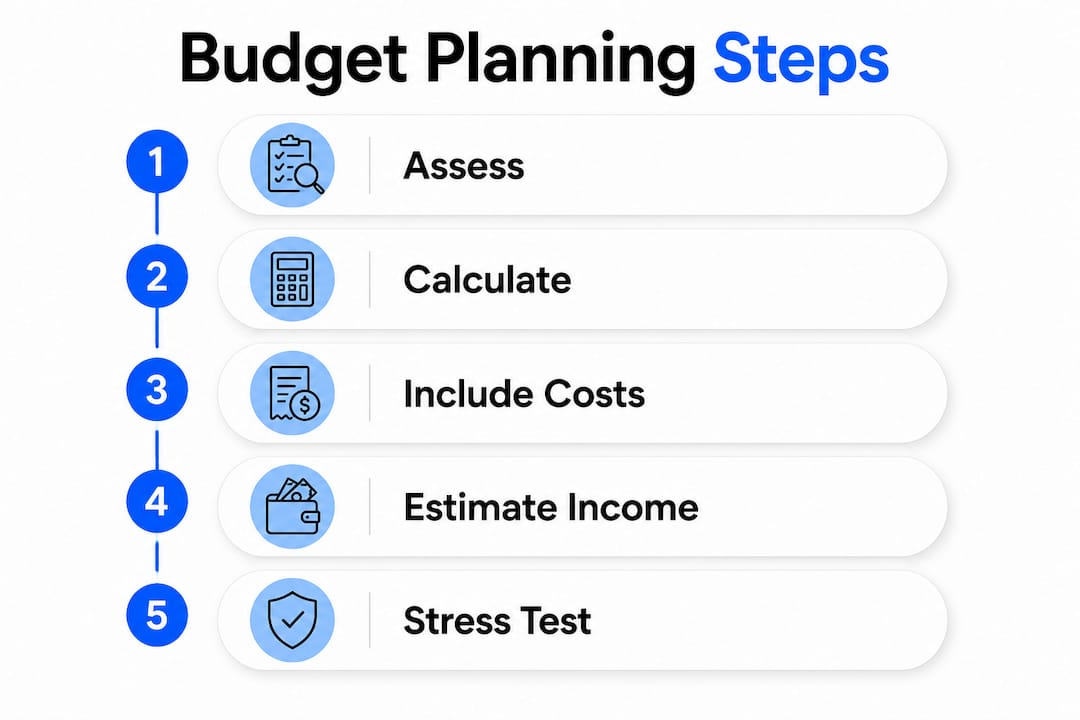
Most first-time investors underestimate total purchase costs by focusing only on the deposit. The deposit is typically 20% of the purchase price for an investment property, but the upfront costs extend well beyond that figure.
Upfront purchase costs
- Deposit: Typically 20% of the purchase price to avoid Lenders Mortgage Insurance
- Stamp duty: Varies by state. In Queensland, stamp duty on a $750,000 property is approximately $18,900
- Legal and conveyancing fees: Generally $1,500 to $3,000 depending on complexity
- Building and pest inspection: Typically $400 to $800 and non-negotiable for older properties
- Loan establishment fees: Lender application and valuation fees, often $500 to $1,500
Stamp duty, legal fees, and inspection costs are not tax deductible in the year you pay them. They do, however, add to your property’s cost base, which reduces your Capital Gains Tax liability when you eventually sell.
Ongoing annual costs
| Cost category | Typical annual range |
|---|---|
| Council rates | $1,000 to $3,500 |
| Landlord insurance | $1,200 to $2,500 |
| Property management fees | 5–10% of rental income |
| Strata fees (units/apartments) | $2,000 to $8,000+ |
| Maintenance and repairs | 1–2% of property value |
| Vacancy costs | 2–4 weeks of lost rent |
These figures come from investment property cost data for 2026 and vary with property type, location, and age. A freestanding house in a regional area will sit at the lower end of maintenance costs. An older apartment in a major city can push well past the upper range.
Pro Tip: Separate your fixed holding costs (rates, insurance, management fees) from your variable costs (maintenance, vacancy). This split gives you a much clearer picture of your minimum monthly outgoings.
Separating fixed holding costs from variable maintenance and vacancy expenses provides clearer cash flow understanding and better budget accuracy. Fixed costs are predictable and easy to plan for. Variable costs require a reserve fund.
How do you estimate rental income realistically?
Rental income is not simply the weekly rent multiplied by 52. A realistic investment property financial plan accounts for vacancy, management fees, and the way lenders shade rental income in their calculations.
Start by researching gross rental yields in your target suburb. Gross yield is annual rent divided by purchase price, expressed as a percentage. A property bought for $600,000 that rents for $500 per week generates a gross yield of approximately 4.3%. Net yield strips out all expenses and is the figure that actually matters for cash flow.
Banks only count 70–80% of gross rental income toward your assessable income in lending calculations. This rental income shading exists because lenders account for vacancy and expenses on your behalf. If your property earns $30,000 per year in rent, the bank may only credit you with $21,000 to $24,000 when calculating your borrowing capacity.
Key steps for realistic rental income estimation:
- Research local vacancy rates by suburb using publicly available rental market data
- Calculate net rental income by subtracting management fees, insurance, rates, and maintenance from gross rent
- Budget for vacancy periods of 2–4 weeks per year, even in strong rental markets
- Set aside a maintenance reserve of 5–10% of annual rental income before calculating net cash flow
- Understand gearing: Negative gearing means expenses exceed rental income, creating a tax-deductible loss. Positive gearing means rental income exceeds expenses, generating taxable profit
Investors must not rely solely on rental income to cover mortgage repayments. Vacancy periods require out-of-pocket payments, and these gaps can last longer than expected in softer rental markets. Your budget needs to absorb at least one month of zero rental income without causing financial stress.
Pro Tip: Model your cash flow at 90% occupancy, not 100%. This single adjustment reveals whether your investment is genuinely affordable or only works in perfect conditions.
What tools and strategies make budget planning work?
A spreadsheet is the starting point for any solid investment property financial plan. Your spreadsheet needs three distinct sections: upfront purchase costs, monthly cash flow, and annual holding costs. Keeping these separate prevents you from confusing one-off expenses with recurring obligations.
Stress testing your budget
Interest rate rises are the most common cause of investor cash flow problems. Build a version of your budget at the current rate, then run it again at 2% higher. If the higher-rate scenario creates a monthly shortfall you cannot cover from savings or income, the property is outside your safe budget range. This mirrors the approach APRA requires lenders to apply, and it gives you the same protection from your own side of the table.
Building a maintenance reserve
Experienced investors set aside 5–10% of rental income annually as a maintenance reserve. This reserve sits in a separate account and is not counted as available cash flow. Major repairs like hot water systems, roofing, and air conditioning units arrive without warning and can cost $5,000 to $15,000 at a time. A reserve fund prevents these events from forcing a sale at the wrong time.
Using mortgage brokers effectively
Mortgage brokers can identify lenders with more favourable assessment approaches. Borrowing limits can vary by up to $350,000 on similar financial profiles depending on which lender you use. Different lenders apply different income shading percentages and expense calculation methods. A broker who specialises in investment lending can match your profile to the lender most likely to approve your loan at the best terms.
Common budgeting pitfalls to avoid:
- Underestimating ongoing costs: Use the actual cost ranges above, not rough estimates
- Overleveraging: Borrowing at your absolute maximum leaves no buffer for rate rises or vacancy
- Ignoring property management fees: These reduce your net rental income by 5–10% before any other expense
- Forgetting insurance: Building insurance is required by most lenders, and landlord insurance protects your rental income
For a deeper look at forecasting your investment cash flow, including how to model different rate and vacancy scenarios, Wealthstacker’s forecasting guides walk through each variable in detail.
Key takeaways
A successful property investment budget requires accurate borrowing capacity assessment, full cost accounting, and a cash flow reserve that survives vacancy and rate rises.
| Point | Details |
|---|---|
| Know your borrowing ceiling | APRA’s 3% stress test buffer and a 6x debt-to-income cap define your maximum loan size. |
| Budget all upfront costs | Stamp duty, legal fees, and inspections add thousands beyond the deposit and are not immediately tax deductible. |
| Shade your rental income | Plan on receiving 70–80% of gross rent in your cash flow model, matching how lenders assess it. |
| Build a maintenance reserve | Set aside 5–10% of annual rental income before calculating net cash flow to cover unpredictable repairs. |
| Stress test at higher rates | Run your budget at 2% above the current rate to confirm the property remains affordable if rates rise. |
Wealthstacker’s tools for property investment budgeting
Building a property investment budget from scratch takes time, and the margin for error is real. Wealthstacker brings together the key tools you need in one place, including automated quarterly property valuations, borrowing capacity modelling, and personalised cash flow forecasts for both buying and rentvesting strategies.
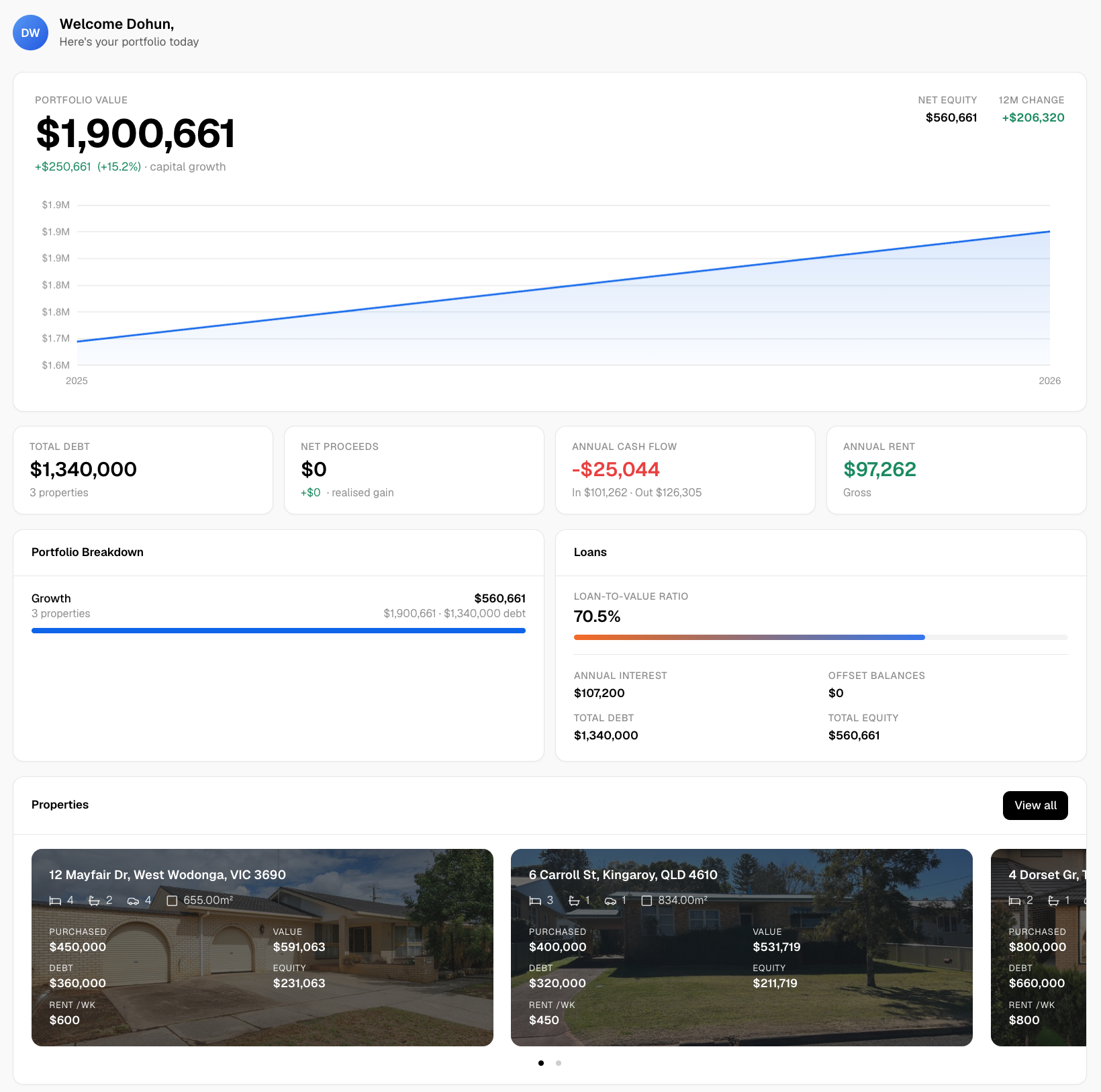
The platform’s AI-assisted modelling lets you test different rate scenarios, vacancy assumptions, and purchase prices against your actual financial profile. You can see your projected net worth over time, not just a static snapshot. For renters weighing up whether to buy or keep investing while renting, Wealthstacker’s property investment app gives you the numbers to make that call with confidence. Quarterly valuations update automatically, so your budget stays current as the market moves.
FAQ
What is a property investment budget?
A property investment budget is a financial plan that covers all purchase costs, ongoing expenses, rental income, and cash flow reserves for an investment property. It gives you a clear picture of what the investment will cost and return over time.
How does APRA’s stress test affect my borrowing capacity?
Australian lenders add approximately 3% to the actual interest rate when assessing your ability to repay, which significantly reduces the loan amount you qualify for. This buffer protects both lenders and borrowers from rate rises.
How much should I budget for ongoing property costs?
Ongoing costs typically include council rates ($1,000 to $3,500), landlord insurance ($1,200 to $2,500), property management fees (5–10% of rental income), and maintenance (1–2% of property value annually). Budget for vacancy of 2–4 weeks per year as well.
Does rental income count toward my borrowing capacity?
Lenders count only 70–80% of gross rental income toward your assessable income, a practice called rental income shading. This accounts for vacancy and expenses and directly reduces the loan size you can access.
How do I stress test my property investment budget?
Run your full budget at the current interest rate, then recalculate at 2% higher. If the higher-rate scenario creates a shortfall you cannot cover from savings or salary, the property sits outside your safe financial range.