
From 1 October 2026: LMI in Australia, pay now or wait?
Lenders mortgage insurance protects the lender, not you, and it usually applies when you borrow more than 80% of a property’s value. Housing Australia’s expanded Home Guarantee Scheme and clear MoneySmart guidance both point to the same conclusion: a smaller deposit is manageable, but it comes at a cost you should plan for before signing anything.
TL;DR:
- Borrowers with less than 20% deposit typically pay LMI, which is a one-time premium that protects the lender, not the borrower, if the property value drops.
- The LMI premium depends on loan size, the loan-to-value ratio, property type, lender policies, and borrower profile, often increasing sharply near 100% LVR.
- Paying LMI upfront costs less overall than capitalizing it into the loan, as financing the premium raises total interest paid over the life of the mortgage.
- Using government schemes like the Home Guarantee Scheme or finding a guarantor can help eliminate or reduce LMI requirements, especially once property price caps lift in 2025.
- When refinancing or repaying early, LMI refunds are not automatic and depend on lender policies; check whether your lender offers partial refunds or allows transfers before committing.
WealthstackerModel Your Property Investment PathWealthStacker helps you compare buying and rentvesting strategies with real-time net worth modelling and automated quarterly property valuations.Explore WealthStacker
Table of Contents
- What is lenders mortgage insurance and who does it protect
- How LMI is calculated and what affects its cost
- Ways to avoid or reduce LMI in Australia
- How LMI is paid, refunded and handled when you refinance
- Why the Home Guarantee Scheme matters now
- Checklist: what to ask your lender or broker about LMI
- Modelling the pay now versus wait decision
- Authoritative places to check official rules and get quotes
- Sources
- FAQ
What is lenders mortgage insurance and who does it protect
LMI is a one-off insurance premium that a lender takes out to cover its own risk of lending you money with a small deposit, according to MoneySmart’s glossary entry. It is easy to assume LMI protects you as the borrower. It does not. If you default and the property sells for less than the outstanding loan, the insurer pays the lender the shortfall, but you remain legally liable for that debt. The insurer compensates the lender, it does not cancel what you owe.

Lenders typically charge LMI once your loan value ratio, or LVR, climbs above 80%. LVR is simply the loan amount divided by the property’s value, expressed as a percentage. Borrowing significantly more than 80% of the property’s value means you are past the threshold where most lenders start requiring LMI.
How LMI is calculated and what affects its cost
The premium you pay depends on several factors working together, and no two lenders calculate it exactly the same way, according to the Insurance Council of Australia.
- Loan size: a bigger loan generally means a bigger dollar premium, even at the same LVR.
- LVR: the closer you are to 100%, the steeper the premium curve gets.
- Property value and type: unit blocks, rural properties or unusual dwellings can attract different loadings.
- Lender and insurer policy: each lender’s arrangement with its mortgage insurer produces different pricing, which is why the same borrower can get different quotes.
- Borrower profile: income stability, employment type and credit history can shift the premium at the margins.
You can usually pay LMI upfront at settlement or capitalise it into the loan, meaning the premium gets added to the principal you owe. Capitalising feels easier because you are not finding extra cash at settlement, but it increases the amount you are paying interest on for the life of the loan, a point the Insurance Council makes clearly when it warns that financing the premium raises total interest paid over time.
A worked example (illustrative only): imagine a property costs a certain amount with a deposit around 10%, putting your LVR well above 80%. If your lender quotes an LMI premium and you capitalise it, your loan principal increases by the premium amount. Over a 30 year loan at a typical variable rate, that extra $18,000 in principal can add several thousand dollars in additional interest by the time the loan is repaid, on top of the premium itself.
Ways to avoid or reduce LMI in Australia
You have real options here, and the right one depends on your timeline and how the property market is moving.
- Save a 20% deposit. This avoids LMI entirely, but it takes longer and property prices may rise while you wait, according to MoneySmart’s guidance on switching and timing home loans.
- Use the Home Guarantee Scheme. Eligible buyers can purchase with a much smaller deposit while the government guarantees the gap, avoiding LMI without needing 20% saved.
- Ask a family member to act as guarantor. A guarantor pledges equity in their own property to cover part of your deposit shortfall, but this puts their asset at risk if you default.
- Work with a mortgage broker. Brokers can compare LMI premiums across participating lenders and sometimes identify waiver arrangements for certain professions or loan structures that a single bank would not mention.
- Consider paying LMI anyway. If house prices in your target area are climbing faster than you can save, paying LMI now to buy sooner can cost less than waiting, a trade-off WealthStacker’s analysis of buying now versus waiting explores in more detail.
Pro Tip: Before ruling out LMI altogether, calculate what a delayed purchase might cost in price growth against what the premium would cost today. Sometimes the insurance is the cheaper option.
How LMI is paid, refunded and handled when you refinance
LMI is generally charged once, at or before settlement, and you choose between paying it in cash or capitalising it into the loan balance. What happens afterwards depends on your lender and insurer.
- Some lenders offer a partial refund of the premium if you repay the loan or refinance within a short period after settlement, though policies vary widely.
- If your LVR drops below 80% shortly after settlement through extra repayments or a valuation increase, that does not automatically trigger a refund. You need to check directly with your insurer.
- LMI is generally not transferable between lenders, so refinancing to a new lender usually means a fresh LMI assessment and potentially a new premium if your LVR is still above 80%.
Always ask your current lender in writing what their refund and transfer policy actually says before you sign a new loan.
Why the Home Guarantee Scheme matters now
From 1 October 2025, Housing Australia removed place limits and lifted property price caps across the Home Guarantee Scheme, a change that meaningfully expands who can buy without paying LMI at all.
- Unlimited places: previously capped annual guarantee numbers no longer restrict how many eligible buyers can access the scheme.
- Higher price caps: caps rose in every state and territory, letting buyers in more expensive markets still qualify.
- First Home Guarantee: aimed at first home buyers, letting them buy with a deposit as low as 5% while the government guarantees the rest of the gap to 20%.
- Family Home Guarantee: aimed at single parents and eligible guardians, allowing a deposit as low as 2%.
If you think you might qualify, the practical next step is to check the current price cap for your area, confirm your lender is a Participating Lender, and apply for pre-approval early since demand for guarantee places can move quickly once caps change.
Checklist: what to ask your lender or broker about LMI
Before you commit to a loan structure, get clear answers to these questions.
- What is the exact LMI premium in dollars, and which insurer underwrites it?
- Will the premium be capitalised into my loan, and can you show me the total interest impact over the full loan term?
- What are your refund or transfer rules if I refinance or make extra repayments early?
- Are you a Participating Lender under the Home Guarantee Scheme, and would I qualify for a guarantee instead of paying LMI?
Getting these answers in writing before settlement means you are comparing lenders on the same basis, not guessing.
Modelling the pay now versus wait decision
Deciding between paying LMI today and waiting to save a bigger deposit is ultimately a numbers exercise, and that is where dedicated modelling tools help more than a standard bank calculator.
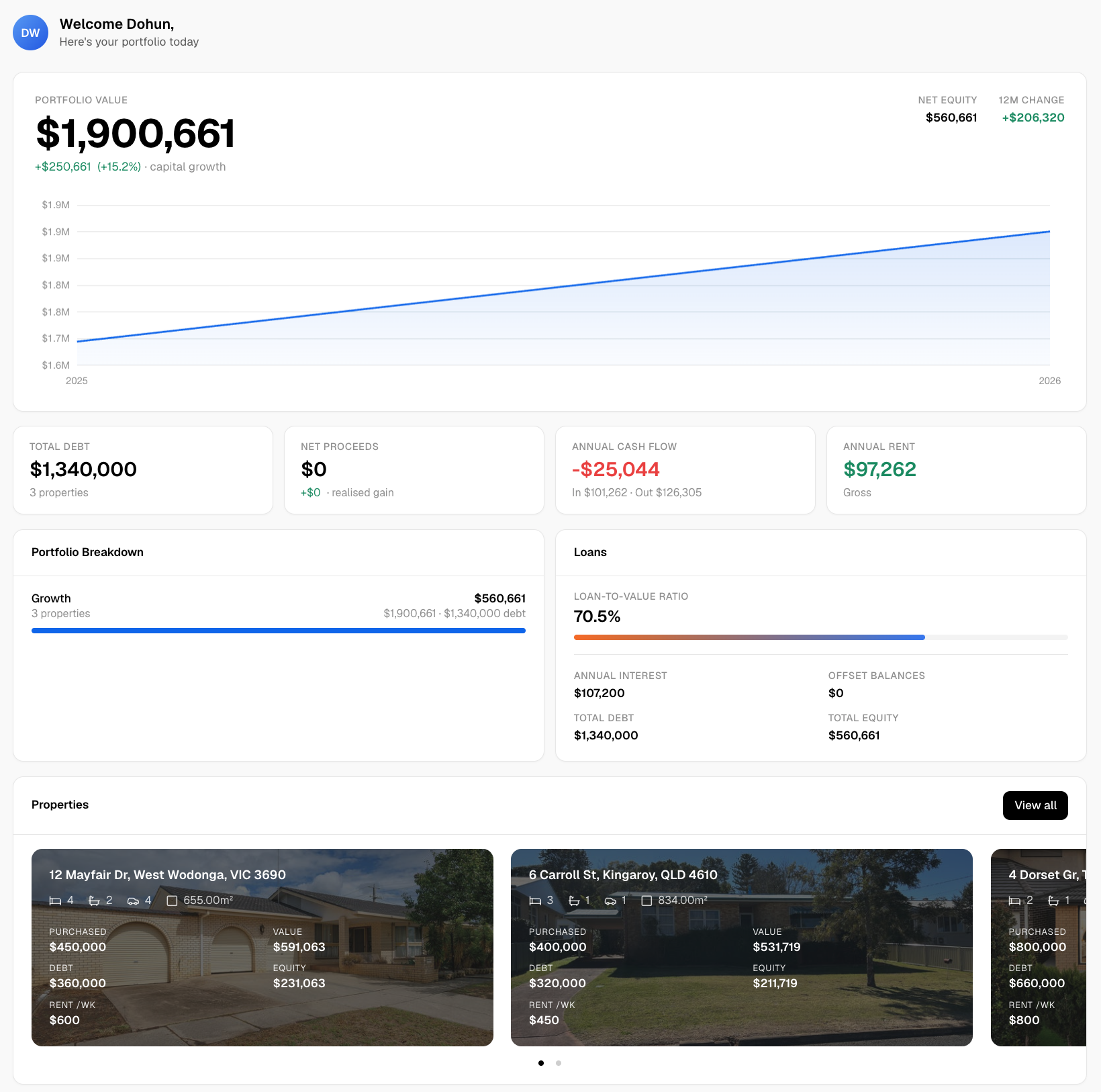
- The platform provides free quarterly property valuations so you can track how a target property’s value is moving while you save.
- Scenario modelling tools let you compare a capitalised LMI loan against a delayed, LMI-free purchase side by side over a long-term horizon.
- Borrowing power analysis shows how a smaller deposit today affects your repayments compared with waiting for a larger deposit.
If you are weighing that decision right now, you can also work through the numbers with a mortgage calculator to sanity check repayment figures before running the full scenario. Try WealthStacker to model your own pay now versus wait scenario with free quarterly valuations and see which path suits your situation.
Authoritative places to check official rules and get quotes
For eligibility and price caps, see Housing Australia. For consumer guidance, see MoneySmart. For insurer detail, see the Insurance Council of Australia.

This article is general information, not a substitute for advice from a qualified financial advisor. Consult a qualified financial professional about your own circumstances before acting on anything here.
Sources
- Unlimited places and higher property price caps for the Home Guarantee Scheme | Housing Australia
- Lenders mortgage insurance (LMI) | MoneySmart glossary
- Lenders mortgage insurance explained | Insurance Council of Australia
FAQ
How much LMI would I pay on a 10% deposit?
The exact figure depends on your lender, insurer, loan size and property value, since insurers price a 90% LVR loan differently across the market. There is no single published rate, so ask your lender for an exact quote in dollars before comparing options.
Do you need a 20% deposit to avoid LMI?
A 20% deposit is the traditional way to avoid LMI because it keeps your LVR at or below 80%, the threshold MoneySmart identifies as the usual trigger point. Eligible buyers can also avoid LMI with a smaller deposit through the Home Guarantee Scheme, which uses a government guarantee instead of insurance.
Does LMI get refunded if I pay off my loan early?
Some lenders offer a partial refund if you repay or refinance shortly after settlement, but policies differ significantly between lenders and insurers. LMI is generally not transferable to a new lender, so check your specific refund terms in writing before refinancing.
How much do I need to earn for a $700,000 mortgage?
The income needed depends on your deposit size, other debts, interest rate and the lender’s own serviceability rules, so there is no single figure that applies to everyone. A mortgage broker or a borrowing power calculator can give you a personalised estimate based on your actual financial position.