
Land contamination checks in Australia: what to do first
A land contamination check in Australia means combining a search of your state’s contaminated-sites register, a review of the relevant planning certificate, and, where red flags appear, a staged professional investigation guided by national assessment standards. The immediate step for any buyer or owner is to request the applicable state register search and planning certificate or property interest report before committing to a purchase or development. These checks sit within a national framework set by the ASC NEPM, which every state and territory implements through its own legislation and regulator.
TL;DR:
- Government registers only record known contamination sites, so a clean search does not guarantee the land is free of risks.
- A majority of contaminated land assessments start with low-cost public records and site walkovers before escalating to professional testing.
- Costs for preliminary investigations typically range from $44 for WA Form 2 reports to higher fees for detailed sampling; timelines can extend beyond two weeks.
- Visible signs like staining, odours, or disused tanks, along with historical research, can serve as quick red flags that warrant expert assessment.
- Confirmed contamination requires tailored remediation plans and validation reports to secure regulatory approval and clear property title notices.
WealthstackerCompare Property Strategies With ConfidenceWealthStacker helps you assess real estate decisions with automated valuations, AI tools, and personalised modelling for buying or rentvesting.Visit WealthStacker
Table of Contents
- Quick checklist: government database and planning-certificate checks to run first
- When to commission a professional site assessment and which specialists to engage
- How assessments typically proceed: PSI, DSI, remedial action plan, validation and monitoring
- What to ask consultants, indicative costs and realistic timelines
- Practical site red flags and low-cost DIY checks you can do safely
- Regulatory framework and disclosure duties across states: what this means for buyers and sellers
- If contamination is confirmed: remediation, management and communicating outcomes
- How WealthStacker fits alongside a contamination check
- FAQ
- Sources
- Authoritative regulator pages and state databases to follow up
Quick checklist: government database and planning-certificate checks to run first
Before you spend money on consultants, work through the public records available in your state. Coverage and process differ from jurisdiction to jurisdiction, so it pays to know which document does what.
- Western Australia: search the online contaminated sites database for classified sites, then request a Basic Summary of Records (Form 2) for full reported-site details.
- New South Wales: order a planning certificate and check the EPA’s Record of notices, searchable by local government area.
- Victoria: start with the Unearthed interactive map, which flags potential contamination sources as a starting point rather than a final answer.
- Queensland: use the department’s online property-search tools, noting that older or complex records sometimes need a phone or form request.
In WA, a Form 2 request typically takes 10 to 15 working days and costs $44, while the online database gives an immediate but partial picture of classified sites only. A planning certificate in NSW can arrive faster, though the EPA’s own review found the contaminated-land information on these certificates varies in clarity between councils.
A “nil” result is not a clearance. Government registers only record sites that have been reported, investigated or formally classified, so a property with an undisclosed history of industrial use, landfill or chemical storage can return a clean search and still carry real risk. That is why experienced buyers pair the register search with a look at historical land use before deciding whether further testing is warranted.

When to commission a professional site assessment and which specialists to engage
Public records answer the “has this been flagged before” question. They cannot tell you whether a quiet residential block was once a service station or market garden. That gap is where a professional assessment earns its cost.
- Check the proposed use. A shift to residential, childcare or other sensitive use raises the bar considerably compared with continued industrial or commercial use.
- Look at the site’s history. Former workshops, dry cleaners, fuel depots, orchards or landfill operations are common triggers for a closer look.
- Note visible or circumstantial indicators. Staining, odours, imported fill, or a neighbouring listed site all justify investigation even without a formal notice.
- Check planning and council requirements. Some rezonings and development applications require a statutory audit before approval will be granted.
Once a trigger is identified, the right specialist depends on what is needed. A contaminated-land consultant typically carries out the fieldwork, sampling and reporting. An accredited site auditor, where the jurisdiction’s guidance requires one, independently reviews that work and issues a statutory audit statement that councils, lenders and buyers can rely on. Laboratories handle the analytical testing behind both roles. Engage these specialists early in a project, particularly where a council or planning instrument is likely to demand an audit before issuing consent.
How assessments typically proceed: PSI, DSI, remedial action plan, validation and monitoring
Once a consultant is engaged, the work generally follows a recognised sequence drawn from NEPM schedules and state guidance.
- Preliminary site investigation (PSI): desktop review of historical land use, aerial photographs, council files and a site walkover, used to build a conceptual site model and decide whether sampling is warranted.
- Detailed site investigation (DSI): targeted soil, groundwater or soil-vapour sampling where the PSI identifies potential contamination, compared against relevant investigation levels.
- Remedial action plan (RAP): sets out how contamination will be managed or removed, covering the method, extent and acceptance criteria for the intended land use.
- Validation and monitoring: confirms remediation has met the stated criteria, often through further sampling and ongoing groundwater or vapour monitoring.
Where the proposed use is sensitive or a planning instrument requires it, a statutory environmental audit and site audit statement provide councils and lenders with independent confirmation that the land is suitable for its intended use. Validation reports need to show proper sampling quality control, since regulators will not accept remediation claims without that documentation.
Pro Tip: Ask your consultant for a copy of the conceptual site model early. It shows you, in plain terms, what they think happened on the site and why, before any sampling begins.
What to ask consultants, indicative costs and realistic timelines
A short conversation before engagement can save weeks later. Ask prospective consultants:
- What experience do they have applying NEPM and your state’s specific guidance?
- Can they share a disidentified sample report so you can judge its depth and clarity?
- Which laboratory do they use, and what quality assurance and quality control processes apply to results?
- What professional indemnity insurance and referable project history can they provide?
Costs vary widely depending on site size, history and the number of contaminants suspected, so treat any quote as indicative until the scope is confirmed. A PSI is generally the cheaper, faster stage since it relies on desktop research and a walkover, while a DSI adds laboratory costs that scale with the number of samples and analytes tested. Remediation costs depend heavily on the contaminant type and extent, from straightforward capping through to full excavation and disposal.
Timelines matter as much as cost. A WA Form 2 search alone takes 10 to 15 working days, and a full DSI with laboratory turnaround can extend well beyond that. Discovering contamination late in a transaction is one of the most common causes of delayed settlements and stalled development approvals.
Practical site red flags and low-cost DIY checks you can do safely
Before paying for testing, a careful walkover and some desktop research often tell you whether further investigation is worth pursuing.
- Look for staining or discolouration on soil, concrete or nearby drainage, particularly around sheds, garages or old machinery areas.
- Note any chemical or fuel odours, especially near former workshops, tanks or fill areas.
- Check for underground or disused tanks, filled wells, or visible demolition rubble mixed into garden beds.
- Pull historical aerial photographs and council records to see what the site and its neighbours were used for previously.
- Ask neighbours or long-term locals about past uses, especially industrial, agricultural or waste-related activities.
Pro Tip: Never dig into, disturb or handle material you suspect is contaminated. If something looks or smells wrong, stop and call a qualified consultant rather than investigating it yourself.
Regulatory framework and disclosure duties across states: what this means for buyers and sellers
The ASC NEPM sets the national methodology for assessing site contamination, but each state and territory gives it legal effect through its own legislation, registers and disclosure rules. That means the documents you need, and the obligations attached to them, change depending on where the property sits.
- Western Australia: the Contaminated Sites Act requires sellers to provide a Form 6 disclosure to purchasers, and failing to disclose known contamination can attract significant penalties.
- New South Wales: planning certificates should record relevant notices, and the EPA’s Record of notices lets buyers check for formal orders against a site.
- Victoria: the Unearthed map and EPA Victoria guidance help identify potential contamination sources, though formal notices and audits sit with the regulator rather than the map itself.
Where contamination has been formally identified, a memorial recording that fact is often placed on the property’s title, which lenders and future buyers will see during their own due diligence. Getting ahead of these requirements, rather than discovering them during a conveyance, keeps settlements and approvals on schedule.
If contamination is confirmed: remediation, management and communicating outcomes
A confirmed finding is not the end of the process, it is the start of a managed pathway. Common remediation options include excavating and disposing of contaminated soil, capping it in place, or using in-situ treatments to break down contaminants.
- Where full removal is not practical, a managed-use or restricted-use approval can allow the site to proceed under specific conditions.
- Validation sampling and ongoing monitoring confirm the chosen remediation actually meets the agreed criteria for the intended use.
- Results typically feed into a site audit statement, validation report or title memorial, which becomes the document councils, lenders and future buyers rely on.
Presenting this evidence clearly, rather than just asserting the work is done, is what gives planners and financiers confidence to proceed.
How WealthStacker fits alongside a contamination check
A clean contamination result does not tell you whether a property is a sound investment, and a hazard flag does not tell you what it is worth. We built WealthStacker’s hazard overlays and free automated quarterly valuations to sit alongside that environmental due diligence, not replace it.
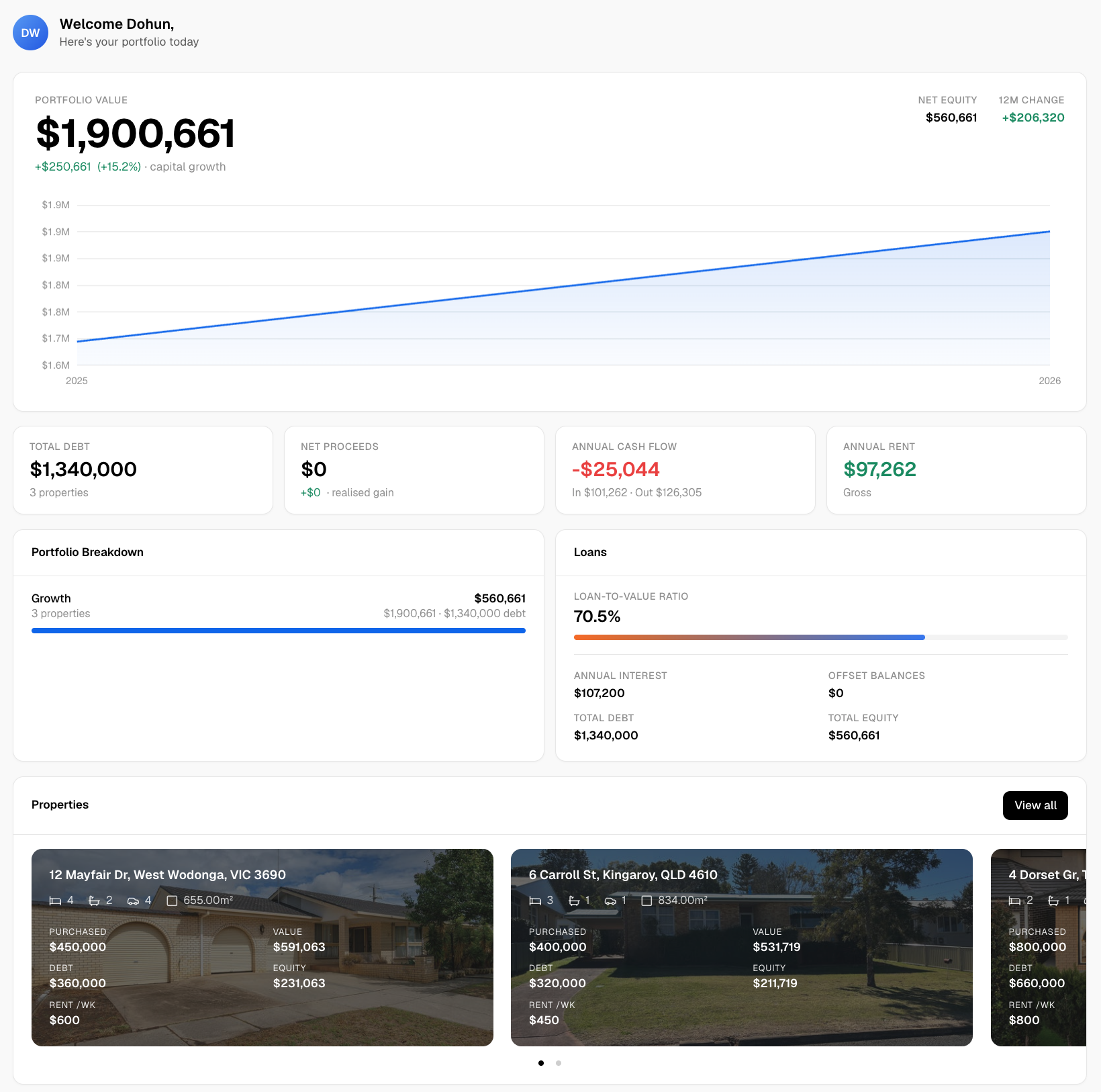
- Hazard and risk overlays help you see flood, bushfire and other site-level risk factors next to a property’s numbers.
- Automated quarterly valuations keep your view of a property’s worth current without manual spreadsheet work.
- Scenario modelling lets you compare rentvesting against buying once you know a site’s environmental standing.
| What you need | Where it comes from |
|---|---|
| Contamination status | State register search, planning certificate, consultant report |
| Risk-adjusted value | WealthStacker hazard overlays and valuations |
| Strategy comparison | WealthStacker scenario modelling for rentvesting versus buying |
For a related hazard check, our guide on bushfire risk checks covers similar due diligence for fire-prone areas, and our piece on climate risk across Australian homes explains how we fold broader hazard data into property decisions. Once your environmental checks are in hand, sign up to WealthStacker to see how the numbers stack up against your goals.
FAQ
What does a land contamination check actually involve?
A land contamination check combines a search of the relevant state contaminated-sites register, a review of the planning certificate or property interest report, and, where risk indicators appear, a staged professional assessment following ASC NEPM guidance. Most buyers start with the free or low-cost government searches before deciding whether a consultant is needed.
Does a “nil” contaminated land search mean the property is safe?
No. A nil result only means the site has not been formally reported or classified, since registers do not capture every historically contaminating activity. Many practitioners still review historical land use or commission a preliminary site investigation when a property’s past use raises questions, even after a clean search.
How long does a contaminated land search take in Western Australia?
A Form 2 Basic Summary of Records in WA generally takes 10 to 15 working days and costs $44, while the online contaminated sites database gives an immediate but more limited result covering classified sites only. Buyers on tight settlement timeframes should request the Form 2 as early as possible.
Who carries out a detailed site investigation and statutory audit?
A contaminated-land consultant typically carries out the sampling, laboratory testing and reporting involved in a preliminary or detailed site investigation. Where a jurisdiction or planning instrument requires independent sign-off, an accredited site auditor reviews that work and issues a statutory audit statement for councils and lenders.
Can WealthStacker tell me if a property is contaminated?
No, our platform does not test land or replace a formal environmental assessment. WealthStacker’s hazard overlays and automated valuations are designed to sit alongside your contamination checks, helping you weigh risk-adjusted value once the environmental status of a property is known.
Sources
Authoritative regulator pages and state databases to follow up
For primary sources rather than summaries, go directly to the regulators. Start with the ASC NEPM for national guidance, then check your state’s own register and planning-certificate process, including NSW’s Record of notices, WA’s contaminated sites fact sheets, and Victoria’s Unearthed map. For pre-purchase checks beyond contamination, Niche Advisory’s property inspection services and High Demand Electrical’s pre-purchase electrical inspections cover complementary due diligence areas.