
Insurance in property investment planning: 2026 guide
Insurance is the single most underestimated pillar in property investment planning, yet it determines whether your portfolio survives a crisis or collapses under one. The role of insurance in property investment planning extends far beyond ticking a compliance box. It protects your rental income, supports your borrowing power, and keeps your cash flow intact when tenants vacate, disasters strike, or liability claims land on your doorstep. For Australian families and individual investors building long-term wealth through real estate, integrating insurance early and deliberately is not optional. It is the foundation that holds everything else together.
What is the role of insurance in property investment planning?
Insurance in property investment is defined as a structured risk transfer mechanism that protects investors from financial losses caused by property damage, liability claims, rental income interruption, and personal income disruption. The importance of insurance for investors goes well beyond replacing a damaged roof. It stabilises cash flow, satisfies lender requirements, and converts unpredictable catastrophic events into known, manageable costs.
Financial advisors recommend treating insurance as a strategic asset in portfolios rather than a passive expense. That shift in thinking changes how you budget, which markets you select, and how resilient your portfolio becomes over time. A resilient investment plan combines emergency liquidity, appropriate insurance coverage that converts catastrophic events into known costs, and diversified investments for growth. Without insurance woven into your planning from the start, a single bad year can undo a decade of equity building.

What types of insurance do property investors actually need?
The three core insurance products for property investors are landlord insurance, building insurance, and income protection insurance. Each covers a different layer of risk, and confusing them or skipping one creates dangerous gaps.
Landlord insurance is the most investor-specific product. It covers property damage caused by tenants, loss of rental income when a property becomes uninhabitable, and public liability if a tenant or visitor is injured on your property. Standard home insurance does not cover these scenarios because it is designed for owner-occupiers, not investment use.
Building insurance protects the physical structure of your property against perils such as fire, storm, flood, and malicious damage. Lenders require this as a condition of your mortgage. The critical detail here is that you must insure for full replacement cost, not purchase price or loan value. Insuring for purchase price rather than replacement cost risks coinsurance penalties, which increase your out-of-pocket expenses significantly during a claim.
Income protection insurance sits outside the property itself but is directly relevant to investors. If illness or injury stops you from working, income protection replaces a portion of your earnings. Without it, you may be forced to sell investment properties to cover personal living costs during a recovery period.
Key coverage features to confirm with your insurer:
- Liability limits: Aim for at least $10 million in public liability cover. Undervaluing this limit exposes you to lawsuits that can exceed the property’s value.
- Vacancy endorsements: Standard policies may restrict or void coverage if a property sits empty for 30–60 days without a specific vacancy endorsement.
- Loss of rent cover: Confirm the waiting period and maximum claim duration before signing.
- Contents cover: If your rental is furnished, confirm contents are listed separately under the policy.
Pro Tip: Always read the vacancy clause before settlement. If you are buying a property that needs renovation before tenanting, you need a vacancy endorsement in place from day one.
How do insurance costs affect investment returns and loan approval?
Insurance premiums are a direct line item in your investment property’s operating costs, and they affect your returns more than most investors realise. Investment property premiums cost 15–25% more than owner-occupied homeowner policies due to higher claim frequencies. That gap matters when you are modelling cash flow before making an offer.
Budget approximately 1–1.5% of property value annually for insurance in low-risk markets, and up to 3% in high-risk regions. Insurance costs rose by 20–40% in many regions during 2026, with some areas experiencing doubled or tripled premiums. That is not a rounding error. It is a deal-breaker if you have not accounted for it.
| Market Risk Level | Annual Insurance Budget | Impact on Cash Flow |
|---|---|---|
| Low risk (most metro areas) | 1–1.5% of property value | Manageable with standard rental yield |
| Medium risk (coastal, bushfire-adjacent) | 1.5–2% of property value | Requires higher rent or lower purchase price |
| High risk (flood zones, cyclone areas) | 2–3% of property value | Can make deal unviable without rent premium |
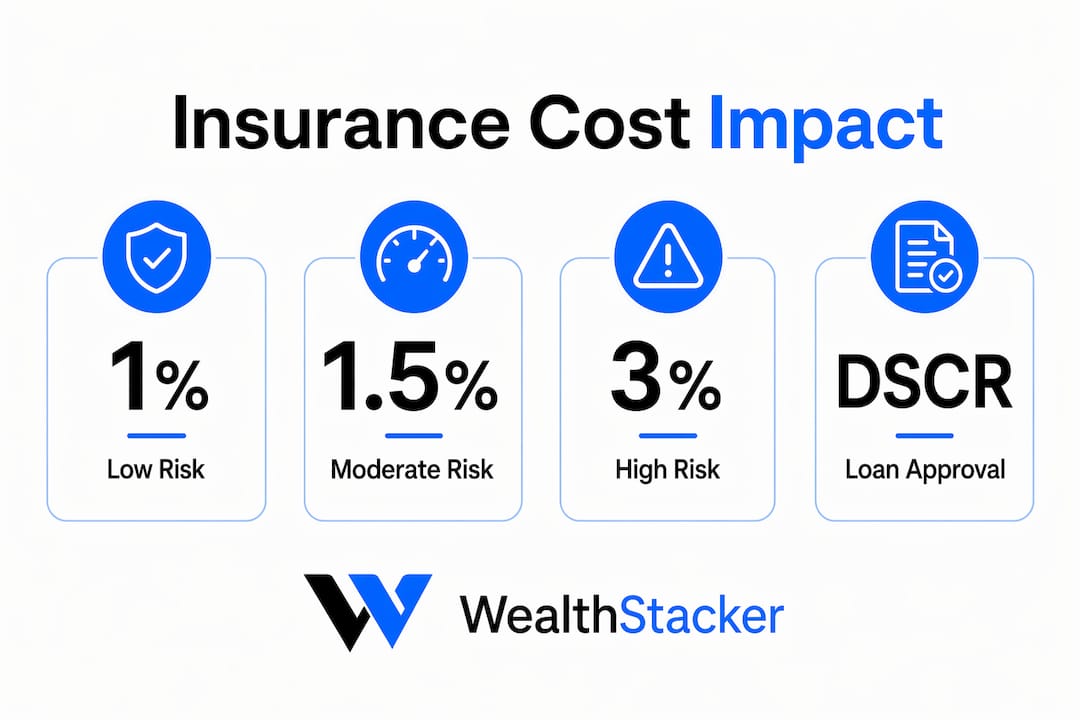
Insurance premiums are incorporated into the PITIA calculation (principal, interest, taxes, insurance, and association fees) that lenders use to assess your Debt Service Coverage Ratio (DSCR). Rising premiums reduce DSCR, potentially disqualifying loans or reducing the amount you can borrow. A property that looks profitable on a spreadsheet can fail loan approval once actual insurance costs are factored in.
Pro Tip: Get a real insurance quote before you make an offer, not after. Use the actual figure in your DSCR calculation. Estimated figures routinely understate the true cost by 30% or more in high-risk postcodes.
What mistakes do investors make with property insurance?
Coverage gaps are the most expensive mistakes in property investment risk management, and most of them are avoidable. The following errors appear repeatedly across investor portfolios.
- Insuring for the wrong value. Insuring a property for its purchase price or outstanding loan balance instead of full replacement cost is one of the most common and costly errors. Replacement cost valuation is necessary to set adequate dwelling coverage. Coinsurance penalties apply when you are underinsured, meaning the insurer only pays a proportional share of your claim.
- Ignoring vacancy clauses. Vacancy clauses in standard policies may limit coverage after 30–60 days of unoccupied property without a vacancy endorsement. Investors renovating between tenants or managing a slow leasing period are particularly exposed. Failing to secure a vacancy endorsement leaves you personally liable for any damage that occurs during that window.
- Underestimating liability exposure. A $5 million liability limit sounds substantial until a serious injury claim arrives. Legal costs alone can exhaust lower limits before a settlement is reached.
- Treating insurance as a set-and-forget expense. Policies need reviewing annually, especially after renovations, rent increases, or market movements that affect replacement costs.
- Excluding insurance from estate planning. If a key investor in a family portfolio passes away or becomes incapacitated, the absence of coordinated insurance can force the sale of assets at the worst possible time.
Pro Tip: Schedule an annual insurance review alongside your tax return. Your accountant and insurance broker should both be in the room, or at least in the same conversation.
How can you strategically integrate insurance into your investment plan?
Treating insurance as a strategic financial tool rather than a cost centre changes how you build and protect a property portfolio. Successful investors integrate risk considerations early in capital planning stages to gain underwriting advantages and improved financing terms. Here is a practical framework for doing that.
- Budget insurance before you select a market. Research typical premiums for your target region before you shortlist properties. High-risk postcodes can add tens of thousands of dollars annually to your operating costs.
- Use replacement cost valuations from day one. Commission a professional valuation at purchase and update it after any significant renovation or market movement.
- Add a vacancy endorsement to every policy. This applies whether you are buying a tenanted property or not. Tenant transitions happen, and renovation periods are common.
- Incorporate insurance into your DSCR modelling. Use actual quotes, not estimates. Run the numbers with a 20% premium buffer to stress-test the deal.
- Explore permanent life insurance as a liquidity buffer. Permanent life insurance policies can provide accessible capital through policy loans, helping investors avoid forced sales during downturns. This is particularly relevant for families with concentrated property portfolios.
- Coordinate insurance with your estate plan. Ensure your will, power of attorney, and insurance beneficiary nominations are aligned. A mismatch can freeze assets at the worst possible time.
“A resilient investment plan converts catastrophic events into known costs. Insurance is the mechanism that makes that conversion possible.”
Investors who document risk accurately and integrate risk management early benefit from better underwriting terms and lower premiums over time. Risk-mature portfolios are viewed more favourably by both insurers and lenders, which improves your investment economics at every stage of growth.
Key takeaways
Insurance is the structural foundation of sound property investment planning, and investors who treat it as a strategic asset consistently outperform those who treat it as a cost.
| Point | Details |
|---|---|
| Insurance type selection | Landlord, building, and income protection insurance each cover a distinct layer of investor risk. |
| Budget for actual costs | Allocate 1–3% of property value annually depending on market risk level, using real quotes not estimates. |
| Avoid coverage gaps | Secure vacancy endorsements and insure for replacement cost, not purchase price, to prevent coinsurance penalties. |
| DSCR impact is real | Rising premiums reduce your debt service coverage ratio and can disqualify loan applications if not modelled correctly. |
| Integrate early and review annually | Build insurance into your acquisition analysis and review policies every year alongside your financial plan. |
Why i think most investors get insurance backwards
Most property investors I have spoken with treat insurance as the last line item they fill in before settlement. They grab a quote, tick the box, and move on. That approach costs them in ways they never trace back to the original decision.
The investors who build genuinely resilient portfolios do the opposite. They research insurance costs before they select a market. They model premium increases into their five-year cash flow projections. They know their vacancy clause conditions by heart. That level of attention is not paranoia. It is the difference between a portfolio that weathers a downturn and one that forces a fire sale.
The part that surprises most people is how much insurance affects financing. I have seen deals that looked excellent on paper fall apart at loan approval because the actual insurance quote was double the estimate used in the DSCR calculation. That is not bad luck. That is a planning failure that a real quote would have caught in week one.
The other thing worth saying plainly: integrating permanent life insurance into a property investment strategy is not something most families consider until it is too late. Using policy loans as a liquidity buffer during a market downturn is a genuinely underused tool. It keeps you from selling a property at the bottom of the cycle just to cover a short-term cash shortfall.
Insurance does not just protect what you have built. Used well, it gives you the staying power to keep building when conditions get difficult.
— Dohun
Plan smarter with Wealthstacker
Understanding how insurance fits into your property investment plan is one thing. Modelling its real impact on your cash flow, borrowing power, and net worth is another.
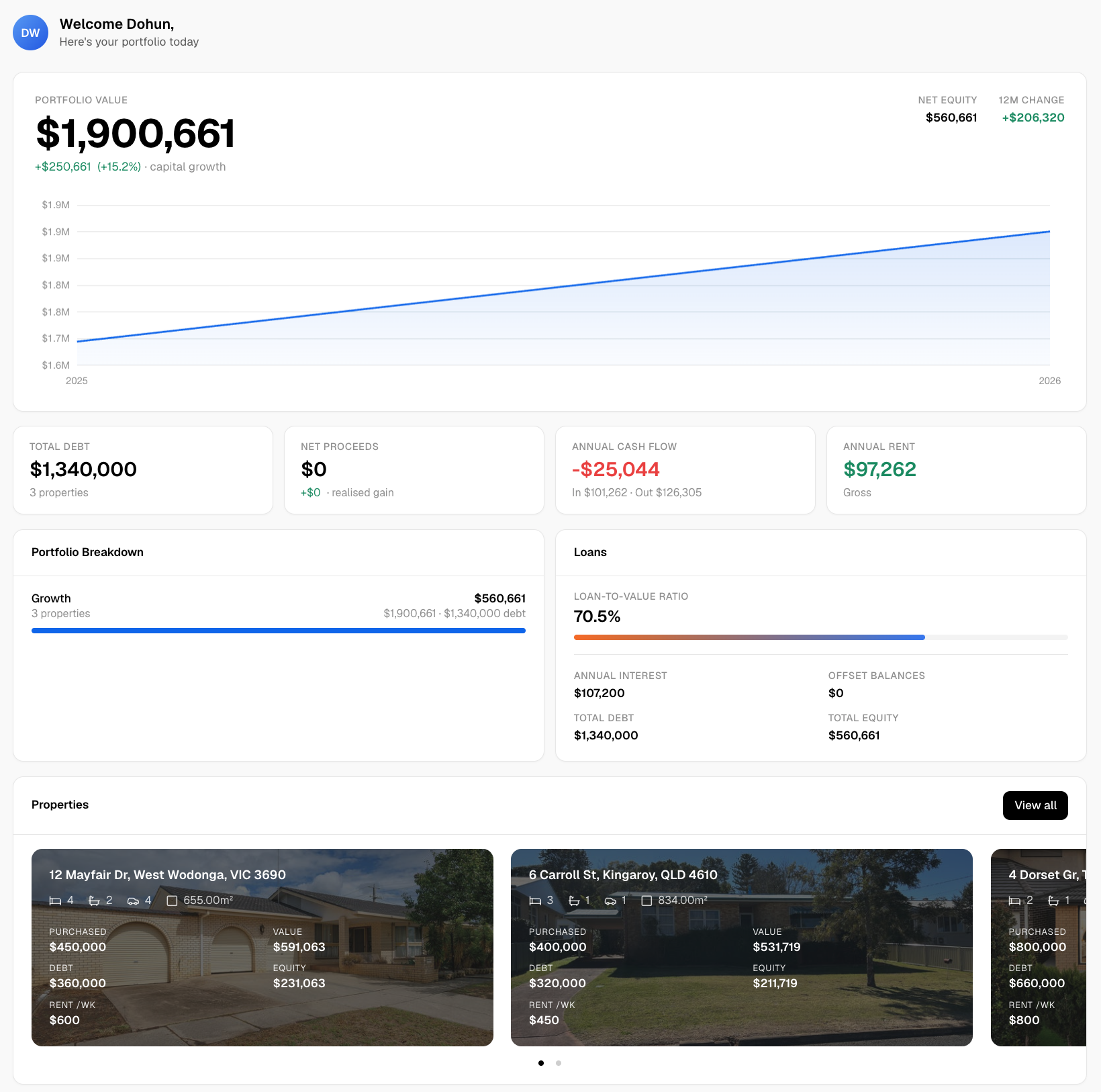
Wealthstacker is built for exactly this kind of analysis. The property investment platform lets you track your properties, model insurance costs as a live variable in your DSCR calculations, and see how different premium scenarios affect your long-term wealth trajectory. Whether you are evaluating your first investment property or managing a growing portfolio, Wealthstacker gives you the numbers you need before you commit. Explore the platform and start modelling your investment plan with insurance built in from the start.
FAQ
What does landlord insurance cover that standard home insurance does not?
Landlord insurance covers tenant-caused damage, loss of rental income when a property is uninhabitable, and public liability specific to investment use. Standard home insurance is designed for owner-occupiers and excludes these scenarios entirely.
How do insurance premiums affect DSCR loan approval?
Insurance premiums are included in the PITIA calculation that lenders use to assess DSCR. Higher premiums reduce your debt service coverage ratio, which can reduce your borrowing capacity or disqualify a loan application altogether.
What is a vacancy endorsement and when do i need one?
A vacancy endorsement is an addition to your insurance policy that maintains coverage when a property is unoccupied for more than 30–60 days. You need one during tenant transitions, renovation periods, or any time the property sits empty.
Why should i insure for replacement cost rather than purchase price?
Insuring for purchase price instead of full replacement cost triggers coinsurance penalties if you make a claim. Lenders also require dwelling coverage equal to full replacement cost as a standard mortgage condition.
How much should i budget for investment property insurance annually?
Budget 1–1.5% of property value annually in low-risk markets and up to 3% in high-risk regions such as flood zones or cyclone-prone areas. Always use actual quotes in your financial modelling rather than estimates.