
How to scale a rental property portfolio step by step
TL;DR:
- Scaling a rental property portfolio involves using specific financing strategies such as conventional loans initially and DSCR loans for larger portfolios. Operational systems and capital recycling through cash-out refinance are essential to sustain growth and avoid bottlenecks. Building these systems early and managing risk through diversification help investors grow confidently and efficiently.
Scaling a rental property portfolio step by step is the process of systematically growing from one or two properties to a structured, income-producing portfolio using repeatable financing, operational, and capital management methods. The investors who do this well treat their portfolio as a business from the very first property. They apply specific loan structures like DSCR loans and the BRRRR method (Buy, Rehab, Rent, Refinance, Repeat), build operational systems before they need them, and recycle capital rather than waiting for savings to accumulate. Wealthstacker’s modelling tools show that the gap between owning two properties and owning ten is almost never about finding deals. It is about having the right systems and financing in place to act when opportunities appear.
What financing strategies enable scaling rental property portfolios effectively?
Financing is the engine of portfolio growth, and the strategy that works for your first property will not work for your fifth. Understanding when to switch loan types is the single most important decision you will make as you grow.
Conventional loans for your first four properties
Conventional loans suit properties one through four. Lenders assess your personal income, credit score, and debt-to-income (DTI) ratio. This works well early on, but DTI limits tighten as you add more mortgages. Most investors hit a wall around property four or five when their personal income can no longer support additional debt servicing on paper, even when the properties themselves are cash-flow positive.
DSCR loans from property five onwards
DSCR loans allow investors to scale past ten properties by qualifying based on property income rather than personal income, removing DTI limits entirely. The Debt Service Coverage Ratio (DSCR) measures whether a property’s rental income covers its mortgage payments. As of 2026, lenders require a DSCR of 1.0 to 1.25 for approval, with no property count limits. A DSCR of 1.0 means rent exactly covers the mortgage. A DSCR of 1.25 means rent covers the mortgage with 25% to spare. That buffer is what lenders want to see before they approve.
- Calculate the property’s gross annual rent.
- Divide that figure by the annual mortgage payment (principal, interest, taxes, and insurance).
- If the result is 1.25 or above, most DSCR lenders will approve the loan.
- Keep six months of reserves per property to meet most lender requirements.
- Work with a mortgage broker who specialises in investor lending, not owner-occupier products.
Cash-out refinance as a capital recycling tool
Cash-out refinance at 75% loan-to-value (LTV) is the most reliable way to unlock equity from appreciation without selling. Every $100,000 in property appreciation can release $75,000 in deployable capital. That capital funds the deposit on the next acquisition, which is the core mechanic behind the BRRRR method. The key discipline is reinvesting that capital immediately rather than spending it.
Pro Tip: Reinvest 100% of cash flow into reserves and deposits until you reach around ten units. Treating the portfolio as a business from the first property avoids the capital bottlenecks that stop most investors at three or four properties.
How to implement operational systems as your portfolio grows
The bottleneck shifts as your portfolio expands. Early on, the challenge is finding deals. By the mid-stage, it is accessing capital. At the late stage, the primary constraint becomes operational discipline. Investors who do not build systems before they need them end up managing chaos instead of managing properties.

When to outsource property management
Professional property management becomes cost-effective beyond five properties, saving time and reducing vacancy rates despite fees of 8–10% of gross rent. Self-management beyond five properties carries hidden time costs that most investors underestimate. A property manager handles tenant screening, maintenance coordination, rent collection, and lease renewals. That frees you to focus on acquisitions and financing, which is where your time creates the most value.
Key operational systems to build before you need them:
- Dedicated business bank account. Keep investment income and expenses completely separate from personal finances. This is non-negotiable for tax purposes and for understanding true cash flow.
- Bookkeeping software. Use accounting software to track income, expenses, and depreciation across every property from day one.
- Standardised tenant screening. Set fixed criteria for credit scores, income-to-rent ratios, and rental history. Apply them without exception to reduce vacancy and arrears.
- Maintenance request workflow. Use a single channel (email, app, or portal) for all maintenance requests. Log every request and resolution for insurance and legal records.
- Lease template library. Standardise your lease agreements so that every tenancy starts on the same legal footing.
Pro Tip: Build your operational systems at property three, not property seven. Scaling bottlenecks that hit at capacity are far harder to fix than ones you prevent in advance.
What are the practical phases to grow from 1 to 10+ rental properties?
Growing a rental portfolio follows a predictable arc. Each phase has different goals, financing tools, and operational requirements.
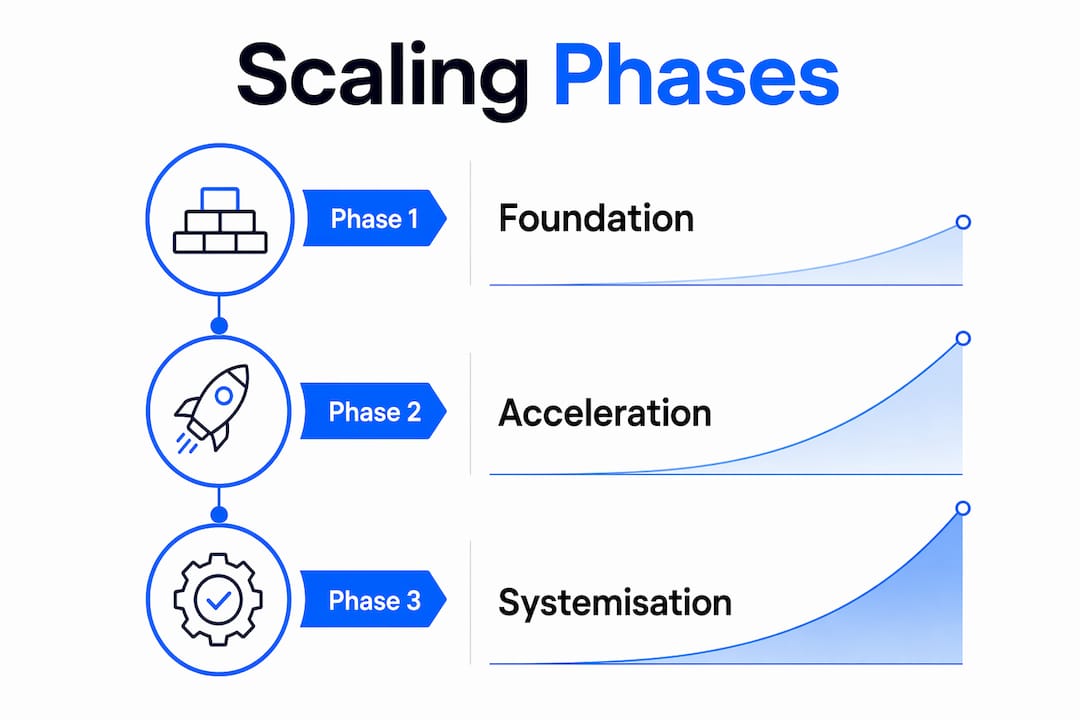
Phase 1: Properties 1–3 (foundation)
This phase is about learning. You are testing your ability to find, finance, and manage properties while building your credit profile and cash reserves. Use conventional loans. Self-manage if you can to understand the operational reality. Reinvest all cash flow. The goal is not profit yet. The goal is building the knowledge and systems that will carry you through the next phase.
Phase 2: Properties 4–6 (acceleration)
This is where most investors stall. DTI limits on conventional loans tighten, and personal income can no longer support new mortgages on paper. The solution is transitioning to DSCR loans and using cash-out refinance to recycle equity from your first properties into new deposits. Outsource property management at this stage. Your time is better spent on deal analysis and lender relationships than on maintenance calls.
Phase 3: Properties 7–10+ (systematisation)
| Phase | Properties | Primary focus | Financing tool |
|---|---|---|---|
| Foundation | 1–3 | Learning and cash reserves | Conventional loans |
| Acceleration | 4–6 | Capital recycling and leverage | DSCR loans, cash-out refinance |
| Systematisation | 7–10+ | Delegation and diversification | DSCR loans, portfolio loans |
At this phase, the portfolio runs on systems, not on your personal effort. Diversification becomes a priority. Experienced investors often buy multi-unit portfolios of ten or more units rather than individual properties to reduce vacancy volatility and accelerate financial independence. Multi-unit acquisitions spread income across multiple tenancies, so a single vacancy does not threaten your cash flow.
Company structure and tax considerations
Incorporating early avoids costly taxes and fees later, but it usually requires meeting criteria like managing five or more properties actively for reliefs such as Section 162. Delaying incorporation until after acquiring multiple properties can incur substantial one-off costs including taxes and refinancing fees. Transfer costs can range from £15,000 to £30,000 per property in some jurisdictions. Speak to a property tax specialist before you buy your third property, not after you have bought your seventh.
How to manage risks and optimise portfolio resilience during scaling
A growing portfolio carries growing risk. The investors who build lasting wealth are the ones who manage downside as carefully as they chase upside.
- Diversify by property type. Single-family properties are valued on market comparables. Multifamily assets are valued on Net Operating Income (NOI), which links directly to rent, vacancy, and operating costs. Increasing rents or cutting costs increases asset value in multifamily buildings. That gives you direct control over valuation.
- Review DSCR, equity, and cash flow quarterly. A property that met DSCR requirements at purchase may fall below 1.0 if rents drop or costs rise. Catch problems early before they affect your ability to refinance.
- Maintain vacancy buffers. Budget for at least one month of vacancy per property per year. Properties that only cash-flow when fully occupied are a liability, not an asset.
- Retain a good tenant. Tenant turnover is one of the most expensive events in property management. Offer lease renewals early, respond to maintenance requests promptly, and keep rent increases reasonable to retain reliable tenants.
- Seek professional advice on portfolio diversification strategies. Tax, finance, and legal structures all interact as your portfolio grows. A specialist in property investment is not a cost. It is risk management.
The investors who scale successfully do not take more risk as they grow. They build better systems for managing the risk they already carry.
Understanding your borrowing capacity at each phase of growth is equally critical. Lenders assess risk differently at five properties than at two. Knowing your position before you make an offer gives you a real negotiating advantage.
Wealthstacker: your portfolio growth toolkit
Scaling a rental portfolio requires clear, current data at every decision point. Wealthstacker is a property investment app and portfolio tracker built for investors who want to see their full financial picture in one place.
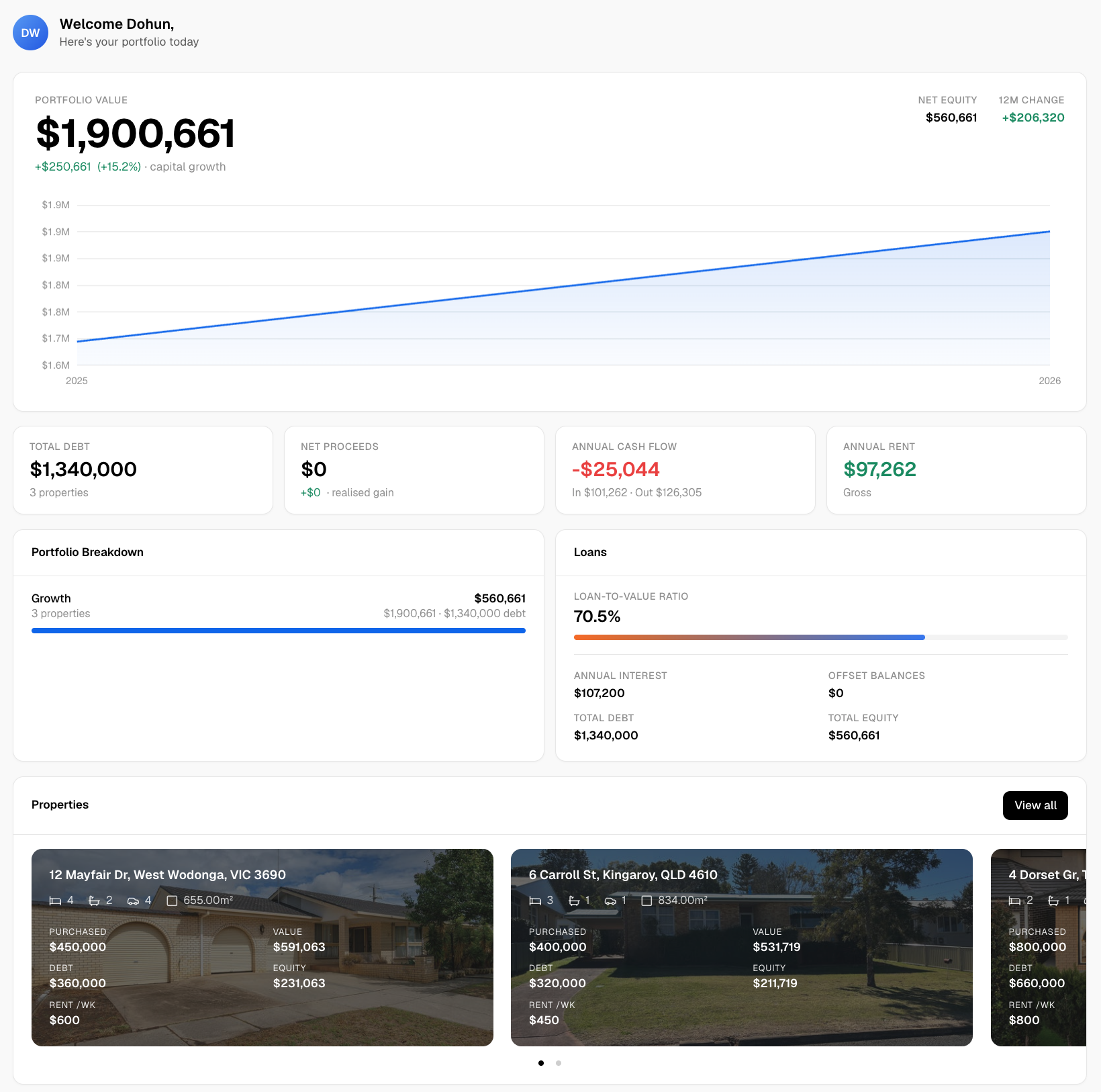
Wealthstacker provides automated quarterly property valuations at no cost, so your portfolio data stays current without manual research. Its AI-driven modelling covers both rentvesting and direct ownership strategies, letting you compare net worth outcomes across different growth paths in real time. You can assess your borrowing power, model acquisition scenarios, and track cash flow across your entire portfolio from a single dashboard. For investors serious about building a rental portfolio with long-term wealth in mind, Wealthstacker gives you the financial clarity to act with confidence at every phase of growth.
Key takeaways
Scaling a rental property portfolio step by step requires the right financing tool at each phase, operational systems built before you need them, and disciplined capital recycling to fund each successive acquisition.
| Point | Details |
|---|---|
| Switch loan types at the right time | Use conventional loans for properties 1–4, then transition to DSCR loans from property 5 onwards. |
| Recycle capital with cash-out refinance | Every $100,000 in appreciation can release $75,000 in deployable capital at 75% LTV. |
| Build systems before you hit capacity | Outsource property management beyond five properties to prevent operational bottlenecks. |
| Incorporate early to avoid transfer costs | Delaying company structure can cost tens of thousands in taxes and refinancing fees per property. |
| Diversify to reduce vacancy risk | Multi-unit acquisitions spread income across tenancies and reduce the impact of a single vacancy. |
FAQ
What is a DSCR loan and when should I use one?
A DSCR loan qualifies based on a property’s rental income rather than your personal income, removing DTI limits. Use it from property five onwards when conventional loan limits start restricting your growth.
How many properties before I need a property manager?
Professional management becomes cost-effective at five or more properties, where the time savings and occupancy improvements outweigh the 8–10% management fee.
When should I set up a company structure for my portfolio?
Set up a company structure before you acquire your third or fourth property. Delaying incorporation until you have multiple properties can trigger significant transfer costs and taxes.
What is the BRRRR method in property investing?
BRRRR stands for Buy, Rehab, Rent, Refinance, Repeat. It is a capital recycling strategy where you refinance an improved property to pull out equity and fund the next acquisition without waiting for new savings.
How do I reduce vacancy risk as my portfolio grows?
Buy multi-unit properties where possible, maintain a vacancy buffer of at least one month per property per year, and retain good tenants through responsive management and fair rent increases.