
HEM Living Expenses: How Lenders Test Your Spending
HEM, the Household Expenditure Measure, is a benchmark of typical household living costs that Australian lenders compare with the expenses you declare on a home loan application. If your declared spending is lower than the benchmark for a household like yours, the lender will normally use the higher figure. That figure is subtracted from your income before the lender decides how much you can borrow, so it shapes your borrowing power as much as your salary does.
This guide explains what HEM covers, how it is applied, how it interacts with the assessment rate, and how to prepare your own numbers so the result holds no surprises. It is written for first-home buyers, renters weighing up rentvesting, and investors adding a property to an existing portfolio.
WealthstackerSee How Property Choices Shape Your WealthWealthStacker helps you explore borrowing power and compare rentvesting and buying strategies with personalised modelling.Explore WealthStackerTL;DR
- HEM is a benchmark for everyday living costs. Lenders compare it with your declared expenses, and the higher of the two is the safer assumption.
- It excludes your rent or mortgage repayments. Those are assessed separately, along with debts and other commitments.
- The benchmark is scaled to your household: relationship status, dependants, location and income all matter.
- APRA expects lenders to assess loans with a buffer of at least 3 percentage points over the loan rate, which compounds the effect of your expenses.
- Accurate, evidence-backed expense figures beat guessing low. Model the result before you apply.
Table of Contents
- What HEM actually is
- Why the higher figure wins
- What HEM leaves out
- HEM is a floor, not a verdict
- How the assessment rate stacks on top
- HEM and investment property loans
- How to work out your real living expenses
- Practical ways to improve your result
- Model your numbers with WealthStacker
- Common mistakes to avoid
- FAQ
- Sources
What HEM actually is
When you apply for a home loan, a lender has to decide how much of your income is left over after you have paid for ordinary life. It cannot simply take your word for it, because people tend to underestimate what they spend. HEM gives the lender an independent reference point for what a household like yours typically spends on the basics.
In practice the benchmark is built from the Australian Bureau of Statistics’ household spending survey data and is updated regularly. Spending items are sorted into groups: absolute basics such as groceries, utilities, transport and children’s clothing, and discretionary basics such as some takeaway food, entertainment and similar costs. Items that are not considered basics sit outside the calculation. You will see lenders describe this slightly differently, but the idea is the same: a defensible estimate of what a household of your type reasonably needs to live on.
Two points catch people out:
- HEM does not include your housing cost. Rent, or the repayments on the loan you are applying for, are assessed on their own line. Think of HEM as the cost of everything else.
- HEM is not a budget. It is a floor used inside a serviceability test. It is not a recommendation about how you should spend, and it does not describe your actual life.
Why the higher figure wins
The core rule is simple. A lender compares what you declare with the benchmark for your household profile. If you declare less than HEM, the lender is expected to use the benchmark instead. If you declare more, your own figure is used.

This sits in the prudential guidance from the banking regulator. APRA’s practice guide on residential mortgage lending says it expects authorised deposit-taking institutions to use the greater of a borrower’s declared expenses or an appropriately scaled HEM or similar index, with a margin linked to income. The same guidance points out that lenders should keep benchmarks current, typically updating them quarterly, and scale them to the borrower’s actual situation instead of relying on the index alone.
That has a practical consequence. Under-declaring does nothing for you. If you are a frugal household and spend less than the benchmark, you will still be assessed at the benchmark. If you spend more than the benchmark, for example because of high health costs, you will be assessed at your real, higher figure. Either way, trying to shave the number down is wasted effort and can create problems if a lender later finds bank statements that contradict your application.
What scales the benchmark
HEM is not a single national number. The amount used for you depends on a handful of household characteristics:
- Relationship status: single applicants and couples have different benchmarks.
- Number of dependants: each child adds to the expected cost of living.
- Location: a capital-city postcode and a regional one can be treated differently.
- Income band: higher-income households are assumed to spend more on the basics than lower-income ones.
Because of this, two buyers with the same loan size can be assessed with quite different living costs. A couple with two children on a high household income will have a materially larger benchmark than a single person on a modest income, and that difference comes straight off their borrowing capacity.
Exact benchmark figures differ by lender, change each quarter and depend on the data the lender licenses, so no published dollar figure for “the HEM” is reliable for your application. The way to see your number is to ask a broker or lender to run your profile, or to use a calculator that lets you test different household settings.
What HEM leaves out
Because HEM only covers general living costs, lenders add other commitments separately. Common examples include:
- Rent (if you will keep renting while buying an investment property) or the new mortgage repayment
- Existing loan repayments, including car loans, personal loans and HECS-HELP or other study debt
- Credit card limits, which are typically assessed on the limit rather than the balance
- Child support or spousal maintenance
- Private school fees
That last group matters because it is easy to assume HEM “covers everything”. It does not. If you pay private school fees or child support, those are generally collected and added to the assessment on top of the benchmark.
Study debt is another quiet drag. If you carry a HELP balance and your income sits above the repayment threshold, the compulsory repayment reduces your serviceable income. We explain this in how the HELP threshold affects borrowing power.
HEM is a floor, not a verdict
A benchmark does not replace a conversation about your real finances. Lenders remain responsible for making reasonable inquiries about your situation and verifying what they are told. That is why you will be asked for bank and credit card statements covering a recent period, and why a lender may query a figure that looks out of line.
So what happens if your declared figure and HEM differ?
- You declare less than HEM: the lender will usually use HEM. Your statements may also be reviewed to see whether your declared figure is plausible at all.
- You declare more than HEM: your figure is used, and your borrowing capacity is lower than the benchmark alone would suggest. Be ready to explain any large categories.
- Your circumstances are unusual: if your actual costs are genuinely different, the way to deal with it is to provide evidence, such as statements, invoices or a contract, and let the lender or broker assess it. You cannot simply demand the benchmark be ignored.
Some lenders compare the two outcomes and use whichever produces the lower surplus. That is the conservative design of the whole system: the outcome that limits your borrowing more is the one that stands.
How the assessment rate stacks on top
Living expenses are only one half of the serviceability test. The other half is the interest rate the lender uses to test your repayments, which is higher than the rate you will actually pay.
APRA expects lenders to apply a buffer of at least 3.0 percentage points over the loan interest rate when assessing serviceability. The buffer provides a contingency for interest rate rises and for unforeseen changes in income or expenses. In other words, the lender assumes your costs will be higher than they are today and checks whether you could still cope.
A worked example
The numbers below are illustrative only and are not a quote or a prediction. Say you apply for a $600,000 loan over 30 years at a 6.0% rate, with principal-and-interest repayments.
| Item | Rate used | Approx. monthly repayment |
|---|---|---|
| What you would actually pay | 6.0% | $3,597 |
| What the lender tests | 9.0% (6.0% plus a 3-point buffer) | $4,828 |
The lender tests whether your income, after living expenses (the higher of your declared figure or HEM) and your other debts, covers the higher repayment of about $4,828 a month. The gap of roughly $1,231 a month between the two is the headroom the buffer builds in. Add a higher HEM figure for a larger household and the maximum loan that passes the test falls further.
The effect is real. When the buffer was lifted by 50 basis points in 2022, the Reserve Bank of Australia estimated that it reduced maximum loan sizes by up to 5 per cent for borrowers whose expenses were in line with HEM. The same speech notes that applying the higher rate to existing debt increases the impact on prospective property investors, who already carry loans.
If you want to see how your own numbers behave under higher rates, our guide to interest rate stress testing for Australian borrowers walks through eight checks, and our explanation of the APRA buffer and debt-to-income limits shows how the pieces fit together.

HEM and investment property loans
If you are buying an investment property, HEM still sits in your assessment, but the picture has more moving parts:
- Existing debts are tested at the higher rate. Your home loan, and any other lending, is typically run through the same buffered assessment as the new loan.
- Rental income is shaded. Lenders usually count only a portion of expected rent, to allow for vacancies and costs. The share varies by lender, so ask which policy applies to you.
- Your own housing cost still counts. If you live in a home you own, its repayments sit in your commitments. If you rent, your rent is a living cost that must be declared.
That last point matters for rentvesters, people who rent where they want to live and buy where the numbers work. Your rent is a real, ongoing expense, and the lender will include it. A rentvesting plan has to show that you can carry your rent, the benchmark-level living costs and the new loan at the buffered rate together. We cover how to build a deposit strategy around that in our rentvesting deposit guide.
If you already hold property, it is also worth understanding how total leverage is viewed. Our explainer on portfolio LVR for Australian investors covers that side, and the debt-to-income ratio guide covers the other limit lenders watch.
How to work out your real living expenses
The best way to approach an application is to work out your actual spending before the lender does. A common set of categories lenders ask about includes:
- Groceries and household supplies
- Utilities: electricity, gas, water, internet and phone
- Transport: fuel, public transport, registration, insurance and maintenance
- Health and fitness: private health cover, medical costs, gym memberships
- Education and childcare
- Eating out, takeaway and entertainment
- Clothing, shopping and personal care
- Subscriptions, holidays and other regular discretionary costs
A reliable method is to pull three months of statements from every account and card you use, tag each transaction by category, and then convert annual or irregular costs (car registration, insurance, holidays) into a monthly average. Many people find their honest total is higher than the figure in their head, mostly because of small recurring charges and irregular bills.
Two habits help before applying:
- Keep your spending consistent and visible. A lender reading your statements wants to see a pattern that matches your declaration. Large unexplained transfers or gambling transactions invite questions.
- Close or reduce what you do not use. Unused credit cards and buy-now-pay-later accounts can reduce borrowing capacity because of their limits or commitments. Cancel them well ahead of an application, not the week before.
Practical ways to improve your result
You cannot negotiate with a benchmark, but you can change the inputs around it.
- Reduce debts first. Paying off or consolidating small loans and lowering card limits has a larger effect on serviceability than trimming a few grocery dollars.
- Check the household profile. Make sure dependants, location and income are entered correctly. A wrong detail changes the benchmark.
- Compare lenders’ policies. Lenders treat rental income, bonuses and some commitments differently, so the same household can have different capacities at different lenders. A mortgage broker can compare these for you.
- Time your application. Because benchmarks and policies are updated regularly, small shifts occur between quarters. This is no reason to rush, but it is a reason to rely on a current assessment rather than one from last year.
- Model before you commit. Test several scenarios, such as a slightly smaller loan, a larger deposit or a different rent, to see which one passes the test with room to spare.
Model your numbers with WealthStacker
Knowing the rules is one thing. Seeing how they apply to your income, rent, debts and target property is another. WealthStacker is a toolkit built for Australian property decisions, with borrowing power estimates, a 15-year modelling tool that compares rentvesting with buying, and net worth and goal planners, so you can test scenarios before you talk to a lender.
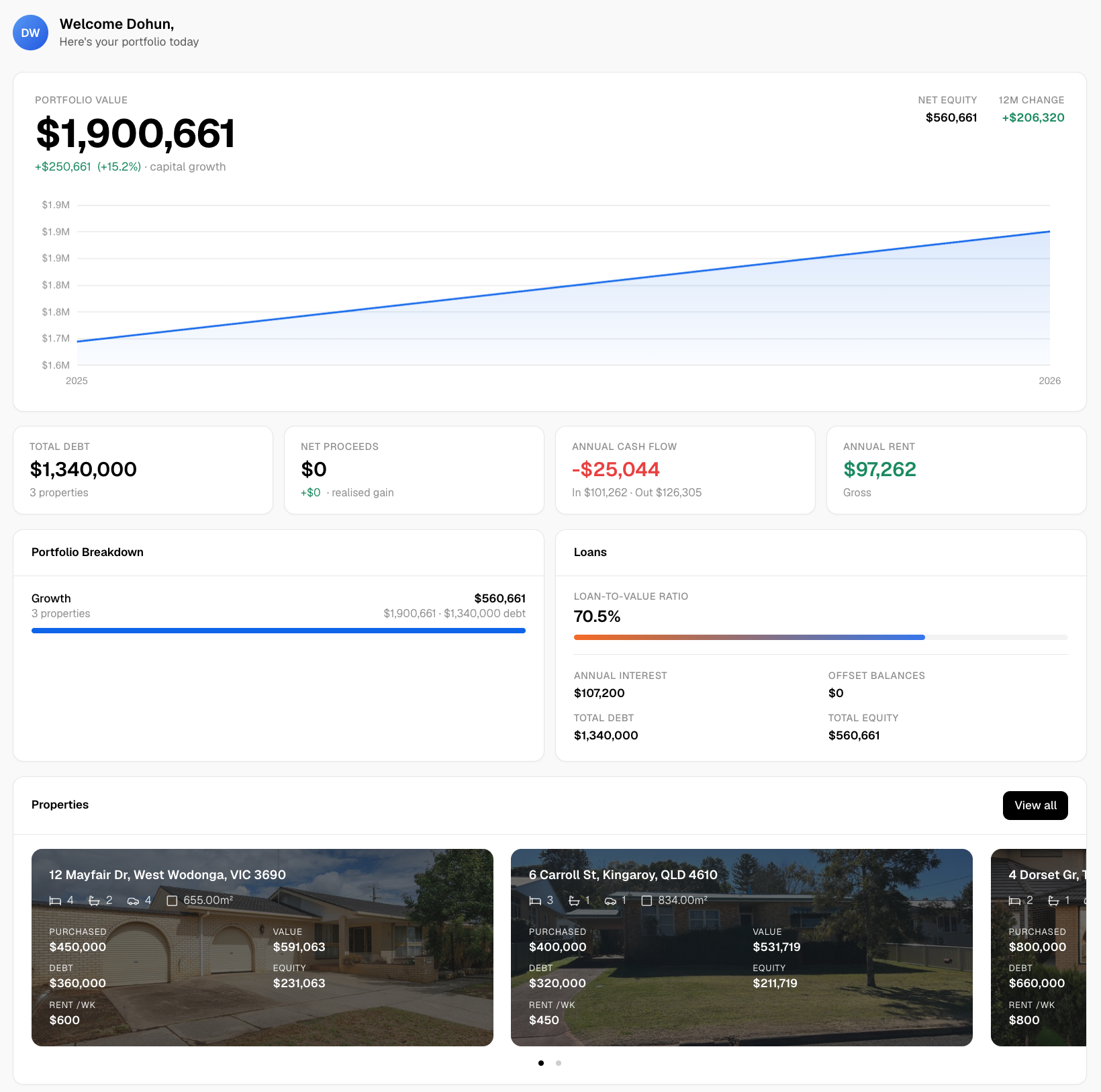
You can start with the WealthStacker toolkit and try different household and loan settings. The estimates are a planning aid and not a lender’s offer of credit, so confirm your final position with a lender or broker. For wider reading, our borrowing capacity guide and the WealthStacker blog go deeper on each part of the process.
Common mistakes to avoid
- Assuming a low budget will help. The lender will use the higher figure, and statements can contradict you.
- Forgetting that HEM excludes housing. Your rent or repayments are added on top.
- Ignoring irregular costs. Insurance, registration and school costs are real even if they arrive once a year.
- Treating one lender’s answer as universal. Policies differ.
- Not stress testing. If your plan only works at today’s rate, it is brittle. Also consider how the RBA rate outlook could change your repayments.
FAQ
Is HEM the same as my actual living expenses?
No. HEM is a benchmark of what a typical household like yours spends on everyday costs, excluding housing. Your actual expenses are what you really spend, shown in your statements. The lender compares the two and uses the higher figure.
Can I ask a lender to use my lower figure instead of HEM?
Not as a matter of right. Regulatory guidance expects lenders to use the greater of your declared expenses or an appropriately scaled benchmark. If your costs are genuinely different from the typical household, provide evidence and ask a broker or lender how their policy treats it.
What is the assessment rate?
It is the higher interest rate a lender uses to test whether you could afford repayments, not the rate you will pay. APRA expects lenders to use a buffer of at least 3 percentage points over the loan rate, so a 6% loan is tested at 9% or more.
Does HEM include rent?
No. HEM excludes rent and mortgage repayments. Those are assessed separately, so a renter buying an investment property must show they can afford their rent, the benchmark-level living costs and the new loan together.
Does HEM change over time?
Yes. The benchmark is updated regularly, typically quarterly, and lenders scale it to your household. Check the current position with your lender or broker when you apply rather than relying on an old figure.
Sources
- APRA, Prudential Practice Guide APG 223 Residential Mortgage Lending
- APRA, Strengthening residential mortgage lending assessments
- Reserve Bank of Australia, Interest Rates and the Property Market (19 September 2022)