
Gross rental yield explained: what it means for investors
TL;DR:
- Gross rental yield measures the annual rent as a percentage of the property’s total cost, including acquisition expenses. It serves as a quick filtering tool for Australian investors but can overstate actual returns since operating costs often consume half of the gross income. Net yield provides a more accurate picture by subtracting expenses, making it essential for investment decisions.
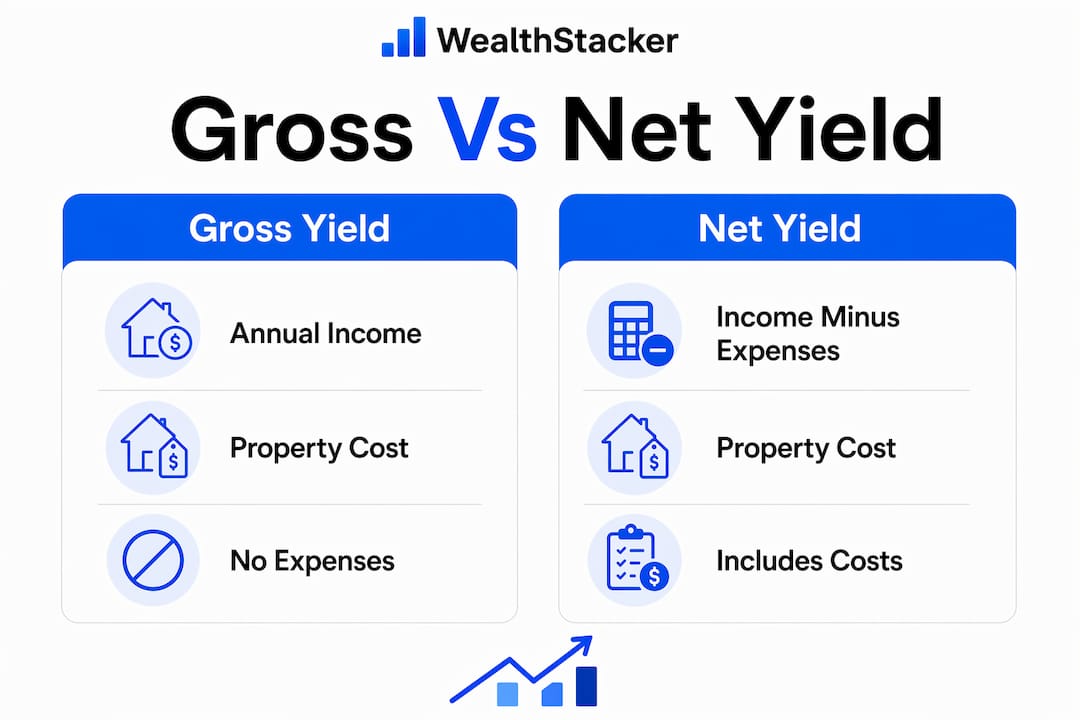
Gross rental yield is defined as total annual rental income divided by a property’s purchase cost, expressed as a percentage. It tells you, at a glance, how much of your property’s value you earn back each year through rent before any expenses are deducted. For Australian property investors, it serves as the standard first filter when scanning listings and comparing opportunities. Understanding what gross rental yield means is the difference between chasing a number and making a sound investment decision.
What does gross rental yield mean and how is it calculated?
Gross rental yield is the percentage return a property generates from rent, measured against its total cost, before expenses are factored in. The industry formula is straightforward: (Annual Rental Income / Property Cost) × 100 equals your gross rental yield percentage. That single calculation gives you a fast, comparable figure across any number of listings.

Property cost is not just the purchase price. Acquisition costs such as stamp duty, legal fees, and conveyancing charges must be included for the figure to reflect your actual invested capital. Leaving these out inflates the yield and gives you a false picture of returns.
Here is a concrete Australian example. A property purchased for $650,000, with $30,000 in acquisition costs, has a total cost of $680,000. If it rents for $550 per week, the annual rental income is $28,600. Dividing $28,600 by $680,000 and multiplying by 100 gives a gross rental yield of 4.21%.
The table below shows how yield shifts across different rent and cost combinations.
| Property cost | Weekly rent | Annual income | Gross rental yield |
|---|---|---|---|
| $500,000 | $450 | $23,400 | 4.68% |
| $650,000 | $550 | $28,600 | 4.40% |
| $800,000 | $700 | $36,400 | 4.55% |
| $400,000 | $420 | $21,840 | 5.46% |
| $350,000 | $400 | $20,800 | 5.94% |
Small differences in rent relative to purchase price produce meaningful yield differences. A $350,000 property renting for $400 per week outperforms an $800,000 property renting for $700 per week on gross yield alone.
Pro Tip: Always include stamp duty, legal fees, and any buyer’s agent fees in your property cost denominator. Omitting these costs can overstate your gross yield by half a percentage point or more on a typical Australian purchase.
Understanding rental income as a basis for yield calculations starts with an accurate rental appraisal, not an optimistic estimate.
What is a good gross rental yield in Australia?
A gross rental yield between 5% and 8% is commonly cited as healthy for residential properties across developed markets, including Australia. That range signals the property generates enough rental income to cover a meaningful portion of holding costs. Yields below 4% in capital cities are common but require strong capital growth expectations to justify the investment.
Location drives yield more than almost any other factor. Regional and outer suburban properties typically produce higher gross yields than inner city apartments or houses in Sydney and Melbourne. A two bedroom house in Toowoomba or Ballarat might yield 6% or more, while a comparable apartment in Sydney’s inner west might sit at 3.5%.
Property type also matters. Commercial properties and student accommodation often show higher gross yields than standard residential stock, but they carry different risk profiles and vacancy patterns. Comparing yields across property types without adjusting for these factors produces misleading conclusions.
Key factors that affect where a property sits within the benchmark range include:
- Location: Capital cities trend lower; regional centres and outer suburbs trend higher
- Property type: Houses, apartments, and commercial assets each have distinct yield norms
- Market conditions: Rising purchase prices compress yields even when rents hold steady
- Vacancy rates: High local vacancy reduces effective annual income and real returns
- Property age and condition: Older properties may attract lower rents relative to their market value
Pro Tip: Before committing to a suburb, research the median gross yield for that specific property type in that postcode. Gross yield varies widely by location and comparing a regional house yield to an inner city apartment yield tells you very little.
Why gross rental yield has real limits: understanding net yield
Gross rental yield excludes every holding cost associated with owning a property. Operating expenses often consume 40–50% of gross rental income, which means the actual cash return is substantially lower than the gross figure suggests. That gap is where many new investors get caught out.
Net rental yield accounts for those costs. The formula is: [(Annual Rental Income minus Annual Expenses) / Property Cost] × 100. Expenses include property management fees, council rates, water charges, landlord insurance, maintenance and repairs, and accounting fees. Each of these reduces the income that actually reaches your pocket.
The comparison table below shows the practical difference between gross and net yield on the same property.
| Metric | Gross rental yield | Net rental yield |
|---|---|---|
| Annual rental income | $28,600 | $28,600 |
| Annual expenses deducted | None | $11,440 (40%) |
| Net income used | $28,600 | $17,160 |
| Property cost | $680,000 | $680,000 |
| Yield result | 4.21% | 2.52% |
The difference between 4.21% and 2.52% is not trivial. On a $680,000 property, that gap represents over $11,000 per year in costs the gross figure simply ignores.
Gross yield also ignores mortgage repayments entirely. Properties with high gross yield can still produce negative cash flow once debt servicing is factored in. A 6% gross yield on a heavily leveraged property may leave the investor contributing cash each month rather than receiving it.
Experienced investors often call gross yield a “vanity metric” because it ignores vacancy rates of around 8% and maintenance reserves of 5–10%, leading to a consistent overestimation of real returns. That label is blunt but accurate.
Pro Tip: A quick way to estimate net yield from gross yield is to multiply the gross figure by 0.6. This cap rate shortcut accounts for typical operating expenses consuming 40–50% of gross rent and gives you a working approximation before you have exact expense figures.
For a deeper look at how gross and net figures interact with your overall investment strategy, the Wealthstacker guide on rental yield vs capital growth puts both metrics in context.
How investors use gross rental yield as a screening tool
Gross rental yield works best as a first pass filter, not a final verdict. When you are scanning twenty listings in a suburb, calculating gross yield on each takes seconds and immediately separates the candidates worth investigating from those that are clearly underpriced on rent or overpriced on purchase cost. That speed is its genuine value.
The most common pitfall for new investors is treating gross yield as a complete picture of returns. A property showing 7% gross yield in a high vacancy market may deliver far less in practice once empty periods and maintenance costs are applied. Gross yield gets you to the shortlist. Net yield and cash flow analysis close the deal.
Meaningful comparison requires discipline. Gross yield should be compared only among similar property types within the same area. Comparing a regional townhouse yield to a CBD studio yield produces a number with no useful context. The metric only tells you something when the comparison is apples to apples.
Best practices for using gross rental yield in your research:
- Use it as a filter, not a decision: Shortlist properties above your minimum yield threshold, then apply net yield analysis to the shortlist
- Compare within the same category: Same suburb, same property type, similar size and condition
- Pair it with vacancy data: A 7% gross yield in a suburb with 12% vacancy is less attractive than a 5.5% yield where vacancy sits at 2%
- Check the rent figure: Confirm the rent used in the calculation is current market rent, not an optimistic projection or an outdated lease figure
- Layer in other metrics: Cap rate, cash on cash return, and debt service coverage ratio all add dimensions that gross yield cannot provide
Understanding why rental yield matters to your overall portfolio strategy helps you use gross yield correctly as one input among several, rather than the sole deciding factor.
Wealthstacker’s tools for tracking rental yield
Knowing the formula is the start. Applying it consistently across a growing portfolio, with accurate expense tracking and up to date valuations, is where most investors struggle.
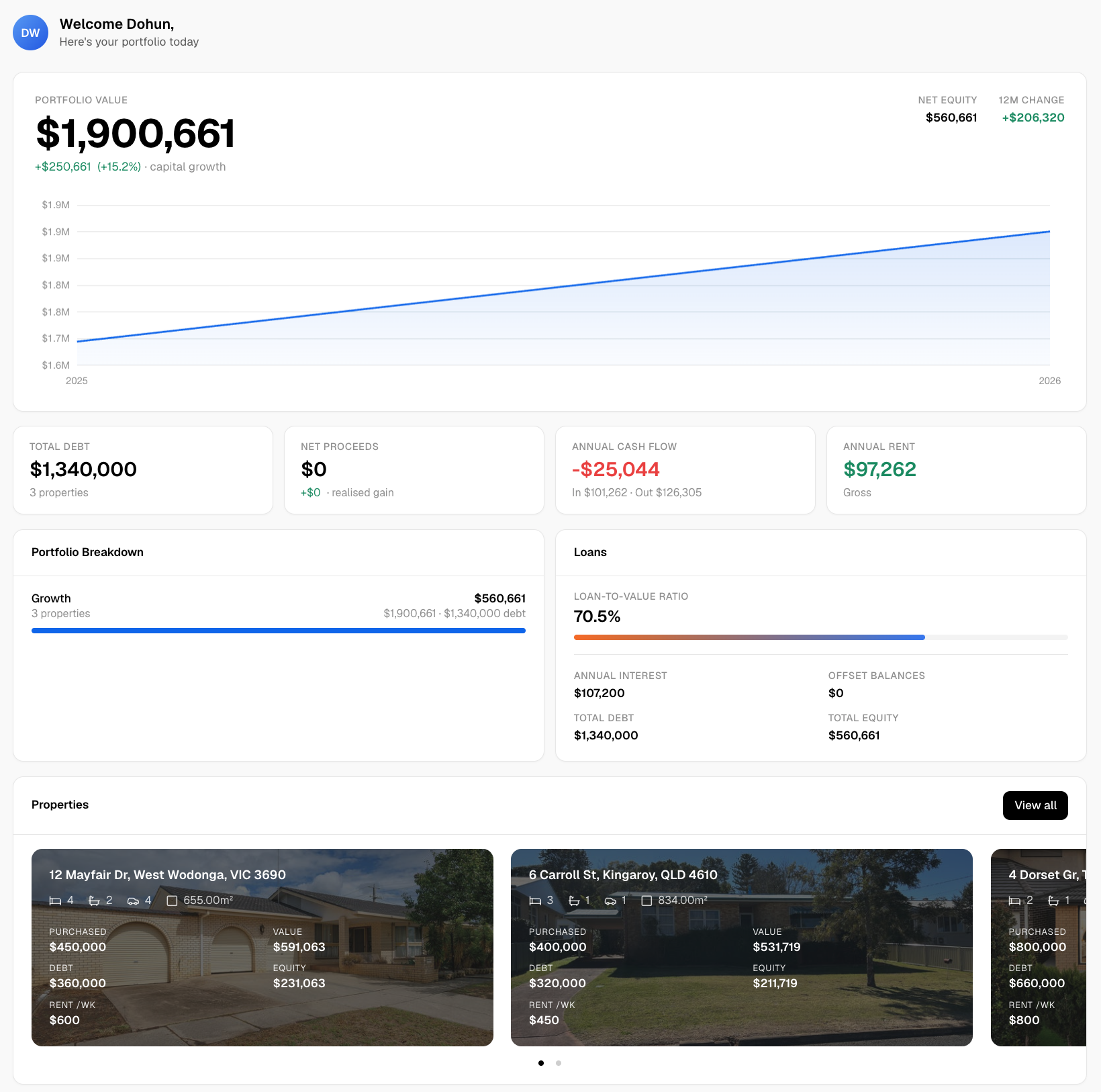
Wealthstacker is built for exactly that problem. The platform provides automated quarterly property valuations at no cost, so your yield calculations always reflect current market values rather than the price you paid years ago. Its AI tools model both gross and net yield scenarios, factor in your borrowing capacity, and show projected wealth accumulation over time. Whether you are evaluating your first investment property or comparing a portfolio of five, Wealthstacker gives you the property investment analysis to make decisions based on real numbers, not rough estimates.
Key takeaways
Gross rental yield is a fast screening metric, but net yield is the figure that determines whether a property actually works for your financial position.
| Point | Details |
|---|---|
| Gross yield formula | Divide annual rental income by total property cost, then multiply by 100. |
| Include all acquisition costs | Add stamp duty and legal fees to the denominator for an accurate yield figure. |
| Healthy Australian benchmark | A gross yield of 5%–8% is generally considered solid for residential property. |
| Gross yield overstates returns | Operating expenses consume 40–50% of gross rent, making net yield far lower. |
| Use gross yield as a filter only | Always follow up with net yield and cash flow analysis before making a final decision. |
FAQ
What does gross rental yield mean in simple terms?
Gross rental yield is the percentage of a property’s value earned as annual rent before any expenses are deducted. It is calculated by dividing annual rental income by the property’s total cost and multiplying by 100.
What is the difference between gross and net rental yield?
Gross rental yield ignores all holding costs, while net rental yield subtracts expenses such as management fees, rates, insurance, and maintenance. Operating expenses typically consume 40–50% of gross rent, so net yield is substantially lower.
What is considered a good gross rental yield in Australia?
A gross rental yield of 5%–8% is widely regarded as a healthy range for Australian residential properties. Regional areas tend to produce higher yields than capital city markets.
How do I calculate gross rental yield quickly?
Multiply the weekly rent by 52 to get annual income, divide by the total property cost including acquisition costs, then multiply by 100. The result is your gross rental yield percentage.
Can I rely on gross yield alone to choose an investment property?
Gross yield is a useful first filter but not a complete measure. Vacancy rates, mortgage repayments, and ongoing expenses all affect real returns, so net yield and cash flow analysis must follow any gross yield assessment.