
First Home Super Saver Scheme: How FHSS Works in 2026
The First Home Super Saver (FHSS) scheme lets you make extra voluntary contributions to your super, then ask the ATO to release those contributions, plus associated earnings, to help with a deposit on your first home. You can contribute up to $15,000 in one financial year and $50,000 across all years. You must request the ATO determination before you settle on the property, and that timing is where most people trip.
This guide explains how the scheme works, who can use it, what the tax treatment looks like, the steps from contribution to settlement, and the mistakes worth avoiding.
WealthstackerPlan Your First Home InvestmentWealthStacker helps you compare buying and rentvesting strategies with personalized modeling and real-time estimates of your potential net worth.Explore WealthStackerTL;DR
- FHSS lets you save for a deposit through voluntary super contributions: up to $15,000 a year and $50,000 in total, with associated earnings added on release.
- Non-concessional (after-tax) contributions are released at 100%. Concessional (before-tax) contributions are released at 85%.
- You generally must never have owned property in Australia, and you must intend to live in the home.
- Request your FHSS determination before you sign off on settlement, then request the release, sign a contract and notify the ATO.
- The scheme is separate from state grants and stamp duty concessions, so check each one on its own.
Table of Contents
- How the FHSS scheme works
- How much you can contribute and release
- Who is eligible
- How the tax works
- The five steps from contribution to settlement
- Timing, debts and other traps
- Planning your deposit around FHSS
- Putting numbers on your plan with WealthStacker
- FAQ
- Sources
How the FHSS scheme works
The idea is simple. Instead of saving a deposit in a bank account, you put extra money into super through voluntary contributions. When you are ready to buy, you request an FHSS determination and then a release of your FHSS amount plus associated earnings. The ATO pays the money out, and you use it toward a home deposit.
The appeal is the tax treatment. Before-tax contributions go into super at a lower tax rate than most people pay on their wages, and when you withdraw the assessable amount you receive a tax offset (more on that below). Not everyone ends up ahead by the same amount, because the outcome depends on your marginal tax rate, the fund you use and how your contributions are made.
Two practical points are worth knowing from the start:
- The money is released by the ATO, not by your super fund. The fund sends the amount to the ATO, which pays you.
- FHSS contributions are not tracked separately inside your super account. The ATO works out your FHSS amount from the contribution records it receives from your fund.
How much you can contribute and release
The headline limits are $15,000 of eligible contributions in a single financial year and $50,000 across all years. Those figures are the contributions counted in the calculation. Associated earnings are added on top, so the final release can be more than $50,000.
Which contributions count
The ATO says only eligible contributions received on or after 1 July 2017 can generally be released. It also sets out two kinds that qualify:
- Voluntary concessional contributions, such as salary sacrifice, and personal contributions you claim (or intend to claim) as a tax deduction.
- Voluntary non-concessional contributions, which are personal after-tax contributions where you claim no deduction.
Employer super guarantee payments do not count, because they are not voluntary. Only the extra money you choose to add is eligible.
How much comes back
The release includes 100% of eligible non-concessional contributions, 85% of eligible concessional contributions and associated earnings. The 85% reflects the 15% contributions tax that the fund deducts from concessional contributions.
A simple illustration, using only those percentages and ignoring earnings:
| Contribution type | Amount contributed | Share released | Released before earnings |
|---|---|---|---|
| Concessional (before tax) | $10,000 | 85% | $8,500 |
| Non-concessional (after tax) | $10,000 | 100% | $10,000 |
Earnings are calculated by the ATO on a deemed basis and added to the amount, so your real figure will differ. The ATO’s own FHSS calculator is the place to get a personal estimate.
Who is eligible
Eligibility is narrower than many first home buyers expect. Here are the main tests.
- Citizenship and residency. You do not need to be an Australian citizen or an Australian resident for tax purposes.
- Age. You must be at least 18 when you request an FHSS determination, although eligible contributions made before 18 may be included.
- No previous property. Standard eligibility requires that you have never owned property in Australia. That covers investment property, vacant land, commercial property, a lease of land and a company title interest in land.
- A genuine home. The property must be residential and in Australia. You must intend to occupy it as soon as practicable and live in it for at least six of the first 12 months from when it is practicable to move in.
Because you must live in the home, FHSS suits owner-occupiers. If your plan is to rent where you like and invest elsewhere, our rentvesting deposit strategy guide covers how deposits and borrowing work on that path.
What you can and cannot buy
The scheme cannot be used for vacant land, a houseboat, a motor home or premises that cannot be lived in. It can support construction on vacant land, as long as ownership of the land has not transferred before you apply for your determination and you sign the construction contract within the required period.
If you have owned property before
The ATO may allow an exception where financial hardship caused you to lose all your property interests. Examples it gives include bankruptcy, relationship breakdown, job loss, serious illness and natural disaster. Previous ownership is not reset automatically. You need the ATO to determine that hardship applies, and you do this before you go through the normal determination process.
How the tax works
There are three layers to keep straight.
- Going in. Concessional contributions are taxed in the fund at 15%, and eligible non-concessional contributions are not taxed in the fund.
- Coming out. The assessable part of your release (the concessional portion and the earnings) is added to your income. The law then gives you a tax offset equal to 30% of that assessable amount for the relevant income year.
- Which year it lands in. The assessable amount goes in the tax return for the financial year in which you request the release, not necessarily the year the money arrives.
That last point matters if your income changes. Requesting a release in a year when you earn less can mean the assessable amount is taxed at a lower rate, but it also makes the timing of your purchase less flexible, so plan the dates before you choose.
One helpful detail for families: the ATO’s current guidance says the FHSS amount is not counted as assessable income when working out family assistance and child-support payments.
If you earn a high income and want to see how contributions fit into a wider tax picture, our guide to high-income earner tax strategies for property is a good next read.
The five steps from contribution to settlement
The ATO describes five steps: request an FHSS determination, request a release, sign a contract and notify the ATO, receive the money, then complete your tax return.

Before you start
Check these four things first, as the ATO suggests: that your contributions are eligible, that your super fund will actually release FHSS amounts, what fees and insurance consequences apply to your account, and that your fund’s contact details match the ATO’s records. A mismatch in details is an easy way to cause delays.
Step 1: Request a determination
The application starts in ATO online services through myGov. Select Super, then Manage, then First home saver. Use your fund statements or transaction records to enter contributions, not your payslips, because the fund’s record is what counts.
The determination tells you how much you can release. It is not a payment.
Step 2: Request the release
Once you have the determination, you submit a separate release request. The ATO says the determination must be requested before ownership of real property transfers, generally before settlement. Settlement or title registration can remove your ability to request a new determination, so do not leave this until the final weeks.
Step 3: Sign a contract and notify the ATO
After a valid release request, you normally have 12 months to enter a contract to buy or build. The ATO may allow an extension of up to another 12 months, which makes 24 months the maximum. The ATO’s fact sheet says you generally must notify it within 90 days of signing the purchase or construction contract.
Step 4: Receive the money
The ATO pays the released amount to you, and you use it toward the deposit and related costs. Your conveyancer or broker should know when funds are expected, because release timing needs to line up with your settlement date.
Step 5: Complete your tax return
Include the assessable component in your tax return for the year you requested the release, and claim the 30% offset. This is the step people forget, so put a reminder in your calendar.
Timing, debts and other traps
A few issues cause most of the problems.
- Determination too late. If ownership transfers before you obtain a determination, you may not be able to get one. Request it early. It can be done before you have found a property.
- Debts to the government. An outstanding debt to the ATO or another Commonwealth agency may be offset against your release, which can reduce it, potentially to nil, and delay payment. Clear or arrange any such debt before you apply.
- Missing the contract window. If you do not sign a contract within the 12 months (or the extended period), your release has consequences you will need to sort out with the ATO. Check its guidance on what to do if you do not buy in time.
- Assuming it replaces state help. The FHSS scheme is separate from state and territory first-home concessions, so eligibility for one does not establish eligibility for the other. Our overview of first home buyer grants shows how the different supports fit together.
- Fund restrictions. Not every fund processes FHSS requests the same way. Ask yours about fees, insurance cover and processing before you start contributing.
Planning your deposit around FHSS
FHSS works best as one part of a deposit plan rather than the whole plan. Three questions help.
How long do you have? Contributions are capped at $15,000 a year, so reaching $50,000 takes at least four financial years. If you hope to buy in two years, you will not reach the maximum.
What does the rest of the plan look like? The released amount is only part of what lenders look at. Your income, debts, living costs and the buffers lenders apply all shape how much you can borrow. The way HELP debt affects borrowing power is one example of a factor that sits outside the scheme but changes your price range.
Is now the right time? Saving through super locks the money away until you buy, so you want some confidence about your timeline. Our buy now or wait guide sets out a way to structure that decision, and the first home buyer investment strategies guide looks at what comes after the purchase.

Putting numbers on your plan with WealthStacker
FHSS is one lever. To judge whether it changes your outcome, you need to see it next to your savings rate, your borrowing power and the suburbs you are considering.
WealthStacker is built for that comparison. You get free automated quarterly property valuations, a 15-year model that compares buying with rentvesting, borrowing power estimates and market research tools for Australian suburbs. You can enter your own figures and see how a larger deposit changes your projected net worth over time, without building a spreadsheet.
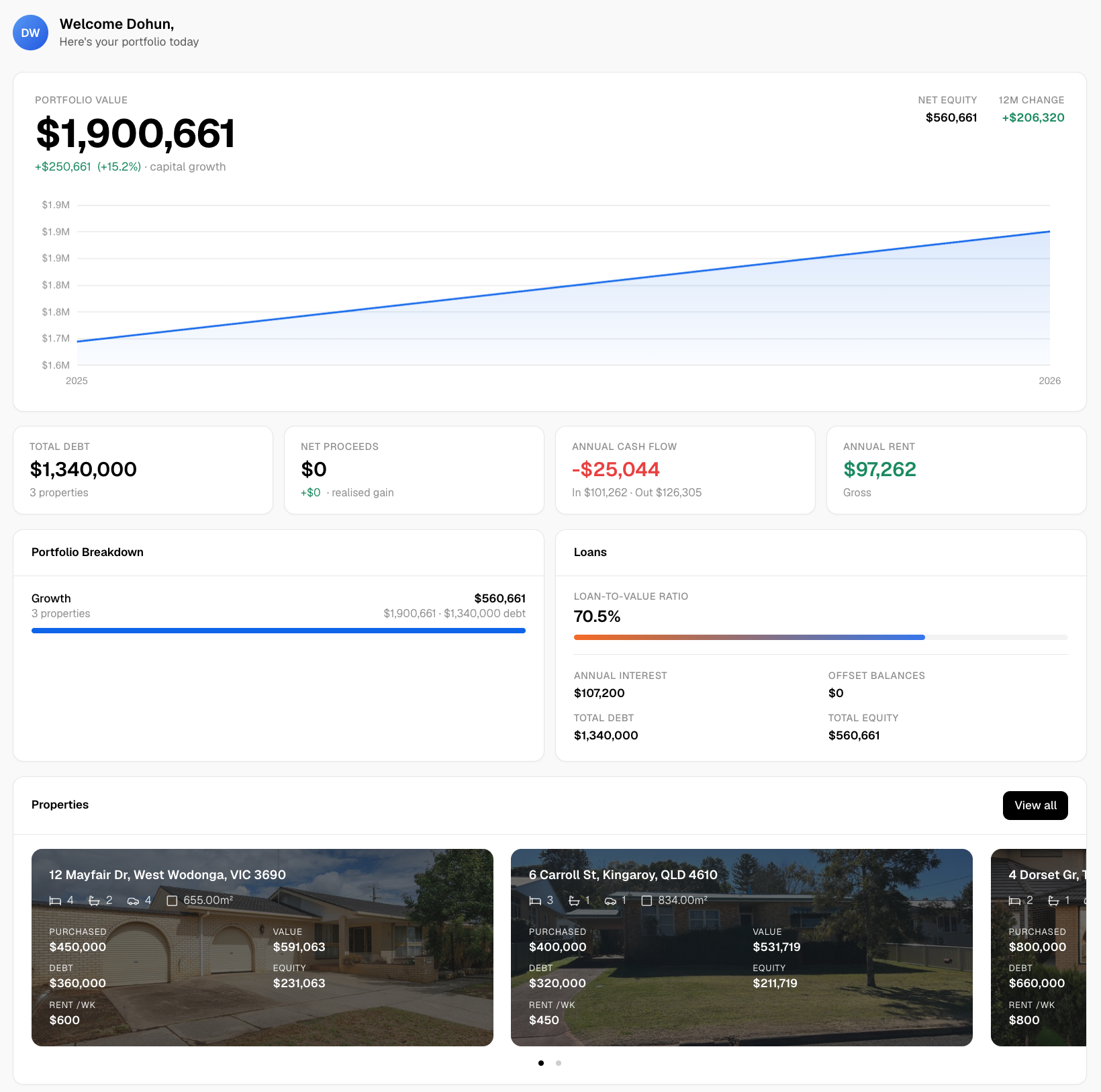
Try the WealthStacker toolkit to model your deposit path and compare your options before you commit to a contribution plan.
FAQ
How much can I withdraw under the First Home Super Saver scheme?
You can have up to $50,000 of eligible contributions counted, with a maximum of $15,000 from any one financial year. The ATO then adds associated earnings, so the release can exceed $50,000. Non-concessional contributions are released at 100% and concessional contributions at 85%.
Can I use FHSS to buy an investment property?
No. You must intend to live in the home as soon as practicable and for at least six of the first 12 months from when you can move in. The property must be residential and in Australia, and you generally must never have owned property in Australia.
What happens if I do not buy a home in time?
After a valid release request you normally have 12 months to sign a contract to buy or build. The ATO may extend this by up to 12 months, to a 24-month maximum. If you are close to the deadline, contact the ATO about your options before it passes.
Do I need to be an Australian citizen to use FHSS?
No. You do not have to be an Australian citizen or an Australian resident for tax purposes. You still need to be at least 18 when you request a determination and meet the other tests, including never having owned property in Australia.
Is FHSS the same as the first home owner grant?
No. FHSS is a federal scheme that lets you use super contributions for a deposit. State and territory grants and concessions are separate, and qualifying for one does not mean you qualify for the other.
Sources
- About the FHSS scheme, Australian Taxation Office
- About your contributions, Australian Taxation Office
- About FHSS release amounts, Australian Taxation Office
- Eligibility for the FHSS scheme, Australian Taxation Office
- Is the FHSS scheme right for me?, Australian Taxation Office
- FHSS eligibility when you lost your property due to hardship, Australian Taxation Office
- When you want to release your FHSS amount, Australian Taxation Office
- Step 1: Request a FHSS determination, Australian Taxation Office
- Step 3: Signing a contract for a home and notifying us, Australian Taxation Office
- Step 5: Completing your tax return, Australian Taxation Office
- First home super saver scheme, Australian Taxation Office
- Income Tax Assessment Act 1997, section 313.25
- FHSS fact sheet, First Home Buyers (September 2025)