
Cross Collateralisation Risks: Untangling Australian Property Loans
Cross-collateralisation means a lender holds security over more than one property for the same loan or loans, and Moneysmart explains that the lender can sell any or all of them to recover the debt. The main risk is lost flexibility: selling or refinancing one property can require lender release or portfolio-wide action. APRA and ASIC frame this risk, and our WealthStacker toolkit helps you make informed real estate decisions.
TL;DR:
- Before selling one property, check whether the lender can apply proceeds to total debt; title release terms depend on its approval.
- Refinancing a crossed portfolio can require valuations for every property, discharge fees for each title, and a fresh serviceability assessment under current lending standards.
- A request to release one title may trigger a stricter review of remaining loans, and lenders assess repayment income rather than property appreciation.
- Verify the structure by checking loan contracts, searching each title for the same lender’s mortgage, and getting the lender’s answer in writing.
- Before restructuring, compare rate savings with valuation, legal, discharge, and settlement costs; a temporary saving may not cover the expense.
WealthstackerMake More Informed Property DecisionsWealthStacker combines property valuations, AI tools and personalized modeling to help you assess real estate strategies and potential net worth.Explore WealthStacker
Table of Contents
- What is cross-collateralisation and how does it work?
- Which risks hit your flexibility, selling and refinancing?
- How do APRA and ASIC treat crossed security?
- How can you tell if your loan is cross-collateralised?
- What can you do if you’re already cross-collateralised?
- How do we help you measure your cross-collateralisation exposure?
- FAQ
- Sources
What is cross-collateralisation and how does it work?
A lender takes a mortgage or other security over more than one property to secure one or more loans. It is often used to draw on equity in an existing property to fund a new purchase without a separate cash deposit, which is the same point Moneysmart makes in its glossary entry.

Each property’s title carries a registered mortgage. With stand-alone security, one loan sits against one title. With crossed security, several titles sit behind a shared pool of debt, so every property answers for every dollar owed.
Lenders like it because it strengthens their position. Some borrowers like it because it avoids a cash deposit and keeps the paperwork under one roof. Here is how it plays out:
- Say you own Property A with a loan and use its equity to buy Property B.
- The lender takes security over both properties for the combined debt.
- Both titles are now tied to the same lending arrangement.
- If you want to sell Property A, the lender decides whether to release that title and on what terms.
- A stand-alone setup would let you sell A and discharge only its own loan.
The scenario is illustrative only, but the logic holds for any crossed portfolio.
Which risks hit your flexibility, selling and refinancing?
The costs show up when you try to change something. Sale proceeds can be applied across the whole debt, refinancing becomes a portfolio exercise, and one weak valuation can affect every property. Here are the main pressure points:
- Selling: The lender has discretion over release of the title. In documented cases sale proceeds have been applied to reduce total debt across the remaining securities, rather than returned to the seller.
- Refinancing: Moving away from a crossed structure commonly needs new valuations on every property, discharge fees for every title and a full serviceability reassessment under current lending standards, as the same Moneysmart material describes. APRA’s guidance on valuation practice expects stronger standards as collateral risk rises.
- Locked-in pricing: Moving one loan to a cheaper product may mean refinancing the whole package. Cross-collateralisation can make it harder to change lenders or products.
- Portfolio revaluation: A fall in one property’s value can prompt a portfolio-wide revaluation and a call to restore LVR positions. Our explainer on portfolio LVR shows how those bands work.
- Friction: Valuation fees, legal costs and settlement timing across several titles add up quickly.
Market-level reads, such as this market analysis guide, can help you judge how far a downturn might go.*
How do APRA and ASIC treat crossed security?
APRA’s guidance sets expectations for lenders when they assess serviceability and changes to loan conditions.
- Serviceability: APRA’s guidance on housing lending standards expects lenders to assess serviceability on income at origination and to reassess when there is a material change to loan conditions, including changes to security arrangements.
- Equity is not income: Lenders should not lean on asset appreciation to stand in for repayment ability, and borrowers should not either.
- Valuation methods: APRA’s prudential practice guide allows desktop, AVM and kerb-side valuations in appropriate contexts, but it expects stronger practice as risk grows. A complex release request is unlikely to be waved through on a quick estimate.
- Consumer side: Moneysmart shows lenders holding discretion over release and sale proceeds, so read your contract before assuming protection.
In practice, a request to release one title can be treated as an exception that triggers a fresh, stricter assessment of the remaining loans.
How can you tell if your loan is cross-collateralised?
Work through this checklist:
- Read your mortgage documents and loan contracts for language that secures one loan against more than one property.
- Order a title search for each property and look for the same lender’s mortgage registered on several titles.
- Compare the key facts sheet for each loan. Lenders must provide one for standard home loans, and the Moneysmart home loan factsheet explains what it covers.
- Ask your lender or broker directly: if I sell one property, does that trigger a release process or a portfolio-wide review?
- If you are still unsure, ask a solicitor to run the title searches and a broker to model your refinancing options.
Answers in writing beat answers over the phone.
What can you do if you’re already cross-collateralised?
You can consider several routes, each of which may cost time and money.
- Partial release: Ask the lender to release one title. Expect it to require enough sale proceeds, updated valuations and a serviceability reassessment, in line with Moneysmart’s description of lender discretion.
- Full refinance: Move the whole package to a new lender, ideally restructuring into stand-alone loans. Plan for valuations, discharge fees and coordinating several settlements.
- Restructure in place: Use offset or redraw features or smaller top-up loans where available. Expect covenants and lender approvals either way.
Budget for these costs:
- Valuation fees on each title
- Legal settlement and discharge fees
- Possible lenders mortgage insurance on a new loan
- Time to coordinate settlements
Pro Tip: Model cost against benefit first. Valuation and legal costs can outweigh a short-term rate saving, and our guide on cash-out refinancing shows what lenders check along the way.
Moneysmart also cautions that debt consolidation into secured debt can put the assets securing the loan at risk if repayments are missed, so weigh any restructure against that.
How do we help you measure your cross-collateralisation exposure?
We built WealthStacker to help you make informed real estate decisions. Here is what we offer:
- Automated property valuations
- Scenario modelling for comparing rentvesting and buying strategies
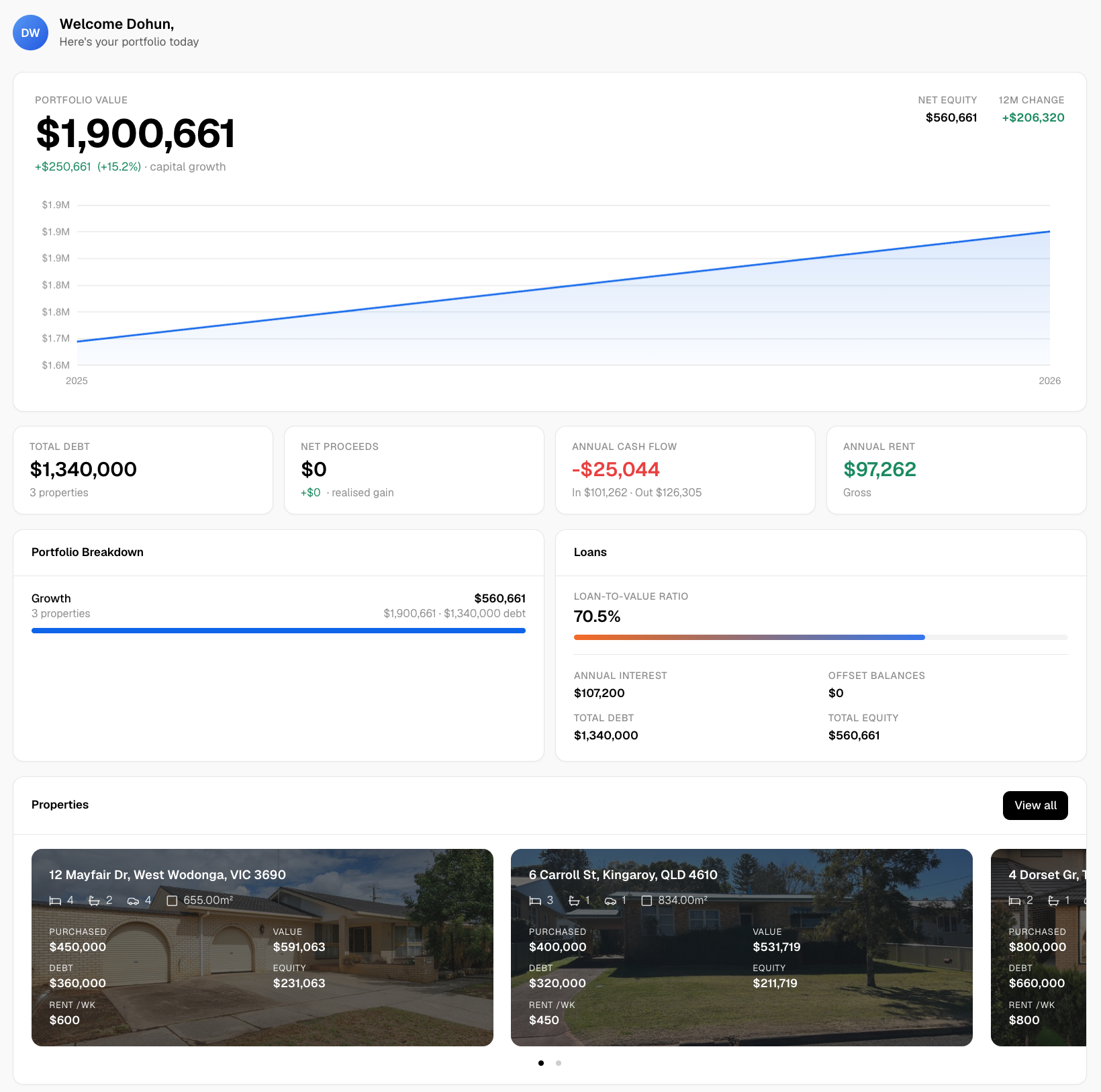
If you hold properties under crossed security, join the WealthStacker waitlist and model your own scenario before you call your lender. You can also learn more on our home page.
FAQ
What is cross collateralisation in simple terms?
It means a lender holds security over more than one property for the same loan or loans. Under that structure, Moneysmart notes the lender can sell any or all of the secured properties to recover the balance owing.
How do I know if my loan is cross-collateralised?
Check your mortgage documents, run title searches and compare each loan’s key facts sheet. If you remain unsure, ask your lender or broker whether selling one property triggers a release process.
How to remove cross collateralisation?
You can negotiate a partial release, or refinance the package into stand-alone loans. Both usually need new valuations, a serviceability reassessment and legal and discharge costs, so model the cost first.
What are the downsides of a bridging loan?
A bridging loan is short-term debt, so costs and timing pressure can be high if your sale is delayed. Any secured borrowing also puts the security at risk if you cannot repay, as Moneysmart cautions for secured debt generally.