
Convert Your Home to an Investment Property in Australia
You can turn your home into an investment property by moving out and renting it, but the decision is really about tax and borrowing, not paperwork. Three things drive the outcome: whether you use the six-year main residence rule to protect your capital gains tax (CGT) exemption, whether your loan and cash flow still work once you are paying rent somewhere else, and how well you keep records from the day the first tenant moves in. Model those three before you hand over the keys.
WealthstackerModel Your Property’s Investment PotentialCompare real estate strategies with AI tools, personalized modeling and automated quarterly valuations to help inform your next property decision.VisitTL;DR
- Once your home earns rent, you can generally claim loan interest, rates, insurance and repairs against that rent. Some costs must be split if the property is partly private or rented below market.
- The six-year rule lets you choose to keep treating the home as your main residence for up to six years while it is rented, which can keep the CGT exemption.
- If you first rent the home out after 20 August 1996, the ATO treats it as acquired at its market value on the day you first rent it. Record that value.
- Your landlord duties start before the first tenant: a written agreement, bond rules and safety compliance. The detail depends on your state.
- Run the numbers first: rent against repayments, the cost of your own new rental or mortgage, and your borrowing power for the next purchase.
Table of Contents
- Why people convert instead of selling
- Step 1: Work out what the home is worth today
- Step 2: Decide how the six-year rule applies
- Step 3: Get the property and paperwork ready
- Step 4: Understand your loan and what you can claim
- Step 5: Test whether the numbers work
- Should you buy an investment property before a home?
- How WealthStacker fits in
- A checklist before you hand over the keys
- FAQ
- Sources
Why people convert instead of selling
Selling a home you have lived in is usually free of CGT, so converting looks like giving something up. People do it anyway for three common reasons. They are upsizing and want to keep the first property. They are relocating for work and expect to return. Or they want a second asset without paying stamp duty and agent fees again.
The trade is simple. You keep a property that may grow in value, and tenants help pay it off. In return you take on tax reporting, landlord obligations and, often, a second housing cost for yourself. Whether it works comes down to numbers you can model before you decide.
Step 1: Work out what the home is worth today
Two figures matter before you rent: what the property is worth, and what you still owe.
The value matters for tax. If your home is first used to produce income after 20 August 1996, the ATO says you are taken to have acquired it at its market value on the day you first rent it out. That value becomes the starting point for any later capital gain. It matters most if you end up owing CGT, for example after the six-year window closes.
The balance matters for borrowing. The gap between value and debt is your equity, and it decides how much room you have for a deposit on your next property.
A practical routine: note the date you first advertise or rent the property, and keep a dated valuation estimate alongside it. Our free quarterly automated valuations in WealthStacker give you a dated value history for the property, so you are not trying to reconstruct it years later.
Step 2: Decide how the six-year rule applies
Your main residence is exempt from CGT if you are an Australian resident, but renting it out puts that exemption at risk. In plain terms, the exemption normally needs the home to be your main residence for the whole time you owned it and not to have been used to produce income.
The ATO’s guidance on the main residence exemption explains that you may choose to treat the home as your main residence for up to six years while it is rented out. This is the six-year rule. If you sell within that window and the choice applies, the gain can be fully exempt.
Without the choice
If the exemption is not available for the whole period, the ATO’s rule is that your main residence exemption is reduced to a partial exemption where the home was used to produce income and you could have deducted some or all of the interest on the money borrowed to buy it.
For a part-rented home, the ATO formula multiplies your capital gain by the days used to produce income, divided by total days owned. Ownership days are counted from contract dates, not settlement dates.
Here is a simple, hypothetical illustration. You own a property for 2,000 days and it produces income for 1,000 of them, with a gain of $100,000. The income-producing share is half, so $50,000 is the part that can be taxed, before any discount.

The 12-month point
The 50% CGT discount is unavailable if you sell within 12 months of first using the home to produce income. If you might sell soon after moving out, that timing is worth knowing before you list the property for rent.
Renting only part of the home
Renting a room while you live there is different. You lose the full exemption on the part used to earn income. The ATO’s worked example has a bedroom rented for 1,857 of 2,192 days, covering 35% of the floor area including shared spaces. On a $120,000 gain, the taxable portion came to $35,582, with the 50% discount applied because the home was held for at least 12 months.
The rules are detailed, and your facts decide the answer. Before you rent, a registered tax agent can confirm how the six-year choice applies to your situation.
Step 3: Get the property and paperwork ready
Landlord obligations are set by each state and territory, so check your own tenancy authority. As one example, Queensland’s rules show the kind of preparation involved.
The Queensland Residential Tenancies Authority (RTA) says that before renting you should make sure the property is clean and in good repair, that locks and security devices work, and that the tenant has the keys they need. It also lists the forms to provide, including the proposed agreement and the entry condition report.

Queensland law also requires a written tenancy agreement on the approved form. Section 61 of the Residential Tenancies and Rooming Accommodation Act 2008 says the lessor pays for preparing it, and failing to provide one carries a maximum penalty of 20 penalty units.
On bonds, the RTA guide says a Queensland bond must be lodged with the RTA within 10 days of receipt, and the tenant must be given a receipt immediately. The same guide says the landlord pays all rates, levies and taxes for the property.
If your home is in another state, the timelines and forms differ, so use your own state’s tenancy authority as the reference.
Step 4: Understand your loan and what you can claim
Your existing mortgage does not disappear when you move out. Lenders generally want to know if a home loan property has become a rental, and investor loans are priced and assessed differently from owner-occupier loans. Our guide to owner-occupier versus investor loans explains the differences, and the interest-only and principal-and-interest choice is covered in our loan structure comparison.
Deductions
The ATO sorts rental expenses into three groups:
- Claimable now: loan interest, council rates, repairs and maintenance, and depreciating assets costing $300 or less.
- Claimable over several years: capital works, borrowing expenses, and depreciation of assets costing more than $300.
- Not claimable: personal expenses, some capital costs, and second-hand depreciating assets purchased after 9 May 2017.
This breakdown comes from the ATO’s page on how to claim rental expenses, last updated in July 2026.
You must also apportion expenses when the property earns rent for only part of the year, is partly used privately, is a holiday home, is only partly rented, is let at below-market rates, or the loan is partly used for private purposes. The same page says you can claim interest, rates and land tax incurred before renting out, provided you are holding the property to produce rental income and keep evidence such as communications with agents.
For a plain-language walk-through of common landlord deductions, see this landlord tax deductions guide.
Records and income
You declare rental income in your tax return, and the ATO’s guidance for renting out a room or part of your home lists what counts as income: rent before fees, insurance payouts, retained bonds, and letting or booking fees. It also lists claimable costs such as council rates, loan interest, utilities, insurance, cleaning and maintenance, and platform fees. Keep records of all of it, because you also need them to calculate your capital gain or loss when you sell.
Negative gearing
If rent does not cover your costs, you have a rental loss. The ATO says that under the rules on its page, rental losses can be claimed against rental and other income, with any unabsorbed loss carried forward. The same page says negative gearing changes announced in the 2026–27 Federal Budget do not apply in the 2025–26 tax return. Because this area is moving, check the ATO page for the year you are lodging, and see our negative gearing explainer for cash flow models.
The ATO also published new guidance on rental property income and deductions on 20 May 2026, including a ruling on rental income and deductions and guidelines on apportioning deductions. They are listed on its public advice and guidance page, which is worth a look if you are apportioning costs.
Step 5: Test whether the numbers work
A conversion is a cash flow decision as much as a tax one. Before you commit, put these on one page:
- Rent minus costs. Expected rent, less loan repayments, rates, insurance, management fees and maintenance.
- Your own housing cost. If you are moving into a rental, add your rent. If you are buying again, add that mortgage.
- Tax effect. Deductions, any rental loss, and a note of the market value on the day you first rent.
- Borrowing power. What a lender will let you borrow for the next property once the existing loan is counted.
On the last point, Australian lenders must assess you against a buffer above the actual interest rate, set by the prudential regulator APRA. Our guide to APRA’s 3% buffer and debt-to-income limits shows how to test those limits against your own numbers. If you plan to borrow against your equity for the next purchase, our articles on refinancing to invest and APRA buffers and ATO tax risk cover how lenders and the ATO look at it.
Using the toolkit for the model
This is where we built WealthStacker to help. It models 15 years of outcomes for rentvesting and buying scenarios side by side, includes borrowing power estimates, and tracks your net worth against your goals, with no spreadsheets required. You can compare keeping the home as a rental against selling it, with your own figures.
Should you buy an investment property before a home?
Some readers ask the opposite question: should the investment come first? That is the idea behind rentvesting, where you rent where you want to live and own an investment elsewhere, often somewhere more affordable or with better growth prospects.
The tax position is the reverse of a conversion. A home you buy as an investment starts as an income-producing asset, so the main residence rules do not apply in the same way. You also lose the home-first exemption story, but you avoid the awkward move-out. The questions to model are the same: rent against holding costs, your own rent, borrowing power for a later home, and what happens to your deposit timeline.
Our article on rentvesting risks in Australia lists what to check before you buy, and the scenario tool lets you compare it directly with buying a home first.
How WealthStacker fits in
If you are weighing a conversion, you need a dated value, a view of your net worth with and without the property, and a plan for the next purchase. WealthStacker gives you free automated quarterly property valuations, a portfolio dashboard, a 15-year modelling tool for rentvesting and buying scenarios, borrowing power estimates, and hazard and risk overlays for Australian suburbs. An AI chat assistant helps you work through the scenarios.
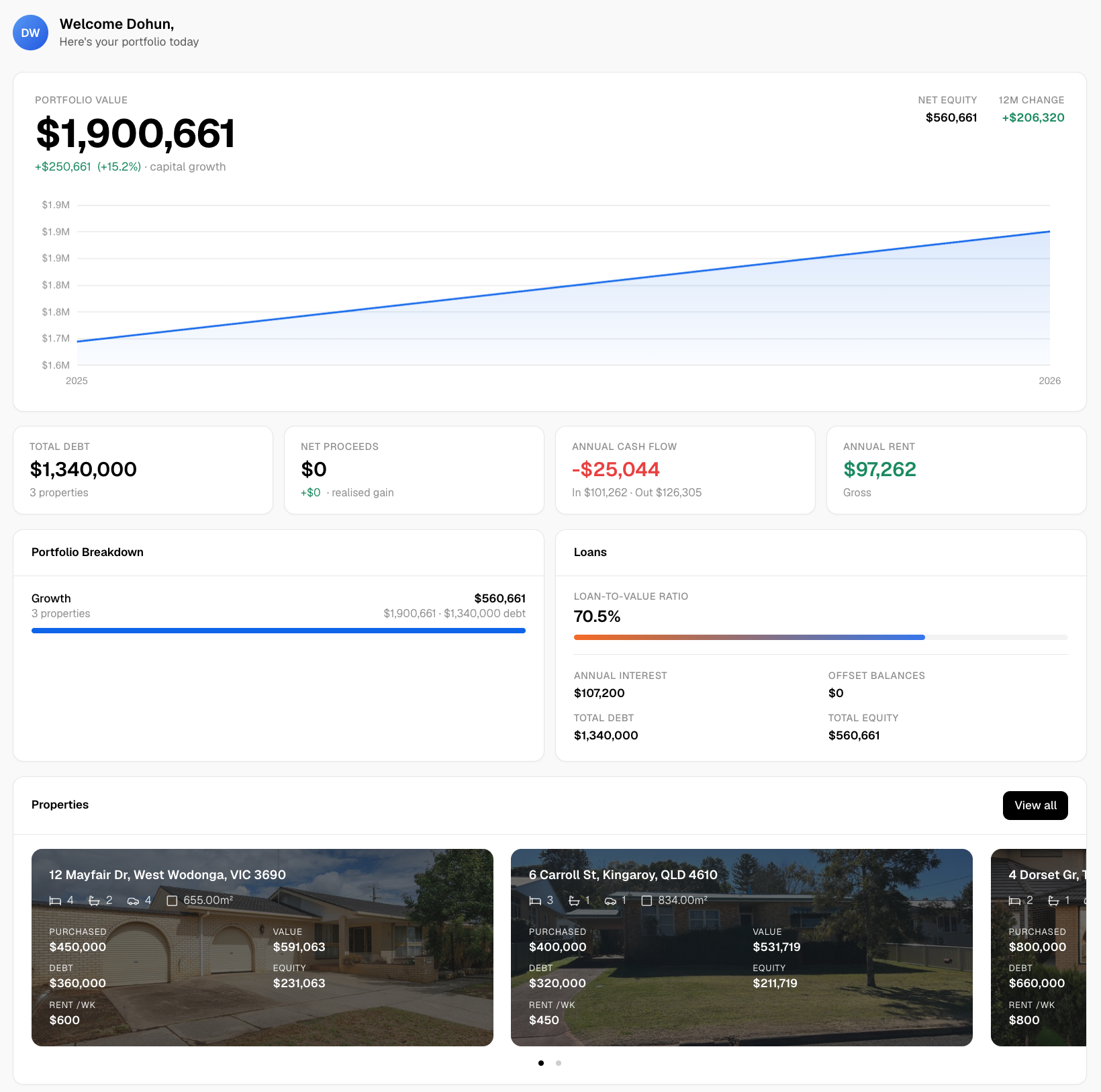
Start at wealthstacker.com.au, add your home, and model both paths before you decide.
A checklist before you hand over the keys
- Record the home’s market value and the date you first rent it out.
- Decide whether you will use the six-year choice, and speak to a registered tax agent to confirm it fits your facts.
- Tell your lender, and check how the loan is treated.
- Complete your state’s tenancy paperwork, bond lodgement and safety compliance.
- Set up a system for income and expense records from day one.
- Insure the property as a rental.
- Model your cash flow with a vacancy allowance for periods without a tenant.
FAQ
Can I keep my home loan if I rent out my home?
Often you can, but you should tell your lender, because rental use can change how the loan is treated and priced. Investor and owner-occupier loans are assessed differently, so check the terms before the first tenant moves in. Our owner-occupier versus investor loan guide explains the difference.
Do I pay CGT when I rent out my main residence?
Not until you sell. When you do, the six-year rule may keep the full exemption if you choose to treat the home as your main residence for up to six years while it is rented. Beyond that, a partial exemption can apply, based on the days it produced income. The ATO’s page on using your home for rental or business sets out the rules.
Can I claim interest on my home loan after I move out?
Yes, once the property is held to produce rental income, loan interest is claimable. If part of the loan is used for private purposes, you must apportion it. The ATO’s rental expenses page explains how.
Is it better to buy an investment property before a home?
It depends on your rent, your borrowing power and how long you want to hold. Buying an investment first suits people who prefer to rent where they live. Model both routes against your own figures before choosing.
Sources
- Using your home for rental or business, ATO
- Main residence exemption guidance, ATO legal database
- TD 1999/71, ATO legal database
- Your main residence, ATO
- Capital gains tax when renting out accommodation, ATO
- How to claim rental expenses, ATO
- Renting out a room or part of your main residence, ATO
- Public advice and guidance, completed issues, ATO
- Managing general tenancies in Queensland, RTA
- Residential Tenancies and Rooming Accommodation Act 2008, Queensland Legislation
- Landlord tax deductions guide