
Mortgage options for first-home buyers: buy vs rentvest 2026
Buying to live suits first-home buyers who need stability, want government entitlements, and can afford the suburb they actually want to live in. Rentvesting suits buyers who can’t afford their preferred area yet, want earlier market entry, and are comfortable managing an investment property while renting elsewhere. The 2026 Budget changes the maths significantly: established properties bought after 12 May 2026 lose the salary offset from negative gearing from 1 July 2027, while new residential builds remain fully exempt.
Three numbers frame the decision right now:
- Westpac’s 2025 research found 54% of first-home buyers are considering rentvesting, and rentvesting loans grew roughly 21.4% in 2024.
- National vacancy rates sat around 1.0–1.2% in early-to-mid 2026, with annual rent growth running at roughly 5.7–6.6%, which tightens the cashflow case for rentvesting but also raises the rent you pay as a tenant.
- Lenders shade rental income to 75–80% when assessing serviceability, so an investment loan can cut your future owner-occupier borrowing capacity by $100,000–$300,000 or more.
The biggest drivers of the decision are short-term cashflow, your long-term growth assumption, tax treatment under the new rules, and the first-home entitlements you forfeit. When you compare mortgage options for first-home buyers, the honest answer is that neither path dominates universally — the outcome depends almost entirely on the numbers you plug in.
Key takeaways
The post-2026 Budget rules make new builds the only tax-efficient rentvesting route for established-property buyers, and borrowing capacity modelling is non-negotiable before committing to either path.
| Point | Details |
|---|---|
| New builds only for tax benefits | Established properties bought after 12 May 2026 lose negative gearing salary offset from 1 July 2027; new builds remain exempt. |
| Borrowing capacity shrinks | An investment loan can reduce future owner-occupier borrowing capacity by $100,000–$300,000 due to rental income shading and stress-test buffers. |
| Entitlements have real dollar value | Buying investment first typically forfeits FHOG and state stamp-duty concessions worth tens of thousands of dollars. |
| Growth rate is the dominant variable | A 1% difference in annual capital growth over 15 years outweighs most tax and cashflow differences between the two paths. |
| Wealthstacker for scenario testing | Load your assumptions into Wealthstacker’s 15-year modelling tool to compare buy-to-live and rentvesting outcomes side by side. |
Table of Contents
- How do buy-to-live and rentvesting compare across the dimensions that matter?
- What do the 2026 Budget changes mean for rentvestors?
- How does an investment loan affect your future borrowing power?
- What are the real cost differences between investor and owner-occupier loans?
- A reproducible 15-year dollar example: buy-to-live vs rentvest
- How to build your own buy vs rentvest model step by step
- How does buying an investment property affect your first-home grants and concessions?
- Decision checklist: questions to answer before you commit
- What should you do this week to move forward?
- Wealthstacker makes it easier to model your buy vs rentvest scenarios
- Sources
How do buy-to-live and rentvesting compare across the dimensions that matter?
The table below maps both paths against the decision dimensions a modeller needs. Generic labels are used because the outcome varies by individual inputs, not by strategy name alone.
| Dimension | Owner-occupied path | Investment-first path |
|---|---|---|
| Short-term cashflow | Higher monthly outgoing (P&I repayments, no rental offset) | Lower net outgoing if rent paid is less than investment loan cost, offset by rental income |
| Long-term wealth | Full CGT exemption on principal place of residence (PPR); equity builds in home you occupy | No PPR CGT exemption; 50% CGT discount retained for new builds post-Budget; growth depends on asset selection |
| Tax treatment | No negative gearing; mortgage interest not deductible | Negative gearing on new builds retained; established properties bought after 12 May 2026 lose salary offset from 1 July 2027 |
| FHOG and stamp duty | Full eligibility if criteria met | Purchasing investment first typically forfeits FHOG and most state stamp-duty concessions |
| Future borrowing capacity | Not impaired by existing investment debt | Investment loan repayments and rental income shading reduce owner-occupier borrowing capacity |
| Loan practicalities | Lower rate, owner-occupier LMI rates, 5–10% deposit possible with guarantees | Typically 20% deposit to avoid LMI; investor LMI costs more; rate premium of 0.2–0.5% |
| Rental yield and vacancy | Not applicable | Gross yield minus vacancy, management, and maintenance; model net yield conservatively |
Rentvesting can improve short-term cashflow while forfeiting the PPR CGT exemption and first-home concessions, so the long-term outcome depends heavily on capital growth and holding period. The honest comparison stacks unrecoverable costs against each other, not repayments against rent.
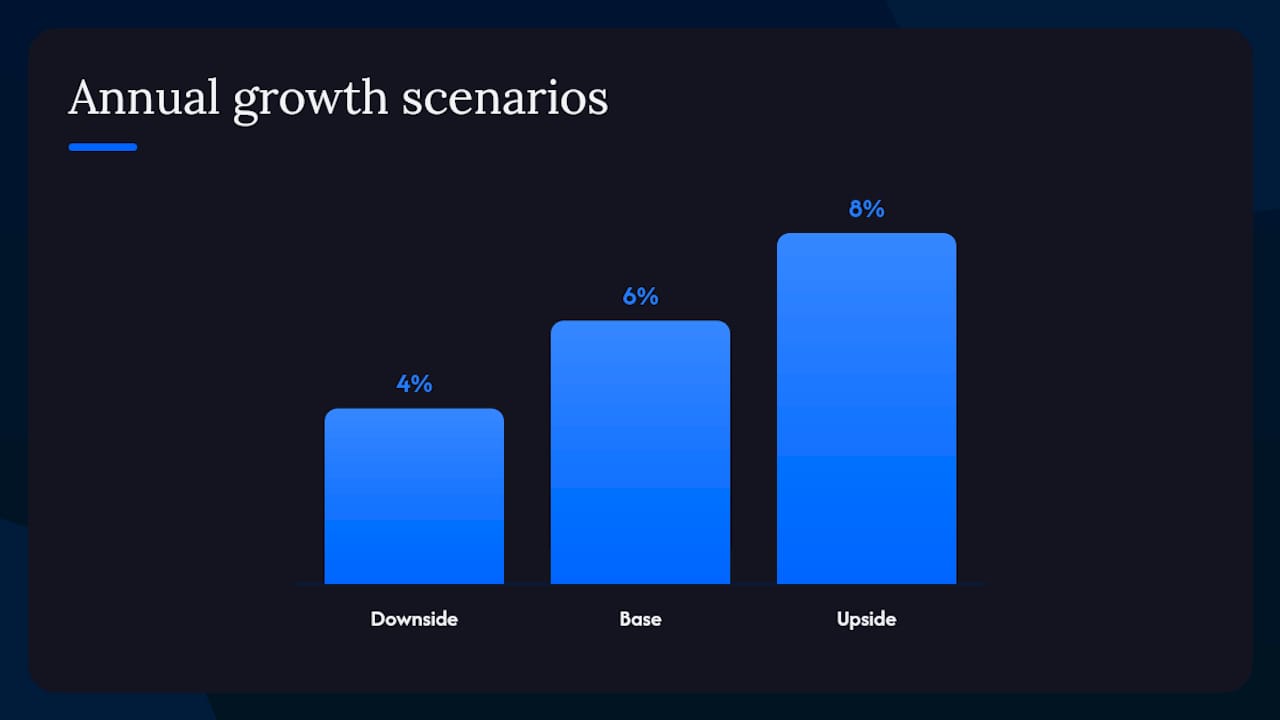
Pro Tip: The single input most likely to flip the result is the assumed annual capital growth rate. A 1% difference in growth, held over 15 years, can outweigh several years of tax or cashflow differences. Run your model at 4%, 6%, and 8% growth before drawing any conclusion.
What do the 2026 Budget changes mean for rentvestors?
The rule is precise. For established residential properties, the contract must have been exchanged at or before 7:30pm AEST on 12 May 2026 to retain negative gearing benefits. Properties purchased after that time lose the ability to offset rental losses against salary income, effective from 1 July 2027. New residential builds purchased after 12 May 2026 remain fully exempt and retain both negative gearing and the 50% CGT discount.
Key points for first-home buyers considering rentvesting now:
- Grandfathering: Properties contracted on or before 12 May 2026 keep their negative gearing treatment indefinitely, regardless of when settlement occurs.
- New-build exemption: Off-the-plan and newly constructed dwellings remain the tax-efficient rentvesting route. If tax treatment matters to your model, only new builds make sense for purchases after 12 May 2026.
- Timing your contract: The cut-off is the exchange date, not settlement. Check your contract timestamps carefully if you are mid-negotiation.
- CGT discount: The 50% CGT discount for assets held more than 12 months is retained for new builds. Established investment properties bought after the cut-off still attract the discount, but the loss-offsetting benefit disappears.
The practical implication: if you are modelling rentvesting with an established property purchased today, remove the negative gearing benefit from your projections entirely. The cashflow case weakens, which makes growth assumptions even more important.
How does an investment loan affect your future borrowing power?
Lenders don’t take your rental income at face value. Most shade it to 75–80% of the gross rent when calculating serviceability, and they count the full investment loan repayment as a liability. On top of that, lenders stress-test at the loan rate plus a buffer of roughly 3%, which reduces the income available to service a future owner-occupier loan.
A simplified example using conservative inputs:
- Investment property purchase price: $650,000. Loan at 80% LVR: $520,000 at 6.5% (investor rate).
- Monthly repayment (P&I, 30 years): approximately $3,290.
- Gross weekly rent: $550 ($28,600/year). Lender shades to 80%: $22,880 assessable.
- Stress-test rate applied to investment loan: 6.5% + 3% = 9.5%. Assessed repayment: approximately $4,380/month.
- Net serviceability impact: the lender sees $4,380/month in investment loan obligations and credits only $1,907/month in rental income, a net drag of roughly $2,473/month.
- At a typical income multiple, that drag reduces owner-occupier borrowing capacity by approximately $200,000–$300,000.
See the borrowing capacity assessment guide for a deeper breakdown of how lenders calculate this.
Pro Tip: Ask your broker to run a full serviceability assessment with the investment loan in place before you commit. Some lenders treat rental income more favourably if you can show 12 months of consistent rental history, which is worth documenting early.

What are the real cost differences between investor and owner-occupier loans?
Investor loans cost more to establish and carry higher ongoing rates. The gap matters because it compounds over a 15-year model.
- Deposit: Most lenders require 20% for an investment loan to avoid LMI. Owner-occupier loans can go to 5–10% with government guarantees or LMI.
- LMI: Investor LMI premiums are higher than owner-occupier equivalents at the same LVR. On a $650,000 purchase at 90% LVR, the premium difference can be several thousand dollars.
- Interest-rate premium: Investment loans typically carry a 0.2–0.5% rate premium over owner-occupier loans. On a $520,000 loan, 0.3% extra costs roughly $1,560/year.
- Property management: Budget 7–10% of gross rent. On $28,600/year rent, that is $2,002–$2,860/year.
- Maintenance and vacancy buffer: Allow 1–2 weeks vacancy per year and 0.5–1% of property value for maintenance. On a $650,000 property, that is $3,250–$6,500/year.
- Council rates, insurance, strata (if applicable): Typically $3,000–$6,000/year depending on property type and location.
| Cost item | Typical annual range |
|---|---|
| Property management (7–10% of rent) | $2,002–$2,860 |
| Maintenance and repairs | $3,250–$6,500 |
| Vacancy buffer (1–2 weeks) | $550 |
| Council rates and insurance | $3,000–$6,000 |
| Rate premium over OO loan (0.3% on $520k) | ~$1,560 |
Pro Tip: Model running costs at the top of each range for your base case, then use the bottom of the range as your upside scenario. Most first-time investors underestimate maintenance.
A reproducible 15-year dollar example: buy-to-live vs rentvest
Assumptions (state these in your own model):
- Purchase price (both scenarios): $750,000
- Owner-occupier deposit: 20% ($150,000); loan $600,000 at 6.2%
- Investor deposit: 20% ($150,000); loan $600,000 at 6.5% (investor premium)
- Rent paid by rentvestor as tenant: $2,400/month ($28,800/year)
- Gross rental income from investment property: $550/week ($28,600/year)
- Net rental income after costs (management, vacancy, maintenance, rates): $20,000/year
- Capital growth: 6% per annum (both properties, same suburb assumed)
- Holding period: 15 years
- Tax: negative gearing removed (established property, post-Budget); CGT at 50% discount applies on investment sale
- Transaction costs on purchase: 5% (stamp duty, legal, inspection); on sale: 2.5% (agent, legal)
After applying CGT on the investment property gain at sale (50% discount, marginal rate 37%), the rentvest path nets approximately $650,000–$680,000 in equity at year 15 versus $870,000 for the owner-occupier. The gap narrows if the rentvestor’s investment property outgrows the owner-occupier’s suburb, and widens if growth is equal.
Transaction costs heavily penalise short holding periods. At a five-year hold, the rentvest path trails by more because stamp duty and selling costs are annualised over fewer years.
Sensitivity checks: At 4% growth, the owner-occupier path leads by a wider margin. At 8% growth on the investment property (outperforming the owner-occupier suburb), rentvesting can close or reverse the gap before CGT. Growth assumption is the dominant variable.
How to build your own buy vs rentvest model step by step
- Collect purchase prices for both your target owner-occupier suburb and your candidate investment suburb. Use recent comparable sales, not asking prices.
- Establish deposit and loan amounts for each scenario. Note the rate premium for investor loans and confirm with a broker.
- Estimate gross rental yield from current listings in the investment suburb. Apply a 20–25% reduction for vacancy, management, and maintenance to get net yield.
- Input tax assumptions. For established properties bought after 12 May 2026, remove negative gearing. For new builds, retain it. Apply the 50% CGT discount at the assumed sale year.
- Model transaction costs as a percentage of purchase price (typically 4–6% in) and sale price (2–3% out). Annualise over your holding period.
- Run three growth scenarios: base (6%), downside (4%), upside (8%). Note which scenario changes your decision.
- Stress-test cashflow at a rate 2–3% higher than current. Can you absorb negative cashflow for 12–24 months without selling?
- Compare net equity at year 15 after CGT, running costs, and forgone entitlements.
Input checklist for data quality:
- Lender serviceability letter (confirms borrowing capacity with and without investment loan)
- Council rates notice or estimate from the local council website
- Market rent evidence: three comparable active listings in the investment suburb
- State revenue office website for current FHOG amounts and stamp-duty concession thresholds
- Accountant confirmation of your marginal tax rate for CGT modelling
Pro Tip: Load these inputs directly into Wealthstacker’s 15-year modelling tool to generate side-by-side scenario outputs without building a spreadsheet from scratch.
How does buying an investment property affect your first-home grants and concessions?
Purchasing an investment property first typically removes eligibility for the First Home Owner Grant and most state stamp-duty concessions, because both require the property to be your principal place of residence. The First Home Guarantee (federal scheme) is owner-occupier only, so a prior investment purchase disqualifies you from that scheme on a later home purchase too.
The practical cost varies by state. In NSW, the stamp-duty concession for first-home buyers on properties up to $800,000 can save tens of thousands of dollars. In Victoria, the FHOG for new builds is $10,000. Forfeiting these on a $700,000–$800,000 purchase is a real dollar cost that belongs in your model.
Action checklist:
- Check your state revenue office website before exchanging contracts on any property (NSW: revenue.nsw.gov.au; VIC: sro.vic.gov.au; QLD: qro.qld.gov.au).
- Ask your solicitor or conveyancer to confirm your first-home buyer status before exchange.
- Speak to an accountant about the timing of purchases if you want to preserve entitlements.
Pro Tip: One approach for buyers who want investment exposure without forfeiting entitlements: buy your first home in an affordable area, establish owner-occupier status and claim the concessions, then purchase an investment property second. You preserve the grants and build the portfolio, just in a different order.
Decision checklist: questions to answer before you commit
Work through these before signing anything:
- Can you absorb neutral-to-negative cashflow on the investment property for at least 12–24 months without selling?
- Does your 15-year model beat the forgone first-home entitlements (FHOG, stamp-duty concession) by a meaningful margin?
- Have you modelled your owner-occupier borrowing capacity with the investment loan already in place?
- Is your holding horizon at least 7–10 years? Short holds destroy returns via transaction costs.
- Have you stress-tested at a rate 3% higher than today’s offer?
Red flags that should prompt a pause:
- Vacancy rates in the target suburb above 3% (tight market assumption breaks down)
- Holding horizon under 5 years
- Emergency cash buffer below three months of combined loan repayments and rent
- Negative cashflow that exceeds 20% of take-home pay
- No accountant review of CGT and negative gearing treatment for your specific situation
Questions to bring to your broker: What is my borrowing capacity with and without the investment loan? Which lenders treat rental income most favourably? What documentation do I need for consistent rental history?
What should you do this week to move forward?
Buy-to-live wins when you need tenure, want government entitlements, and can afford your target suburb. Rentvesting wins when the buy/rent gap is large, you have a long horizon, and you can absorb the CGT cost and forgone concessions. Post-Budget, the rentvesting case is strongest for new builds.
Immediate next steps:
- Run both scenarios in a modelling tool using the assumptions from the worked example above. Adjust for your actual suburb prices and rental estimates.
- Get a pre-approval letter from a broker that includes a serviceability assessment with the investment loan in place, so you know your future borrowing capacity before committing.
- Book a 30-minute session with an accountant to confirm your marginal tax rate, CGT exposure, and whether any state entitlements are still available to you.
If you want to buy within three to six months: prioritise the pre-approval and the state revenue office eligibility check first. Both take less than a week and can change your decision entirely.
Wealthstacker makes it easier to model your buy vs rentvest scenarios
The worked example in this article uses a fixed set of assumptions. Your numbers will differ, and small differences in suburb growth rates or rental yields can shift the outcome by tens of thousands of dollars over 15 years.
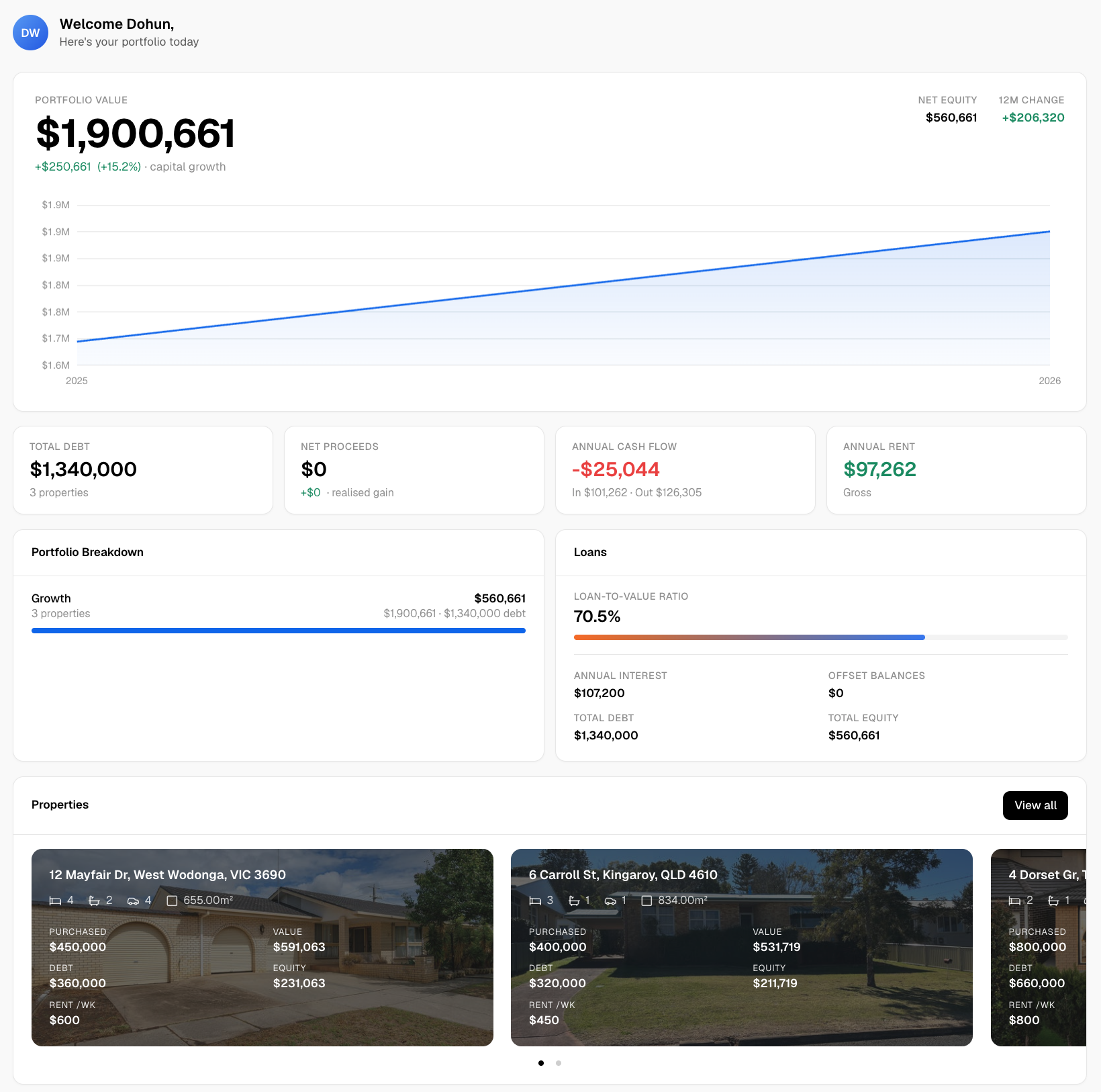
Wealthstacker’s free toolkit lets you upload the exact inputs from the assumptions box above and run side-by-side 15-year projections for both paths. The property investment app includes automated quarterly valuations, a borrowing power estimator, scenario comparisons for buy-to-live and rentvesting, and an AI-powered chat assistant for suburb research. You can stress-test growth, vacancy, and rate scenarios without building a spreadsheet. For buyers who want to move quickly, the borrowing power estimator shows the serviceability impact of an investment loan before you speak to a lender. Start with the free plan, load your numbers, and see which path actually wins for your situation. This is general information only; consult a licensed broker and accountant for advice tailored to your tax position and lending circumstances.
Sources
- What is rentvesting and how does it work? Australia 2026 | Mozo
- Rents are exploding — here’s how to actually decide between buying, rentvesting or staying put | BuyInvestLive
- Rent vs buy: compare unrecoverable costs, not repayments — NodeSaver | NodeSaver
- What Is Rentvesting and Is It Right for You? | Stanford Financial
- Rentvesting in Australia: A 2026 Strategy Guide | MortgageWorldAustralia
This article is general information, not a substitute for advice from a qualified financial advisor. Consult a qualified financial professional about your own circumstances before acting on anything here.