
Auction vs Private Sale: How to Choose in Australia
An auction is a public, unconditional sale on a set day, with no cooling-off period. A private sale (also called private treaty) is a negotiated deal where the buyer can usually make conditional offers and, in most states, gets a cooling-off period. Auctions suit sought-after, distinctive homes in strong markets. Private sales suit softer markets, buyers who need finance or inspection conditions, and sellers who want to keep costs down.
This guide covers both sides of the table: what buyers should do before bidding, what sellers should weigh before choosing a method, and how the rules differ by state. It also explains the “market rent vs contract rent” question investors ask when they run the numbers on a property.
WealthstackerMake Property Decisions With Clearer NumbersWealthStacker helps you assess property investments with automated valuations and tools to model buying and rentvesting strategies.Explore WealthStackerTL;DR
- Auction sales are unconditional. You cannot make the offer subject to finance or a building inspection, and there is no cooling-off period, so your checks must be finished before the day.
- Private treaty sales can be conditional and, in most states and territories, come with a short cooling-off period, usually 2 to 5 days depending on where you buy.
- Sellers choose auction for a fixed timetable and competitive tension, and private treaty for flexibility, lower campaign costs and protection in soft markets.
- A property that does not reach its reserve price is passed in, and negotiations often continue privately afterwards.
- Whichever method you face, set your walk-away price from your own cash flow numbers, not from the atmosphere on the day.
Table of Contents
- How an auction and a private sale actually work
- Cooling-off rights: the biggest rule difference
- Buying at auction: what to do before the day
- Buying by private sale: where you have more room
- Selling: which method suits your property
- Why agents often favour auctions
- Run the numbers before you pick a method
- Market rent vs contract rent: what investors need to know
- Using WealthStacker to compare your options
- Which method is right for you?
- FAQ
- Sources
How an auction and a private sale actually work
At auction, the property is advertised for a few weeks, buyers inspect, and bidding happens publicly on a set date. The seller sets a reserve price in writing, the minimum acceptable bid, and the property is passed in if the highest bid falls below it. If the bidding reaches the reserve, the highest bidder signs the contract on the spot and usually pays a deposit that day.
The key point for buyers is that an auction sale is unconditional. You cannot make your bid subject to finance approval or building inspections, and there is no cooling-off period.
By private treaty, the vendor and agent set an asking price or price guide, and buyers make offers. Private sale is the most common way to sell property in Australia, and the process is private: you negotiate directly with the agent, one buyer at a time or several in parallel. Offers can carry conditions such as finance, a pest and building inspection, or a settlement date that suits you.
| Auction | Private sale (private treaty) | |
|---|---|---|
| Price discovery | Public competitive bidding | Private negotiation through the agent |
| Conditions | Unconditional | Can be conditional (finance, inspections) |
| Cooling-off | None for buyers | Usually 2 to 5 days in most states |
| Timetable | Fixed sale date | Open ended, set by negotiation |
| Seller costs | Usually extra, such as the auctioneer’s fee | Generally lower campaign costs |
| Certainty | Not guaranteed, property can be passed in | Not guaranteed until contracts are exchanged |
Cooling-off rights: the biggest rule difference
Cooling-off rules are set by each state and territory, so check the official consumer or fair trading page where you are buying. Across Australia, cooling-off periods exist for private treaty sales in most states but not for auction purchases.
Published summaries of the private treaty periods are:
| State or territory | Cooling-off period | Penalty for withdrawing |
|---|---|---|
| NSW | 5 business days | 0.25% |
| Victoria | 3 business days | 0.2% |
| Queensland | 5 business days | 0.25% |
| ACT | 5 business days | 0.25% |
| Northern Territory | 4 business days | None |
These figures come from a summary of private treaty cooling-off periods by state first published in 2020 and regularly updated. Rules can change, so confirm the current period and penalty with your state regulator and your conveyancer before you sign anything.
One trap catches people who think they can wait out a pass-in. In NSW, the auction exclusion from cooling-off also applies if contracts are exchanged on the same day as the auction after the property has been passed in. If you negotiate with the agent in the minutes after a pass-in and sign that day, you may give up your cooling-off right.
Rules on underquoting, reserve price disclosure and cooling-off penalty fees also differ by state. Ask your conveyancer or solicitor what applies where you are buying.
Buying at auction: what to do before the day
Because you cannot add conditions, the work happens beforehand. A practical checklist:
- Get finance sorted. Have your pre-approval in writing and know what a lender will actually let you borrow. Our guide to testing Australian mortgage limits explains how the APRA 3% buffer and debt-to-income limits shape your ceiling.
- Order inspections and the contract review. Have a solicitor or conveyancer read the contract and the section 32 or equivalent vendor disclosure before auction day. Commission a building and pest inspection while the property is in its campaign.
- Check hazards. Flood, fire and other risks affect insurance and resale. See the bushfire checks to make before an offer.
- Set a hard limit. Decide your maximum bid, including stamp duty and buying costs, and write it down. Deposit and settlement terms are usually fixed, so confirm you can meet them.
- Watch comparable auctions. Attend a few in the suburb. You will see how bidding moves, how many registered bidders appear and how often the reserve is met.
The upside of auctions for buyers is transparency. You can see how many people are bidding and where the competition drops off. The downside is the emotional pressure, which pushes buyers past their budget. A limit set in advance is the best protection.
Buying by private sale: where you have more room
Private treaty gives buyers time. You can inspect more than once, negotiate on price and terms, and make offers subject to finance and inspections. Private sale is typically more flexible than an auction, and the cooling-off period in most states provides an additional safety net.
The trade-off is that you do not see the other buyers. An agent may tell you there are other interested parties, and you cannot verify it. The practical response is to anchor your offer in evidence: recent comparable sales, your inspection results and your own numbers. Offers with clean terms, such as a short finance period and a flexible settlement date, can also win against a slightly higher but more conditional offer.
Selling: which method suits your property
If you are the vendor, the choice depends on three things: how distinctive the property is, how strong local demand is and how much you value timing certainty compared with cost.
When auction tends to work. Auctions may achieve the best price for a property in a sought-after suburb, of unique character, or one that needs exposure to find buyers. Auctions also give you a better opportunity to sell by a specific date, though they do not guarantee a sale, and they usually involve additional costs such as an auctioneer’s fee.
When private treaty tends to work. Where clearance rates are low, one industry guide argues that only genuinely competitive properties should go to auction, while private negotiation may better protect the vendor in softer conditions. If buyers in your area typically need finance or inspection conditions, a private sale lets them make offers they can actually fulfil.
What a failed auction means. If bidding stops below the reserve, the property is passed in. The highest bidder is usually offered first chance to negotiate, and the property often continues as a private sale. The campaign money is spent, and the property now carries the label of having failed at auction. If your home is sitting unsold after either method, it helps to understand why a house won’t sell and what to do next, then review price, presentation and timing before you change approach.
A sensible rule of thumb for sellers is to ask your agent for recent auction clearance results and days on market for properties like yours in your suburb. Then ask what the reserve strategy is and what the full campaign cost is under each method. Put the quotes in writing so you can compare them.

Why agents often favour auctions
Agents often recommend auctions because the method creates a deadline and a visible contest. It concentrates buyer interest into a few weeks and can lift prices when demand is real. That is a legitimate advantage in a hot market. It is worth remembering that the campaign is paid for up front, and an unsold property does not refund it. Treat the recommendation as one input, and test it against local clearance data and your own timeline.
Run the numbers before you pick a method
The method matters less than the price you pay or accept. Investors and first-home buyers get into trouble when the excitement of a bidding contest replaces a cash flow forecast.
Before you bid, work out:
- Net cash position. Rent, minus interest, rates, insurance, management and maintenance. Our 12 month net cash test shows a simple way to do it.
- Return benchmarks. Compare your expected yield against real estate ROI benchmarks, so you know whether the price still stacks up.
- Rental growth assumptions. Test your forecast against what the data says about rental growth rather than assuming a number.
- Rentvesting risks. If you plan to keep renting where you live and buy elsewhere, read the rentvesting risks to check before committing, and see the deposit strategy for beating the APRA buffer.
A worked example of the logic: if your model shows that a property only makes sense up to a certain price, that figure is your auction limit or your private sale offer ceiling. Anything above it means you are paying for the thrill, not the investment.
Market rent vs contract rent: what investors need to know
Investors comparing sale methods also ask about rent, because the price they pay should reflect the income they can realistically earn.
- Contract rent is the rent actually written into the lease and paid by the tenant today.
- Market rent is what the property would rent for now if it were offered to the market.
The two can differ. A tenant on a long lease or an older agreement may pay less than market, and a property let at a premium may drop when the lease renews. Market rent can be estimated by comparing rents charged by local agents for similar properties, or by a formal valuation.
When buying a tenanted property, ask for the lease and the rent roll, then compare the contract rent with what comparable properties are currently advertised for. Base your forecast on whichever is more cautious unless you have a firm reason to expect a rise.
In commercial property, rent reviews can reset contract rent by CPI, a fixed percentage or to market. Buyers’ agents caution that these reviews do not automatically guarantee rent growth and can produce flat or lower rent in soft markets. Residential investors should take the same lesson: do not assume today’s rent only goes up.
Using WealthStacker to compare your options
WealthStacker is a toolkit for Australian property decisions. It includes free automated quarterly valuations, a 15-year modelling tool for comparing rentvesting and buying scenarios, borrowing power estimates and hazard overlays. You can test the maximum price that works for your finances before you walk into an auction room or put in a private offer.
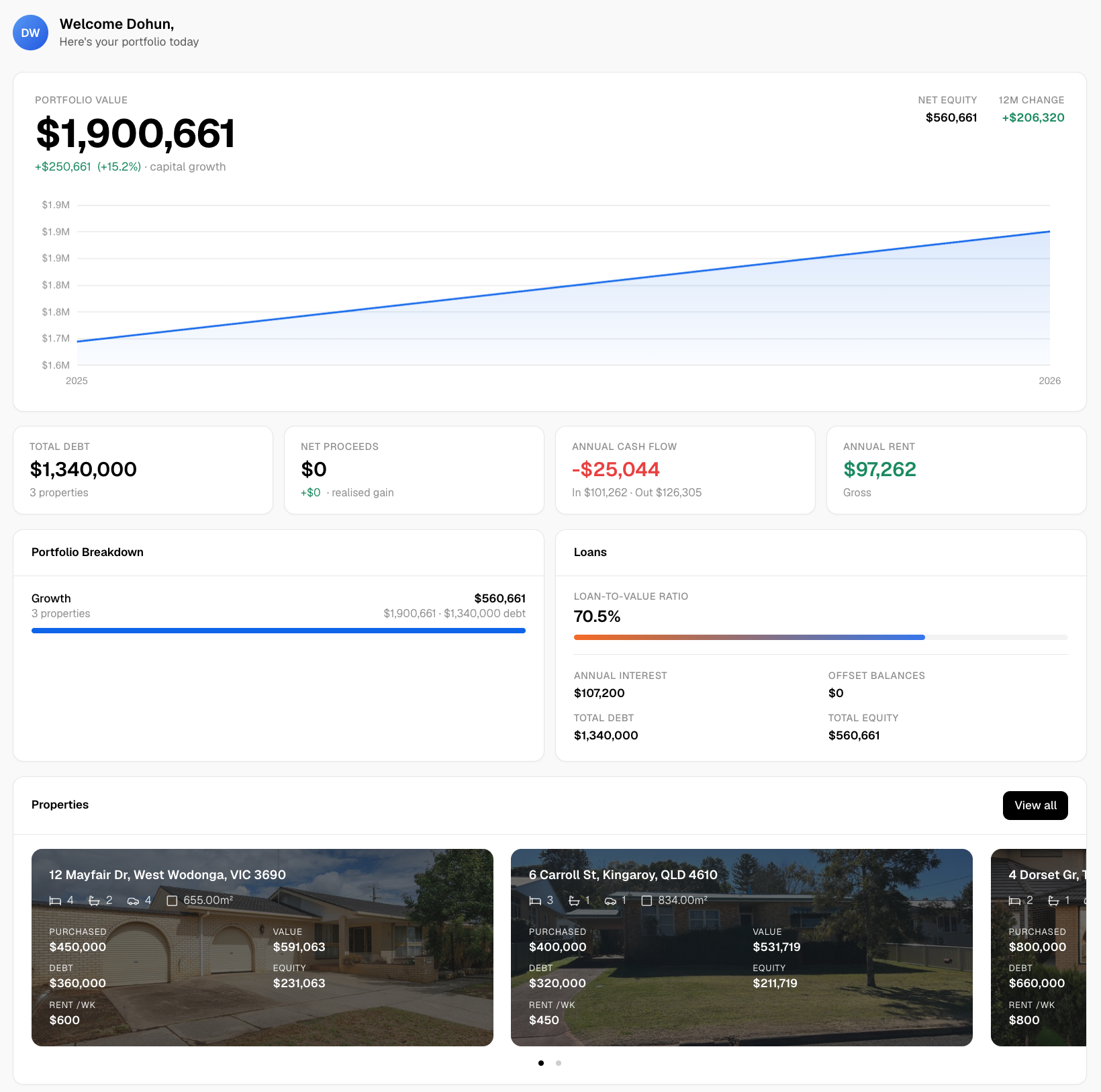
If you are weighing a purchase, join WealthStacker and run your scenario. You can also explore more guides on the WealthStacker blog.
Which method is right for you?
Choose to bid at auction if your finance is approved, your inspections are done, you have a firm limit and you are comfortable deciding in public.
Choose to negotiate by private sale if you need conditions, want time to compare options or are buying in a market where properties often sit for weeks.
Choose auction as a seller if the property is distinctive or in a high-demand area, and you value a fixed date.
Choose private treaty as a seller if demand is softer, you want to keep campaign costs lower or you are happy to take time to find the right buyer.
FAQ
Is auction better than private sale?
Neither is better in every case. Auctions can produce a strong price for sought-after properties and give sellers a fixed sale date. Private sales offer flexibility, conditions and, for buyers, a cooling-off period in most states. The better method depends on the property, the local market and your priorities.
Can a sale fall through after auction?
An auction sale is unconditional, so once the hammer falls and contracts are signed, the buyer is committed and there is no cooling-off period. A sale can still fail if the buyer cannot settle, for example because finance falls through, and that is a serious breach of contract. This is why finance and inspections must be settled before the auction.
Do houses sell by auction in Australia?
Yes, though it is far more common in some markets than others. Auction culture is strongest in places such as Melbourne and Sydney, and private treaty is the most common way to sell property across Australia. Local auction culture is one of the factors to weigh when choosing a method.
What happens if a property does not sell at auction?
If the highest bid is below the reserve, the property is passed in. The agent will usually start private negotiations with the highest bidder and other interested buyers, and the property may continue to be marketed as a private sale.
Sources
- Property sales method and price, Consumer Affairs Victoria
- Steps to selling a property, NSW Government
- Contracts and deposits when buying property in NSW
- Buying property at an auction, Consumer Protection WA
- What is a private treaty sale and how can you buy?, realestate.com.au
- Auction vs private treaty: which way should you sell?
- Rent Setting Policy (SAHV)
- Commercial rent reviews in Australia: CPI, fixed and market
- House won’t sell? Why it happens and what to do next